

Products
- High-Quality Graphene
- CVD Graphene, Graphene-Like Materials
- Graphene-Like Series
- Defect-Free Single-Crystal Graphene and Graphene-Like Materials (Mechanical Exfoliation)
- Quantum Dot Series
- Aggregation-Induced Emission (AIE)
- Near-Infrared II (NIR-II) Fluorescent Dyes
- Graphdiyne
- Two-Dimensional Transition Metal Carbides/Nitrides/Borides (MXene)
- Metal Nanomaterials and Other Functional Bio-Nanomaterials
- Metal-Organic Frameworks (MOF)
- Covalent Organic Frameworks (COF)
- Two-Dimensional Layered Metal Oxides (LDH)
- Carbon Nanotube Powders, Pastes
- Carbon Nanotube Arrays and Special Carbon Nanotube Materials
- High-Quality Metallic and Semiconducting High-Purity Single-Walled Carbon Nanotubes
- Carbon Nanotube Sponges
- Mesoporous Carbon and Carbon Nanomaterials
- High-Quality Fullerenes
- One-Dimensional Nanomaterials
- Molecular Sieves
- Inorganic Nanomaterials
- Perovskite Materials
- Highly Oriented Pyrolytic Graphite (HOPG)
- Organic Materials
- Single-Atom Catalysts
- Thermoelectric Materials
- Sodium Storage Materials
- Industrial-Grade Nanomaterials
- Solid-State Lithium Batteries
- Hydrogel Series and Consumables
Online Inquiry
Thermoelectric Materials
Thermoelectric materials have emerged as one of the most promising classes of functional materials for the twenty-first century, enabling direct interconversion between thermal energy and electrical power through solid-state mechanisms. These remarkable materials exploit fundamental thermoelectric effects—the Seebeck effect for power generation and the Peltier effect for active cooling—without relying on moving parts, working fluids, or greenhouse gas emissions, making them indispensable for sustainable energy technologies.
The performance of thermoelectric materials is quantified by the dimensionless figure of merit, ZT = S²σT/κ, where S denotes the Seebeck coefficient, σ the electrical conductivity, T the absolute temperature, and κ the thermal conductivity. Maximizing ZT requires the delicate optimization of interdependent transport parameters—a challenge that has driven decades of research into band structure engineering, phonon scattering mechanisms, and nanostructuring approaches. State-of-the-art materials now routinely achieve ZT values exceeding 1.5, with record values surpassing 2.5 in certain nanostructured systems.
Our comprehensive portfolio of thermoelectric materials spans the full temperature spectrum from cryogenic applications to high-temperature waste heat recovery above 1000°C. We supply bismuth telluride-based compounds optimized for room-temperature cooling and low-grade power harvesting, lead telluride and skutterudite alloys engineered for mid-temperature automotive and industrial applications, and silicon-germanium solid solutions for radioisotope thermoelectric generators and aerospace missions. Each material undergoes rigorous characterization to ensure reproducible thermoelectric properties batch after batch.
Beyond conventional bulk materials, we offer nanostructured variants designed to decouple the normally antagonistic transport parameters through quantum confinement effects and enhanced phonon scattering at interfaces. These advanced formulations deliver substantially higher ZT values than their coarse-grained counterparts while maintaining excellent thermal stability and mechanical integrity required for long-term device operation.
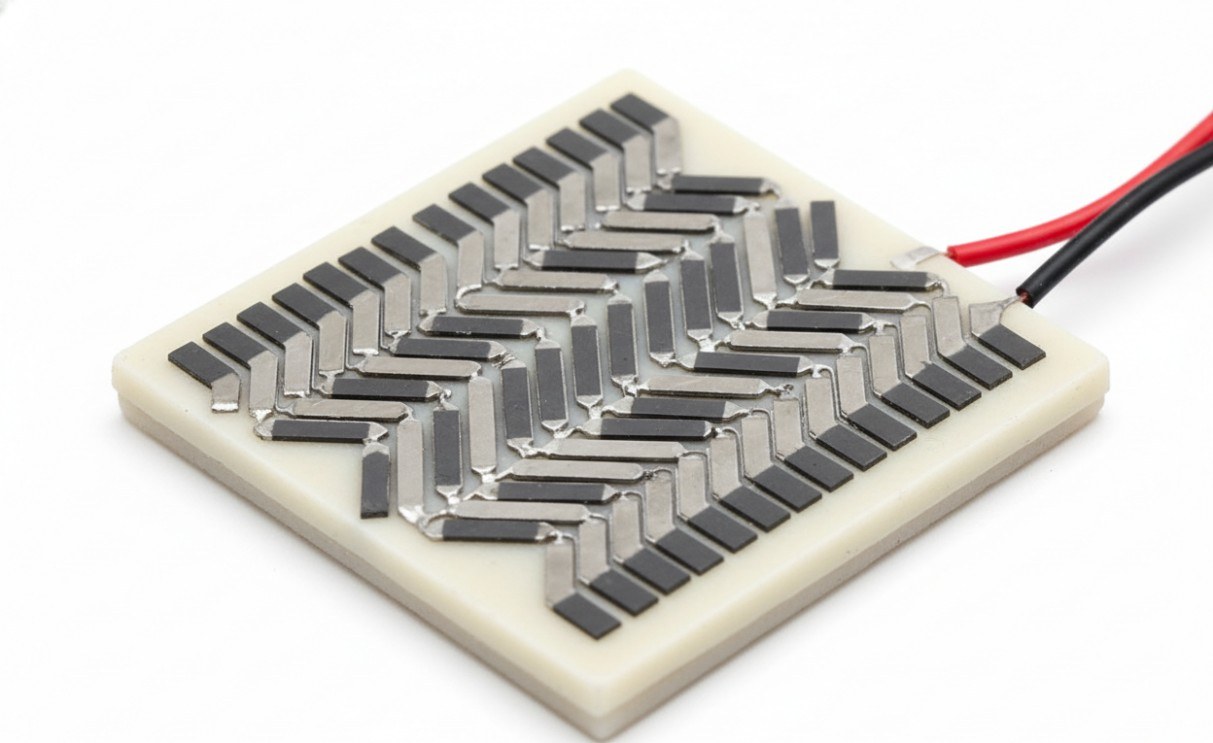 Figure 1: Thermoelectric generator module array for waste heat recovery applications
Bismuth Telluride (Bi₂Te₃) Based Materials
Bismuth telluride and its alloys with antimony telluride (Bi₂Te₃-Sb₂Te₃) and bismuth selenide (Bi₂Te₃-Bi₂Se₃) represent the cornerstone of room-temperature thermoelectric technology. These compounds crystallize in a rhombohedral layered structure that provides inherently low lattice thermal conductivity along the c-axis while maintaining respectable electrical conductivity within the basal planes. When properly doped, p-type Bi₂Te₃-Sb₂Te₃ alloys achieve peak ZT values of 1.2-1.4 near 350 K, while n-type Bi₂Te₃-Bi₂Se₃ formulations reach comparable figures of merit optimized for the same temperature range.
Zone melting remains the preferred method for producing high-performance single-crystal Bi₂Te₃ ingots with strongly anisotropic transport properties. However, for commercial module fabrication, polycrystalline materials prepared by mechanical alloying followed by spark plasma sintering (SPS) have gained widespread adoption. The SPS process enables rapid densification at lower temperatures while preserving fine grain structures that scatter phonons more effectively than electrons, yielding ZT values approaching those of single crystals but with superior mechanical strength and fabrication isotropy.
- p-type Bi₂Te₃-Sb₂Te₃ alloys: ZT ~ 1.2-1.4 at 300-400 K for Peltier cooling modules
- n-type Bi₂Te₃-Bi₂Se₃ alloys: ZT ~ 1.0-1.2 at 300-400 K, matched to p-type legs
- Nanostructured Bi₂Te₃ with embedded Te nanoprecipitates: enhanced ZT through phonon scattering
- Available forms: zone-melted ingots, SPS pellets, hot-pressed blocks, thin films
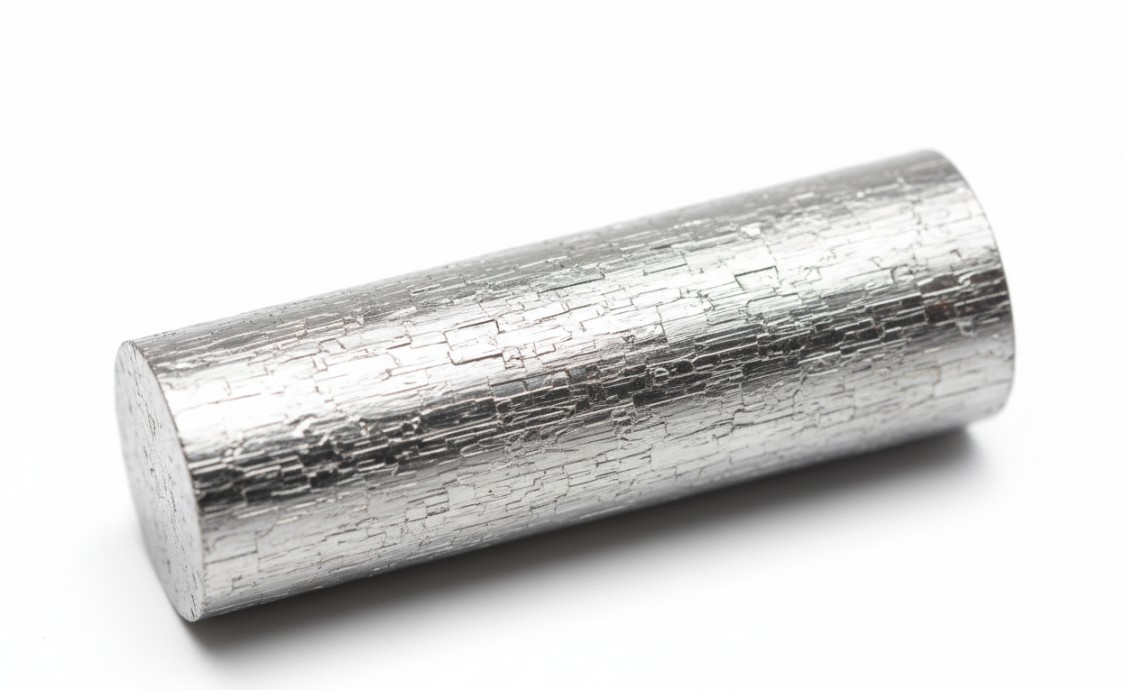 Figure 2: Polycrystalline bismuth telluride ingot produced by zone melting technique
Mid-Temperature Thermoelectric Materials
For applications in the 400-800°C range—encompassing automotive exhaust heat recovery, industrial furnace cogeneration, and distributed power generation—several material systems have demonstrated exceptional performance. Lead telluride (PbTe), despite its toxicity concerns in consumer applications, remains the benchmark mid-temperature material for industrial and military thermoelectric generators, achieving ZT values up to 1.8 at 700-800 K through resonant thallium doping and nanostructuring strategies that reduce lattice thermal conductivity without compromising carrier mobility.
Filled skutterudites, represented by the general formula MₙCo₄Sb₁₂ where M is a filler atom such as Ce, La, Yb, or Ba, represent another class of high-performance mid-temperature materials. The distinctive cage-like crystal structure of skutterudites provides a natural framework for the phonon-glass electron-crystal (PGEC) concept, wherein heavy filler atoms rattle within oversized structural cages, strongly scattering heat-carrying phonons while preserving excellent electronic transport through the Co-Sb network. Optimized filled skutterudites routinely achieve ZT values of 1.4-1.7 at 650-850 K, making them prime candidates for next-generation automotive thermoelectric generators.
- PbTe-based alloys: ZT up to 1.8 at 700-800 K for industrial waste heat recovery
- Filled skutterudites (Ce/La/Yb)ₙCo₄Sb₁₂: ZT 1.4-1.7 at 650-850 K, PGEC concept
- TAGS ((GeTe)₀.₈(AgSbTe₂)₀.₂): ZT ~ 1.3 at 700 K, Pb-free alternative
- Half-Heusler compounds (ZrNiSn, TiCoSb): ZT 1.0-1.2 at 700-900 K, excellent mechanical properties
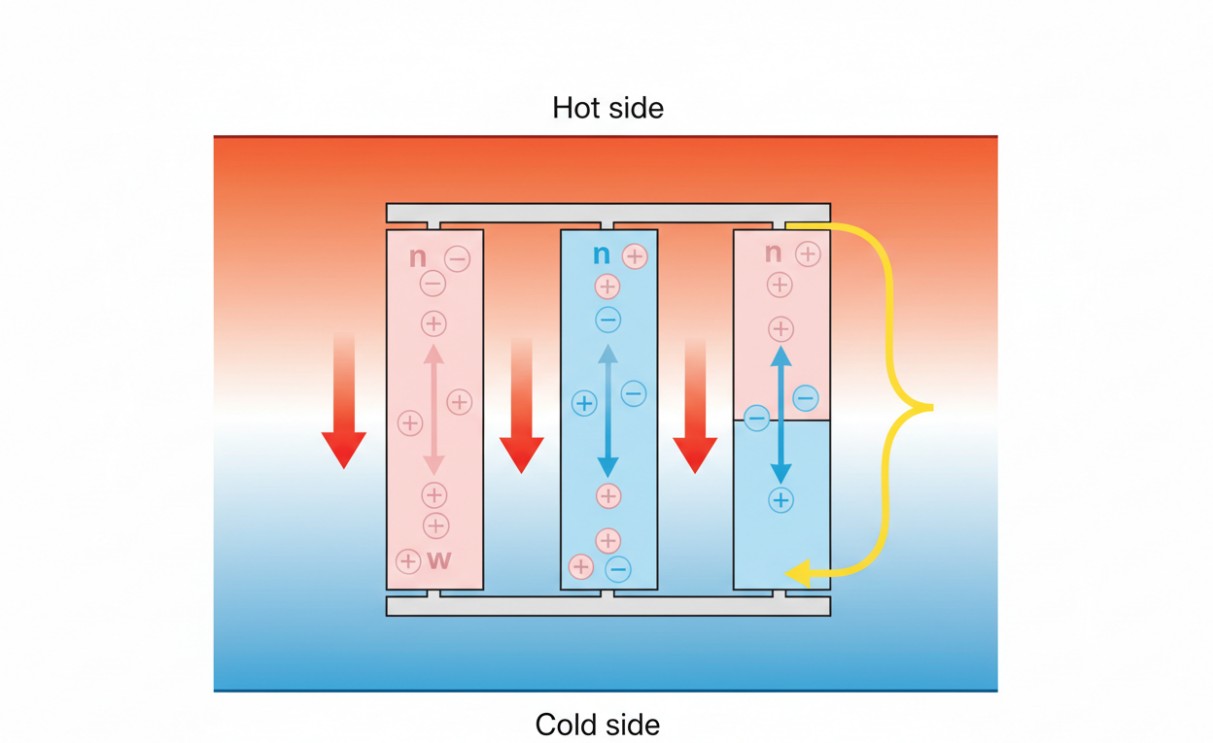 Figure 3: Operating principle of a thermoelectric device showing thermal and electrical flows
High-Temperature Thermoelectric Materials
Silicon-germanium (SiGe) alloys have served as the workhorse material for high-temperature thermoelectric applications since the 1970s, most notably powering radioisotope thermoelectric generators (RTGs) aboard deep-space missions including Voyager, Cassini, and the Mars Curiosity rover. The exceptional thermal stability of SiGe alloys up to 1100°C, combined with their mechanical robustness and radiation tolerance, makes them uniquely suited for harsh environments where no alternative material can survive. Modern nanostructured SiGe composites have pushed ZT values from the traditional 0.5-0.6 of bulk alloys to over 1.0 at 1100 K through phonon scattering at nanoscale precipitates and grain boundaries.
Magnesium silicide (Mg₂Si) and its solid solutions with Mg₂Sn have attracted intense research interest as environmentally friendly, earth-abundant alternatives to PbTe for mid-to-high temperature applications. These materials offer low toxicity, low density, and raw material costs approximately one-tenth those of tellurium-based compounds. Recent advances in doping strategies and nanostructuring have raised the ZT of Mg₂Si-based materials to 1.3-1.5 at 800-900 K, bringing them within striking distance of commercial viability for automotive and industrial waste heat recovery systems.
- SiGe alloys: ZT ~ 1.0 at 1100 K, NASA-qualified for space missions
- Mg₂Si-Mg₂Sn solid solutions: ZT 1.3-1.5 at 800-900 K, Pb-free and low-cost
- β-FeSi₂: ZT ~ 0.2-0.3, but extremely abundant and oxidation-resistant to 1000°C
- Oxide thermoelectrics (CaMnO₃, NaCo₂O₄): air-stable to 1000°C for harsh oxidizing environments
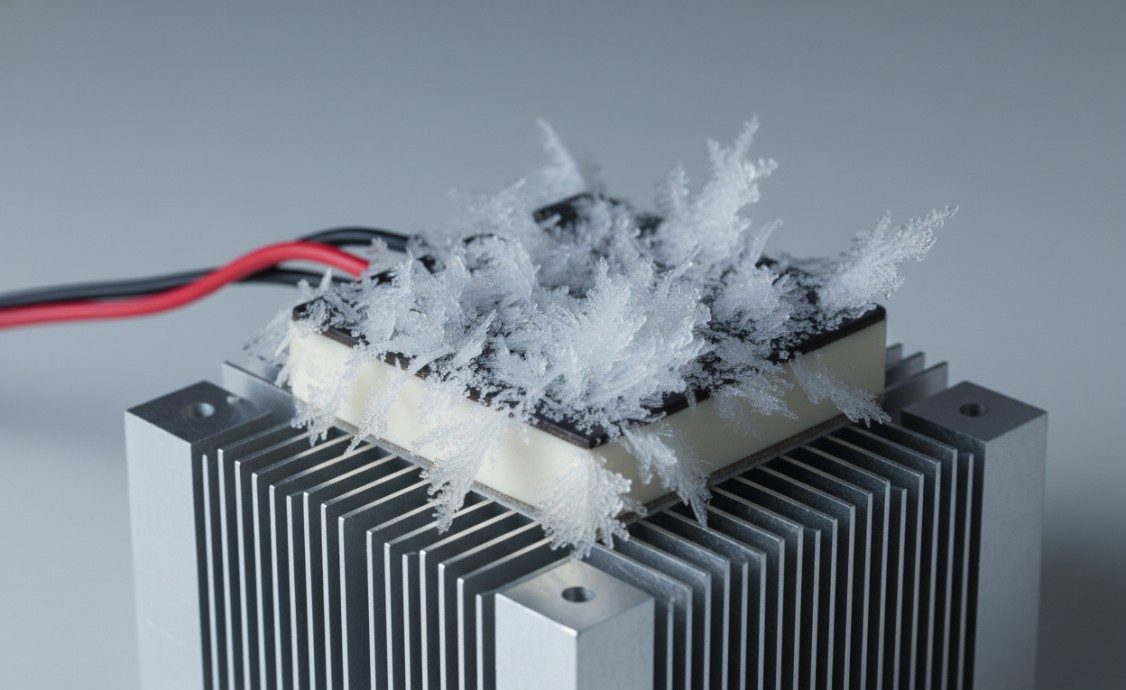 Figure 4: Peltier cooling device demonstrating active refrigeration effect
Applications of Thermoelectric Materials
The unique capability of thermoelectric materials to convert heat directly into electricity—and vice versa—without mechanical components opens diverse application spaces spanning energy harvesting, precision thermal management, and sensing. In the automotive sector, thermoelectric generators mounted on exhaust systems can recover 3-5% of otherwise wasted fuel energy, translating to meaningful fuel economy improvements for heavy-duty trucks and passenger vehicles alike. Global automotive thermoelectric module sales are projected to exceed $1.2 billion by 2030 as emission regulations tighten worldwide.
Peltier coolers based on Bi₂Te₃ modules find ubiquitous use in electronics thermal management, photonic device stabilization, portable refrigeration, and medical specimen transport. Unlike vapor-compression refrigeration, thermoelectric coolers offer precise temperature control (±0.1°C), solid-state reliability with no refrigerants, and the unique ability to heat as well as cool by reversing current direction. These attributes make them indispensable for applications ranging from DNA sequencers and infrared detector arrays to wine cabinets and laser diode packages.
- Automotive waste heat recovery: exhaust gas TEGs for fuel efficiency improvement
- Industrial cogeneration: capturing waste heat from furnaces, kilns, and smelters
- Precision thermal management: photonic devices, laser diodes, IR detectors
- Aerospace RTGs: deep-space missions, lunar surface power, planetary probes
- Medical and laboratory: portable vaccine coolers, PCR thermal cycling, specimen transport
- Wearable electronics: body-heat-powered sensors and communication devices
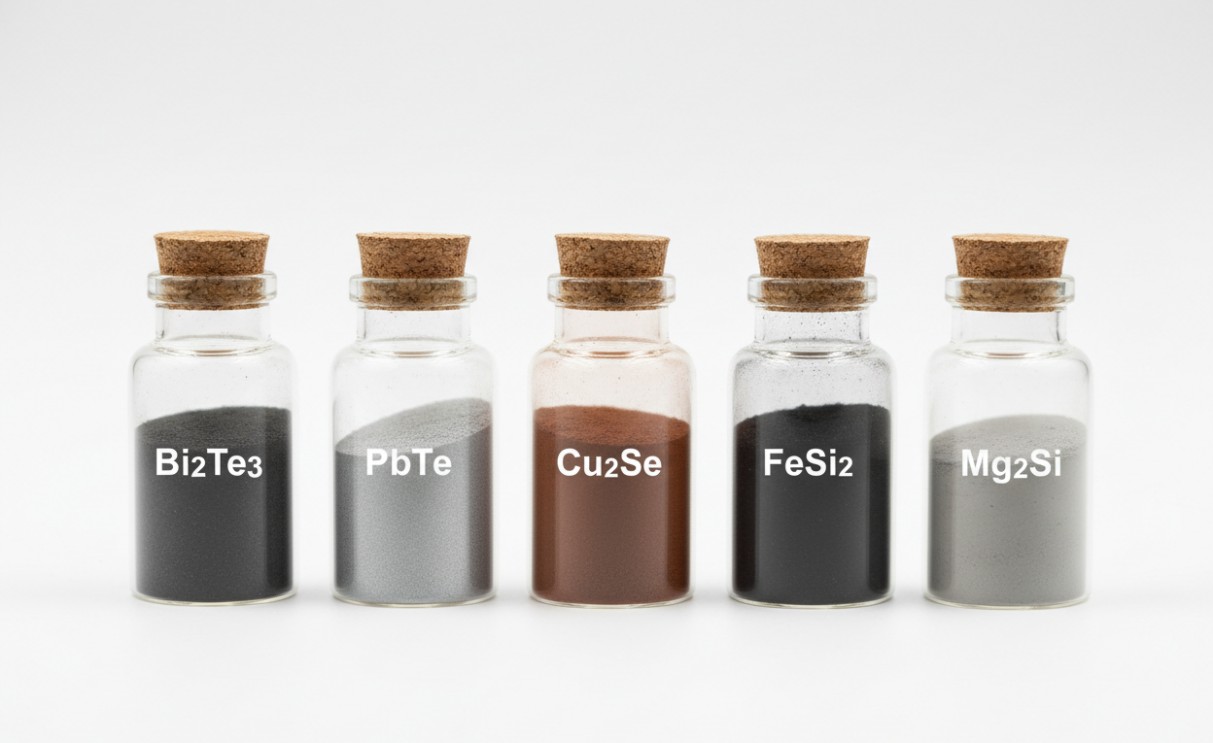 Figure 5: Collection of thermoelectric material powders for research and device fabrication
Synthesis Methods and Quality Assurance
Our thermoelectric materials are synthesized through carefully controlled processes selected to optimize the target performance metrics for each application. High-purity elemental starting materials (5N-6N purity) are loaded into carbon-coated quartz ampoules and sealed under high vacuum (10⁻⁵ Torr) before melting in rocking furnaces to ensure compositional homogeneity. For materials requiring nanostructuring, mechanical alloying in planetary ball mills under controlled atmosphere produces precursor powders with grain sizes in the 50-200 nm range, which are subsequently consolidated by spark plasma sintering at optimized temperatures and pressures to achieve >98% theoretical density while retaining nanoscale microstructures.
Every batch undergoes comprehensive characterization to verify thermoelectric performance and reproducibility. Room-temperature Hall effect measurements determine carrier concentration and mobility; temperature-dependent electrical resistivity and Seebeck coefficient measurements from 80-1100 K map the full operational envelope; and laser flash analysis quantifies thermal diffusivity for accurate ZT calculation. We additionally perform X-ray diffraction for phase purity verification, scanning electron microscopy for microstructural analysis, and inductively coupled plasma mass spectrometry (ICP-MS) for compositional confirmation. A certificate of analysis accompanies every shipment, documenting all measured transport properties.
Customization and Special Requirements
We recognize that thermoelectric device development often requires materials with precisely tailored properties that differ from standard catalog offerings. Our technical team welcomes inquiries for custom compositions, including non-stoichiometric formulations, co-doped variants, and ternary or quaternary alloys designed to shift the peak ZT temperature or optimize specific transport parameters. We also support research-scale orders ranging from gram quantities for preliminary screening to kilogram batches for module prototyping.
For device fabricators, we offer value-added processing services including dicing to custom dimensions, metallization with diffusion barrier layers (typically Ni/Au or Ti/Ni/Au), and assembly into unicouple or module configurations. Our engineering team can assist with leg geometry optimization, thermal interface material selection, and module-level performance modeling to accelerate your product development cycle. Contact our applications engineering group to discuss your specific thermoelectric material requirements.
| Catalog Number | Product Name | Order | Quantity |
|---|---|---|---|
| THEM-0001 | (BiSb)2Te3 Thermoelectric Material |
-
+
|
|
| THEM-0002 | SnSe Thermoelectric Material |
-
+
|
|
| THEM-0003 | PbTe Thermoelectric Material |
-
+
|
|
| THEM-0004 | CdSb Thermoelectric Material |
-
+
|
For Research or Industrial Raw Materials, Not For Personal Medical Use!