

Services
At Eata Nanomaterials, we transform complex material concepts into reproducible, high-performance nanosystems. Our integrated research pipeline covers every critical stage — from molecular-level synthesis and precision surface engineering to comprehensive physicochemical characterization and application-specific prototyping. Whether your project targets drug delivery platforms, energy storage breakthroughs, or quantum-enabled devices, our interdisciplinary team brings the technical depth and instrumental resources to move your ideas from hypothesis to peer-reviewed reality.
Nanomaterial Synthesis & Fabrication Services
Creating nanomaterials with precisely tuned properties demands mastery across multiple fabrication paradigms. Our synthesis capabilities bridge both top-down and bottom-up methodologies, enabling us to produce metallic nanoparticles, metal oxides, quantum dots, carbon nanostructures, and polymeric nanocarriers with tight control over size distribution, crystallinity, and phase purity.
 Figure 1: Advanced nanomaterial synthesis laboratory equipped with CVD systems and precision reaction vessels
Bottom-Up Methods We Employ:
- Sol-Gel Processing: Low-temperature wet chemistry producing highly uniform metal oxide nanoparticles and porous silica structures with tunable pore geometries.
- Chemical Vapor Deposition (CVD): Scalable thin-film and nanowire growth for carbon nanotubes, graphene, and semiconductor nanostructures with excellent crystalline quality.
- Colloidal Synthesis: Hot-injection and heat-up methods for monodisperse quantum dots and plasmonic nanoparticles with narrow size distributions (PDI < 0.1).
- Hydrothermal & Solvothermal: High-pressure crystallization routes for nanorods, nanosheets, and complex oxide morphologies inaccessible through ambient methods.
- Green Synthesis: Biogenic reduction using plant extracts or microbial cultures for eco-friendly nanoparticle production without hazardous reductants.
Top-Down Capabilities:
For applications requiring bulk-derived nanostructures, we utilize ball milling for mechanical attrition of metals and alloys into nanocrystalline powders, as well as laser ablation for generating ligand-free noble metal nanoparticles directly from solid targets in aqueous or organic media. Electrochemical etching and sputtering round out our fabrication toolkit for producing nanoscale features on chip-compatible substrates.
Nanomaterial Portfolio Overview
| Material Class | Examples | Key Properties |
| Metallic Nanoparticles | Au, Ag, Pt, Cu, Fe | Plasmonic, catalytic, magnetic, antimicrobial |
| Metal Oxides | TiO2, ZnO, Fe3O4, SiO2 | Semiconducting, photocatalytic, superparamagnetic |
| Quantum Dots | CdSe, CdTe, InP, perovskite | Size-tunable emission, narrow bandwidth |
| Carbon Nanostructures | CNTs, graphene, CQDs | High conductivity, mechanical strength, fluorescence |
| Polymeric Nanoparticles | PLGA, PCL, chitosan, PEG-PLA | Biodegradable, tunable degradation, biocompatible |
| Lipid Nanoparticles | Liposomes, SLNs, niosomes | Membrane-mimetic, high drug loading |
Nanomaterial Surface Modification & Functionalization Services
Raw nanoparticles rarely meet the performance requirements of advanced applications. Surface functionalization bridges this gap — enhancing colloidal stability, biocompatibility, targeting specificity, and responsive behavior. Our conjugation chemistry team has developed robust protocols for attaching diverse ligand classes to virtually any nanomaterial core.
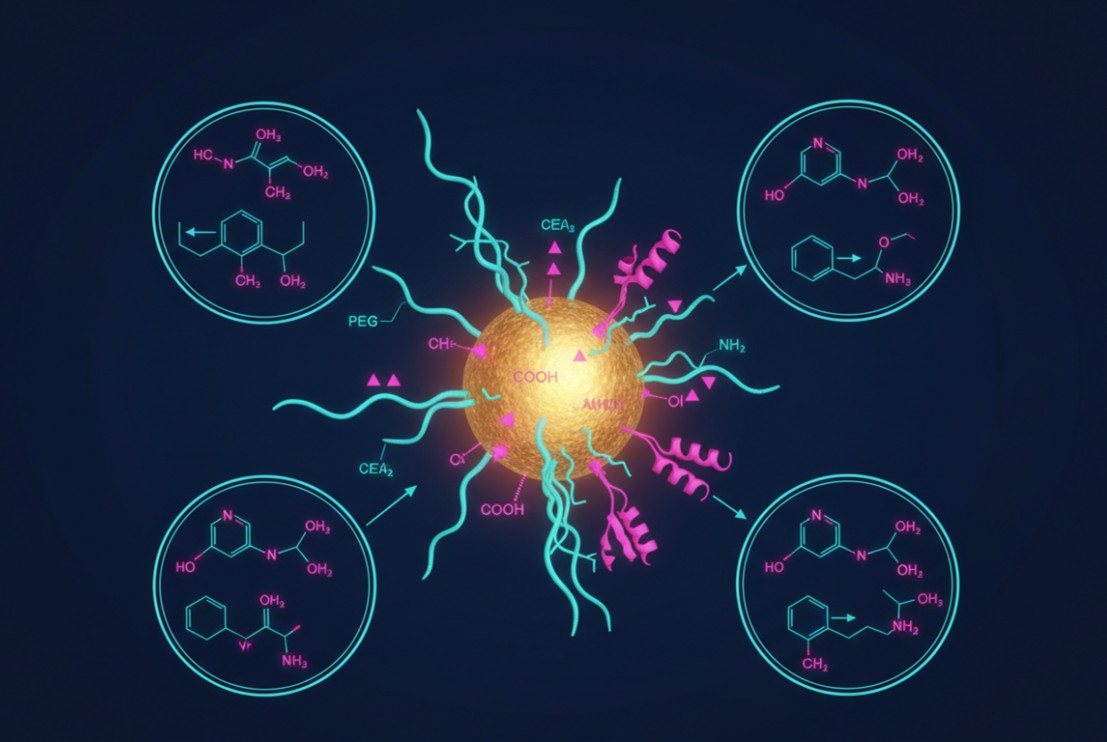 Figure 2: Nanoparticle surface functionalization with PEG, targeting ligands, and fluorescent markers
Functionalization Strategies:
- PEGylation: Grafting polyethylene glycol (PEG) chains (1-20 kDa, linear or branched) to achieve stealth characteristics, prolong circulation half-life, and minimize immunogenicity for in vivo studies.
- Biomolecular Conjugation: Site-specific attachment of antibodies, peptides, proteins, DNA/RNA oligonucleotides, and aptamers using EDC/NHS, thiol-maleimide, or bio-orthogonal click chemistry (azide-alkyne cycloaddition).
- Small Molecule Functionalization: Introduction of carboxyl, amine, thiol, hydroxyl, or aldehyde groups to create reactive handles for secondary coupling reactions.
- Stimuli-Responsive Coating: Deposition of pH-sensitive, thermo-responsive, or enzyme-cleavable polymer shells enabling controlled payload release under defined pathological or environmental triggers.
- Lipid & Zwitterionic Coatings: Formation of biomimetic lipid bilayers or superhydrophilic zwitterionic surfaces to minimize protein adsorption and enhance biocompatibility.
Each functionalization campaign includes rigorous validation of conjugation efficiency, surface density quantification, and stability assessment under physiologically relevant conditions. We support iterative optimization to achieve the precise ligand density and orientation your application demands.
Nanomaterial Characterization & Analysis Services
Comprehensive characterization forms the backbone of credible nanomaterial research. Our analytical facility houses a complementary suite of state-of-the-art instruments capable of resolving nanoscale features across physical, chemical, and structural dimensions. We deliver publication-ready datasets with detailed interpretation — whether you need routine quality control or deep mechanistic insights.
 Figure 3: State-of-the-art nanomaterial characterization laboratory featuring TEM, DLS, and advanced analytical platforms
Analytical Capabilities & Deliverables
| Parameter | Techniques | Deliverables |
| Size & Distribution | DLS, NTA, Laser Diffraction | Hydrodynamic diameter, PDI, concentration |
| Morphology | TEM, SEM, AFM | Shape, aspect ratio, aggregation state |
| Surface Charge | Electrophoretic Light Scattering | Zeta potential, stability prediction |
| Structure | XRD, Raman, FTIR, SAED | Crystallinity, phase ID, functional groups |
| Composition | EDS, ICP-MS, XPS | Elemental mapping, purity, surface chemistry |
| Thermal Properties | TGA, DSC | Degradation temp, phase transitions |
| Optical/Magnetic | UV-Vis-NIR, VSM, Fluorescence | Absorption spectra, magnetization curves |
Beyond routine measurements, we offer accelerated stability testing under ICH guidelines, batch-to-batch comparability studies, and custom method development for novel nanomaterial architectures. All data packages include raw instrument files, processed results, and expert interpretation suitable for peer-reviewed publication or technical documentation.
Nanomaterial Application Development Services
Translating well-characterized nanomaterials into functional prototypes represents the critical final step toward real-world impact. Our application development team works at the intersection of materials science, biology, and engineering to build proof-of-concept systems that demonstrate measurable performance in your target use case.
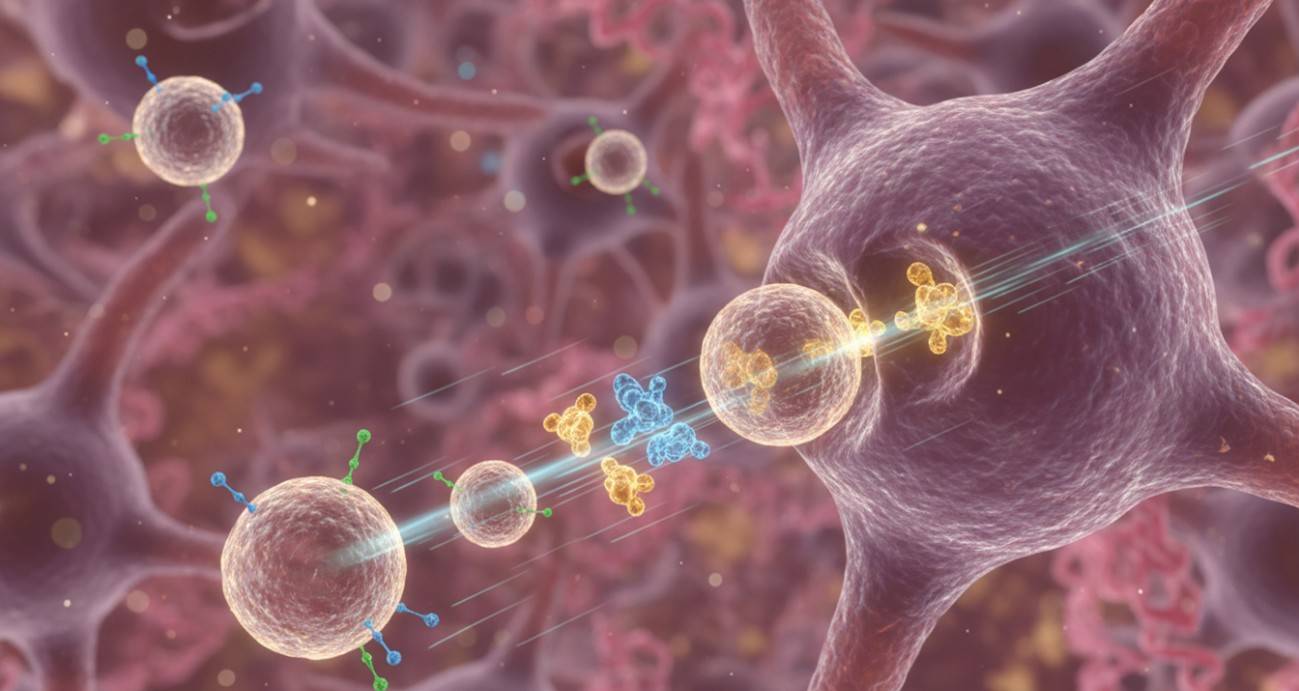 Figure 4: Lipid nanoparticles crossing cellular membranes for targeted therapeutic delivery
Active Research Domains:
- Nanomedicine & Drug Delivery: Development of liposomes, polymeric micelles, solid lipid nanoparticles, and inorganic carriers for small molecules, proteins, and nucleic acids — with optimization for loading efficiency, release kinetics, and cellular uptake.
- Energy Materials: Design of nanostructured electrodes, solid-state electrolytes, and catalyst supports for next-generation batteries, fuel cells, and photoelectrochemical devices.
- Sensing & Diagnostics: Fabrication of plasmonic biosensors, quantum dot-based assays, and electrochemical nanoprobes with tailored selectivity and detection limits.
- Photonics & Electronics: Synthesis and integration of quantum dots, perovskite nanocrystals, and 2D materials for light-emitting devices, photodetectors, and flexible electronics.
Every application development project follows a structured workflow: initial consultation to define success criteria, literature-informed experimental design, iterative prototype fabrication with analytical feedback loops, and comprehensive reporting with recommendations for next-phase scale-up or in vivo translation.
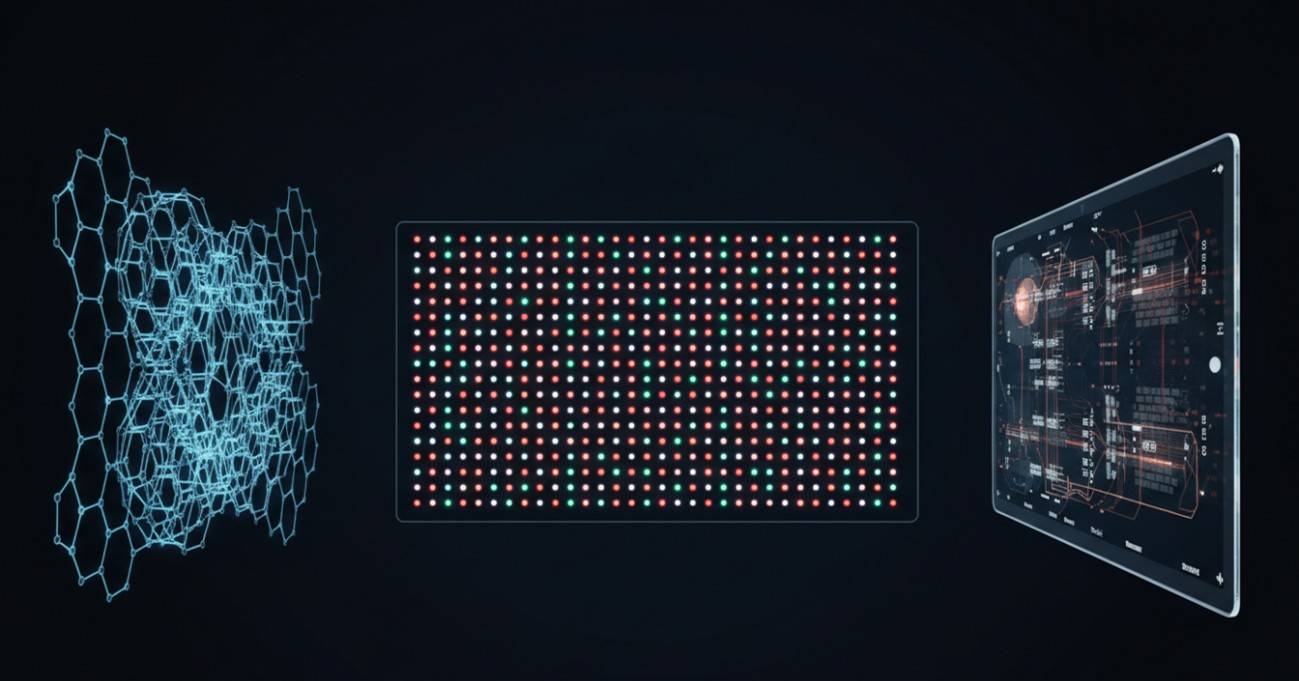 Figure 5: Quantum dot arrays, carbon nanotube structures, and nanoelectronic device prototypes
What Sets Our Research Services Apart
Several factors distinguish Eata Nanomaterials as a preferred research partner for academic and industry collaborators:
- Integrated Pipeline —Synthesis, modification, characterization, and application testing under one roof eliminates inter-lab transfer delays and ensures continuity.
- Publication-Grade Data —All results undergo rigorous quality review and are delivered in formats ready for peer-reviewed journals — including high-resolution figures and detailed methods sections.
- Custom Protocol Development —When off-the-shelf methods fall short, we design novel synthetic routes and analytical workflows tailored to your unique material system.
- Collaborative Mindset —Regular progress updates, open data sharing, and direct scientist-to-scientist communication keep your project aligned with evolving research goals.
Ready to Advance Your Nanomaterial Research?
Share your project requirements with our team and receive a tailored research proposal with clear milestones, deliverables, and scientific approach.