

Surface Functionalization and Ligand Exchange Services
The surface of a nanoparticle defines how it interacts with its environment. Bare nanoparticle surfaces frequently suffer from aggregation, nonspecific binding, and limited compatibility with biological or chemical systems. Through strategic functionalization and ligand exchange, these challenges transform into opportunities for precise molecular engineering.
At Eata Nanomaterials, we specialize in modifying nanoparticle surfaces with meticulously selected chemical groups, polymer coatings, and biological recognition elements. Our capabilities span metallic, oxide, semiconductor, polymeric, and carbon-based nanomaterials, accommodating particle sizes from one nanometer to one micron across spherical, rod-shaped, plate-like, and porous morphologies.
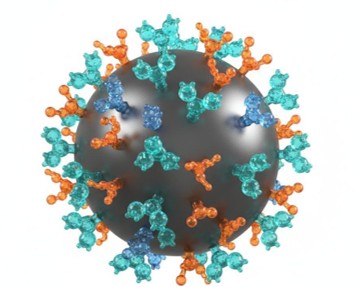 Figure 1: A surface-functionalized nanoparticle decorated with multicolored molecular ligands enabling diverse chemical reactivity.
Small Molecule and Functional Group Modification
Introducing precisely defined reactive groups onto nanoparticle surfaces creates stable anchoring points for subsequent conjugation chemistry. We routinely install the following functional moieties across diverse nanomaterial platforms:
- Carboxyl groups (-COOH) for amide coupling via EDC/NHS chemistry, enabling protein and antibody attachment
- Amino groups (-NH2) for reactions with activated esters, isothiocyanates, and aldehydes
- Thiol groups (-SH) for gold-thiol and maleimide-thiol conjugation, disulfide formation
- Hydroxyl groups (-OH) for silanization, esterification, and click chemistry applications
- Aldehyde groups (-CHO) for reductive amination with primary amines on biomolecules
- Azide and alkyne groups for copper-catalyzed or strain-promoted click bioconjugation
These modifications are introduced through multiple chemistries depending on the substrate. Silanization with organofunctional alkoxysilanes serves as our primary route for oxide surfaces including silica, iron oxide, and titania. Thiol chemistry dominates for gold and silver surfaces. Carboxylation via oxidation applies to carbon-based materials, while ligand insertion strategies suit lipid and polymeric particles.
Polymer-Based Surface Ligands
Polymer coatings transform nanoparticle interfacial behavior, providing steric stabilization, stealth properties, and environmental responsiveness. We offer controlled modification with polymer ligands of defined molecular weight and architecture:
Polyethylene glycol (PEG): The gold standard for conferring stealth characteristics. PEGylation dramatically reduces protein adsorption, retards immune recognition, and prolongs circulation time. We offer linear and branched PEGs with terminal functional groups for further conjugation.
Polyvinylpyrrolidone (PVP) and polyacrylic acid (PAA): Synthetic polymer coatings providing excellent colloidal stability in polar media. PVP-coated particles resist salt-induced aggregation, while PAA introduces dense carboxyl functionality for subsequent biomolecule coupling.
Stimuli-responsive polymer ligands: Smart coatings that respond to temperature, pH, redox potential, or enzymatic triggers. These enable controlled payload release, targeted activation, and switchable surface properties for advanced drug delivery and sensing platforms.
 Figure 2: A PEGylated nanoparticle with coiled polyethylene glycol chains forming a protective hydration shell.
Ligand Exchange Services
Ligand exchange replaces native surface molecules with functional alternatives, a critical process for transforming as-synthesized hydrophobic nanoparticles into water-dispersible, biocompatible platforms. Our expertise covers:
- Hydrophobic-to-hydrophilic exchange on quantum dots, replacing oleic acid/oleylamine with thiolated or phosphonate ligands for aqueous dispersion
- DMSA (meso-2,3-dimercaptosuccinic acid) ligand exchange on magnetic iron oxide, yielding carboxyl-terminated, highly stable, biocompatible particles
- Thiol-PEG exchange on gold and silver nanoparticles, providing tunable PEG chain lengths and terminal functional groups
- Bidentate and multidentate polymer ligand exchange, offering superior binding affinity and kinetic stability compared to monodentate thiol ligands
- Silica shell growth via Stober method or reverse microemulsion, completely encapsulating the core particle with a chemically versatile silica surface
Successful ligand exchange demands careful matching of ligand affinity, solvent compatibility, and kinetic control. We optimize exchange conditions through systematic screening, monitoring completeness via NMR, FTIR, and zeta potential shifts.
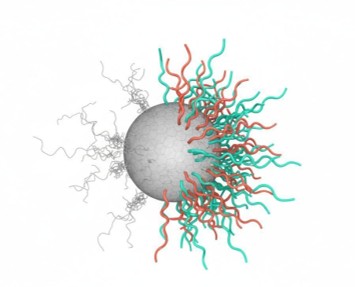 Figure 3: Illustration of ligand exchange showing replacement of original surface ligands with new functional polymer chains.
Biomacromolecule Conjugation
Building upon functionalized surfaces, we covalently immobilize biological recognition elements to create targeted, biospecific nanomaterial interfaces. Our conjugation portfolio includes:
- Antibodies and antibody fragments (Fab, scFv) for targeted diagnostics, immunolabeling, and affinity purification
- Proteins and enzymes retaining catalytic activity when surface-immobilized for biocatalysis and biosensing
- Functional peptides including cell-penetrating peptides, receptor-targeting sequences, and self-assembling motifs
- DNA, RNA, and oligonucleotides for gene delivery, hybridization assays, and DNA-directed assembly
Each bioconjugation project receives individualized optimization. We carefully select coupling chemistry, buffer conditions, and stoichiometry to preserve biomolecule activity while maximizing surface coverage.
Targeting and Recognition Ligand Installation
For applications demanding selective molecular recognition, we install specific targeting ligands that direct nanoparticles toward defined biological structures. Available targeting functionalities include:
| Ligand Category | Examples | Target Receptor / Application |
| Small-molecule ligands | Folic acid, galactose, biotin | FR-alpha, ASGPR, streptavidin |
| Protein ligands | Transferrin, RGD peptide | Transferrin receptor, integrins |
| Aptamers | SELEX-derived DNA/RNA sequences | Cell surface markers, cytokines |
| Antibodies | Monoclonal, polyclonal, fragments | Tumor antigens, immune markers |
| Carbohydrates | Mannose, lactose, sialic acid | Lectins, selectins, immune cells |
Functionalization Capabilities by Nanoparticle Type
Our surface modification services accommodate a comprehensive range of nanomaterial classes. The following overview maps available functionalization strategies to specific particle types:
| Nanoparticle Type | Functionalization Strategies We Offer |
| Gold Nanoparticles | Thiol-PEG modification, antibody/peptide conjugation, silica coating, click chemistry |
| Silver Nanoparticles | Thiol/PEG stabilization, biomolecule coating, antimicrobial functionalization |
| Magnetic Nanoparticles | Silica/polymer coating, carboxyl/amino functionalization, DMSA ligand exchange |
| Silica Nanoparticles | Silanization (amino, carboxyl), stimuli-responsive molecular gates, dye doping |
| Quantum Dots | Ligand exchange, amphiphilic polymer coating, silica encapsulation, thiol functionalization |
| Carbon Nanotubes / Graphene | Carboxylation, pi-pi stacking modification, biomolecule adsorption, covalent grafting |
| Polymeric Particles | Terminal group functionalization, surface carboxyl/amino modification, lipid coating |
| Lipid Nanoparticles | Lipid insertion (DSPE-PEG), surface adsorption/conjugation, targeting ligand display |
 Figure 4: An array of surface-functionalized nanoparticle dispersions in various colors, each representing distinct chemical modifications.
Comprehensive Characterization and Quality Assurance
Verification of successful surface modification underpins every project. We employ a multi-technique analytical approach to confirm functionalization completeness, uniformity, and stability:
- Zeta potential analysis documents surface charge changes following modification, predicting colloidal stability (target |zeta| > 30 mV for stable dispersions)
- Dynamic light scattering (DLS) monitors hydrodynamic diameter shifts indicating coating thickness and aggregation state
- Fourier-transform infrared (FTIR) spectroscopy identifies characteristic vibrational modes of introduced functional groups
- X-ray photoelectron spectroscopy (XPS) provides quantitative elemental composition of surface modifications with nanometer-depth resolution
- Thermogravimetric analysis (TGA) determines grafting density and organic content of surface coatings
- UV-Vis spectroscopy tracks plasmonic or excitonic peak shifts confirming surface-environment changes
- Transmission electron microscopy (TEM) visualizes core-shell morphologies and coating uniformity
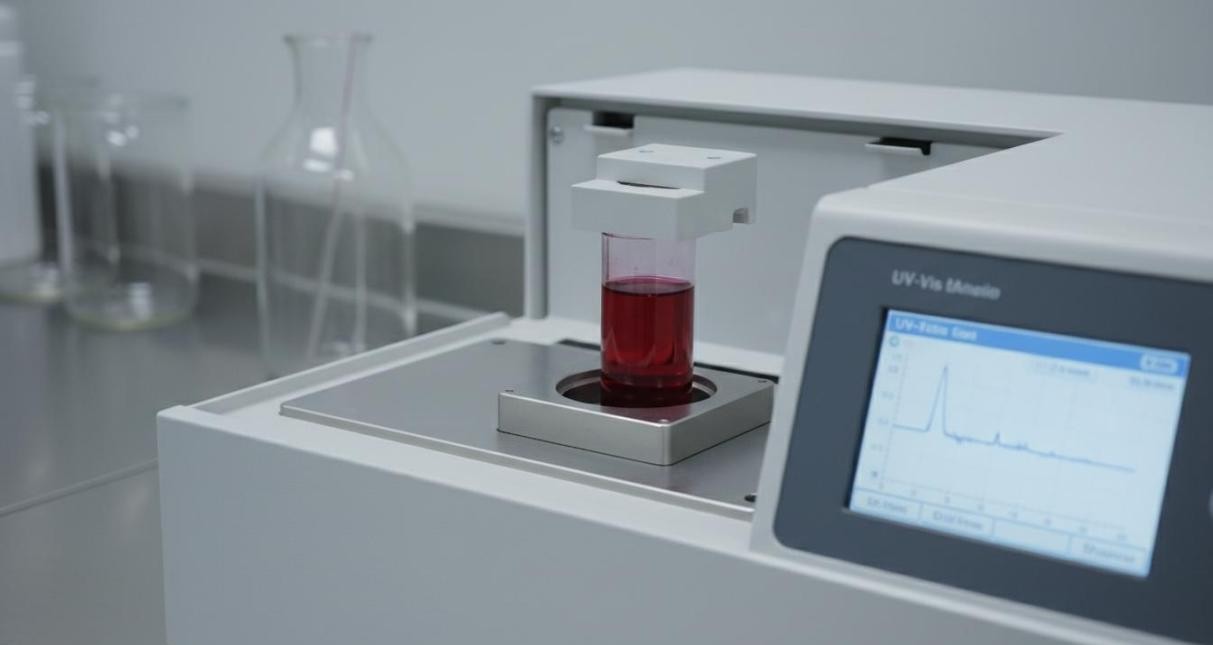 Figure 5: A UV-Vis spectrophotometer analyzing a gold nanoparticle colloid for plasmonic peak characterization.
Multifunctional and Composite Ligand Architectures
Complex research applications frequently demand multiple functionalities coexisting on a single nanoparticle surface. We engineer composite ligand architectures integrating targeting ligands with stealth polymers, signal molecules with biomacromolecules, or responsive elements with recognition modules. Through orthogonal coupling strategies, each ligand class is installed sequentially without compromising previously attached functionalities.
An exemplar multifunctional design might combine: PEG chains for stealth circulation, folic acid for tumor targeting, a near-infrared dye for imaging, and a therapeutic payload encapsulated within the core. Such modular construction enables cooperative functionality unattainable with single-ligand systems.
Collaborate with Eata Nanomaterials on Your Surface Modification Project
Whether you seek to convert hydrophobic nanoparticles into aqueous dispersions, install reactive handles for downstream bioconjugation, or engineer sophisticated multifunctional surfaces, our team possesses the chemical expertise and analytical infrastructure to realize your objectives.
Connect with our scientists to discuss your specific nanomaterial platform, desired surface chemistry, and intended application. We welcome projects ranging from exploratory proof-of-concept studies to ongoing research programs requiring reproducible batch production.