

Carbon Nanomaterial Oxidation and Derivatization Services
Carbon nanomaterials, encompassing graphene, carbon nanotubes, fullerenes, and carbon quantum dots, possess remarkable mechanical, electrical, and thermal properties. However, their hydrophobic graphitic surfaces and strong interparticle van der Waals interactions frequently limit processability and compatibility with polar solvents, polymers, and biological systems.
Oxidation and subsequent derivatization transform these pristine materials into versatile platforms brimming with reactive functional groups. At Eata Nanomaterials, we specialize in introducing oxygen-containing moieties and their subsequent chemical transformation, enabling researchers to tailor carbon nanomaterials for drug delivery, composite reinforcement, energy storage, catalysis, and sensing applications.
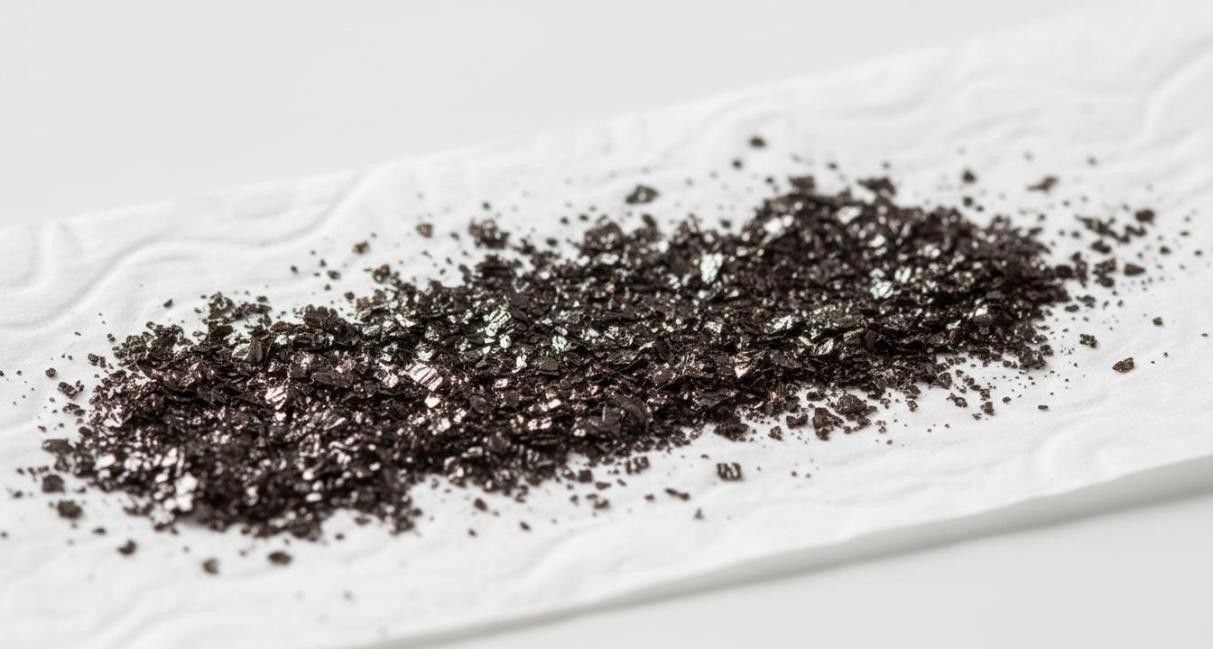 Figure 1: Graphene oxide powder prepared via modified Hummers oxidation, displaying the characteristic dark brown-black flaky morphology.
Graphene Oxide Synthesis via Hummers and Modified Methods
Graphene oxide serves as the primary gateway to graphene-based functional materials. Our oxidation protocols convert graphite into graphene oxide with well-controlled oxygen content and defect density, balancing processability against electronic property preservation.
The oxygenated functional groups introduced during oxidation include epoxide rings on the basal plane, hydroxyl groups decorating both surfaces, carbonyl groups, and carboxylic acids clustered primarily at sheet edges. This heterogeneous distribution of reactive sites enables orthogonal derivatization strategies targeting specific functional groups independently.
We offer several graphene oxide synthesis approaches:
- Classic Hummers method employing KMnO4 and NaNO3 in concentrated H2SO4, producing GO with moderate oxidation degree suitable for applications requiring retained conductivity
- Modified Hummers method excluding NaNO3 and increasing KMnO4 in a 9:1 H2SO4/H3PO4 mixture, yielding higher oxidation efficiency without toxic NOx gas generation
- Improved Hummers with pre-oxidation steps achieving greater interlayer expansion and higher single-layer exfoliation yield
- Iron-based green oxidation using K2FeO4 as oxidant, eliminating heavy metal contamination and enabling sulfuric acid recycling
- Ultrasonic-assisted oxidation accelerating oxidant diffusion and reducing reaction time from 12 hours to 3 hours with higher carboxylic acid enrichment at sheet edges
Each batch undergoes rigorous purification through HCl washing, centrifugation, and dialysis until neutral pH is achieved. The final GO product is characterized by XRD, FTIR, Raman spectroscopy, and TGA to confirm oxidation degree and structural integrity.
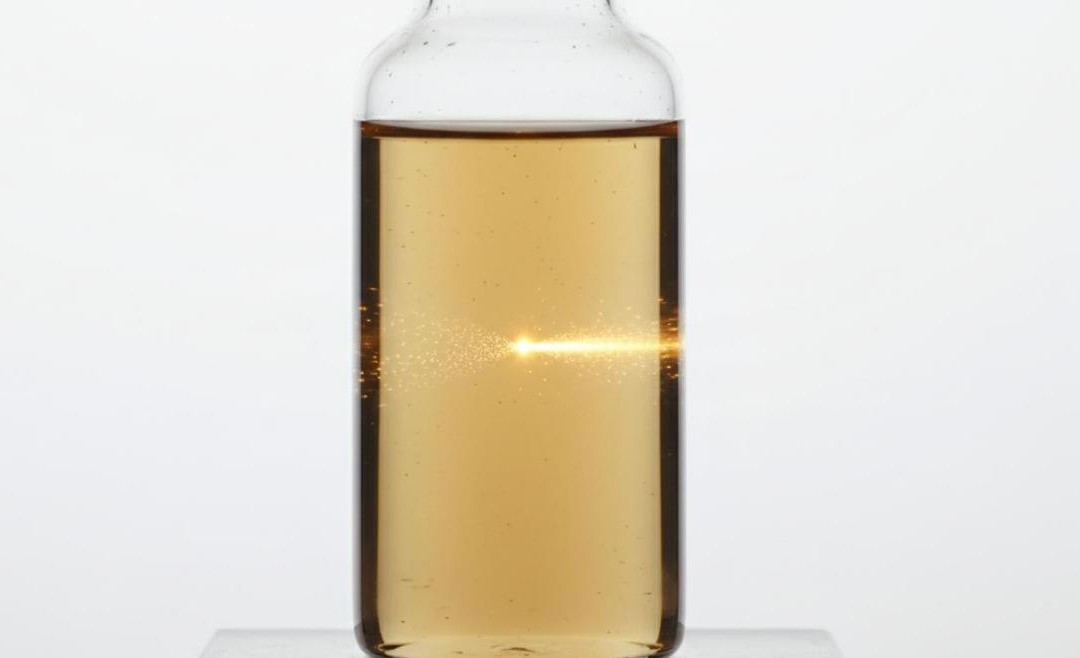 Figure 2: Aqueous graphene oxide dispersion exhibiting the characteristic brown-yellow color and Tyndall effect of colloidal GO sheets.
Carbon Nanotube Oxidation and Purification
Oxidative treatment of carbon nanotubes accomplishes dual objectives: purification by removing amorphous carbon and metallic catalyst residues, and functionalization by introducing carboxyl, hydroxyl, and carbonyl groups at defect sites and tube termini. These polar groups dramatically enhance aqueous dispersibility and provide anchor points for covalent derivatization.
Our carbon nanotube oxidation capabilities include:
- Wet chemical oxidation using HNO3, H2SO4/HNO3 mixture, KMnO4, (NH4)2S2O8, H2O2, or O3, each yielding distinct oxygen functional group distributions
- Controlled acid oxidation with treatment times from 30 minutes to 24 hours, balancing functional group density against structural damage to the graphitic sidewall
- Ultrasonic-assisted oxidation enhancing functional group yield while generating shortened, cut nanotubes with increased surface area for drug delivery applications
- Stirring-based mild oxidation preserving tubular integrity while introducing sufficient carboxyl and hydroxyl groups for stable aqueous dispersions lasting over 60 days
The distribution of oxygen-containing groups varies with oxidant identity. Aggressive oxidants such as HNO3 and KMnO4 generate higher carboxyl concentrations, while milder treatments with (NH4)2S2O8, H2O2, or O3 yield predominantly carbonyl and hydroxyl functionalities. We select the oxidant and conditions based on your target application and required group distribution.
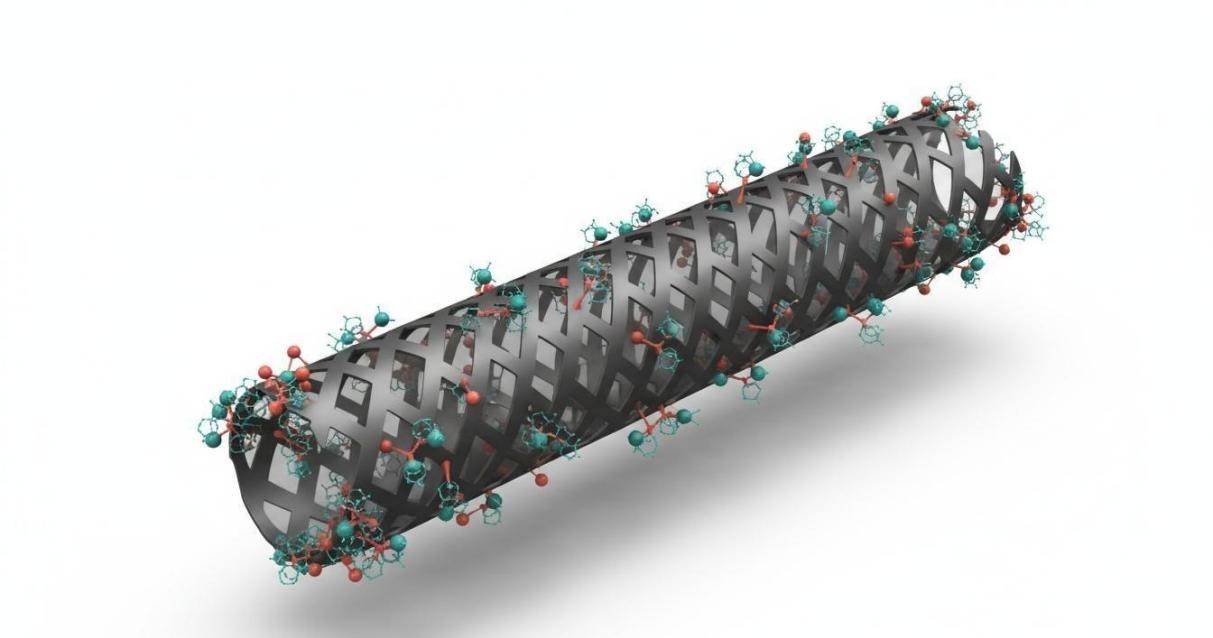 Figure 3: An oxidized multi-walled carbon nanotube with oxygen-containing functional groups decorating the surface and open tube ends.
Derivatization of Oxygenated Functional Groups
Once oxygen-containing groups populate the carbon nanomaterial surface, they serve as reactive handles for installing diverse functional molecules. Our derivatization services target each functional group with chemoselective reactions:
| Functional Group | Derivatization Reaction | Typical Reagents | Application |
| Epoxide | Ring opening by nucleophiles | Amines, thiols, hydrazine | Amine-functionalized GO for bioconjugation |
| Carboxyl | Amidation / Esterification | EDC/NHS, SOCl2, DCC | Antibody, protein, PEG attachment |
| Hydroxyl | Silanization / Etherification | APTES, alkyl halides | Surface coating, polymer grafting |
| Carboxyl | Diazonium coupling | Aryl diazonium salts | C-C bond for stable functionalization |
| C=C (basal) | Radical addition | Diazonium salts, azides | Direct sidewall functionalization |
Epoxide Ring Opening Functionalization
Epoxide groups distributed across the basal planes of graphene oxide represent highly reactive sites for nucleophilic attack. Ring-opening reactions proceed under mild conditions without compromising the structural integrity of the carbon backbone, making this our preferred route for installing sensitive biomolecules.
Amine nucleophiles, including aliphatic diamines, amino acids, peptides, and aminopolymers, attack epoxide carbons through nucleophilic addition, forming C-N bonds and generating new hydroxyl groups. The reaction proceeds in aqueous media at room temperature over 24-72 hours, with functionalization density controllable through amine concentration and reaction time.
Thiol-based nucleophiles similarly open epoxide rings, forming thioether linkages particularly valuable for chelating metal nanoparticles or creating sulfur-rich surfaces for catalytic applications. The cooperative effect between introduced nucleophiles and neighboring carboxyl groups at sheet edges often enhances catalytic performance beyond single-group functionalization.
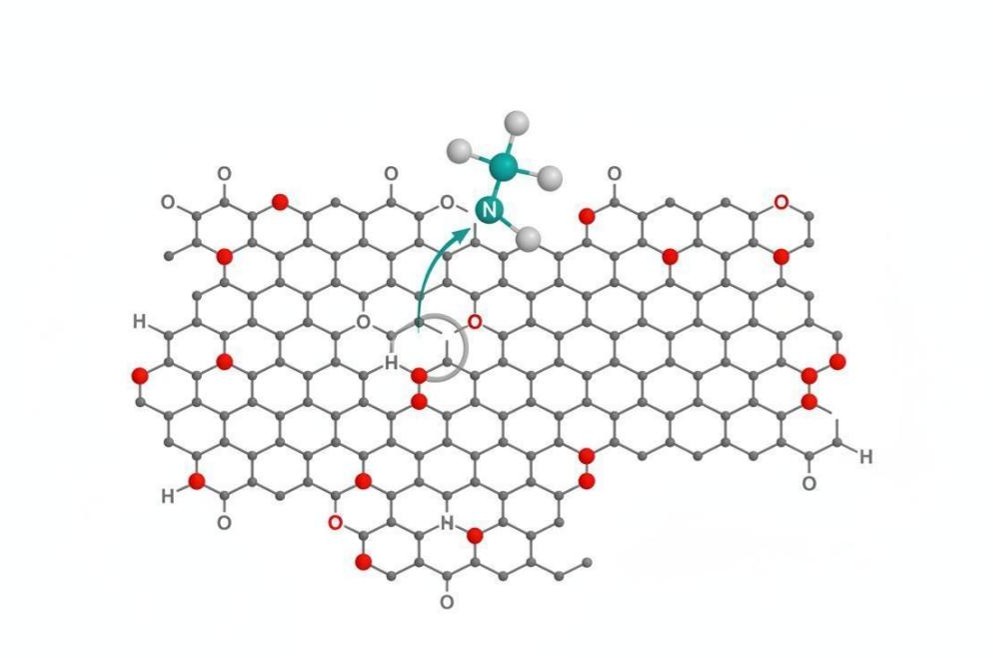 Figure 4: A graphene oxide sheet showing nucleophilic attack of an amine molecule on an epoxide ring, opening the ring and forming a C-N bond.
Carboxyl Activation and Amide Coupling
Carboxylic acid groups concentrated at graphene oxide edges and carbon nanotube openings are activated through well-established coupling chemistry for attachment of amine-bearing molecules. Our standard activation protocols include:
- EDC/NHS coupling forming sulfo-NHS ester intermediates that react with primary amines to create stable amide bonds under aqueous conditions
- Thionyl chloride (SOCl2) treatment converting carboxyls to acyl chlorides for reaction with alcohols or amines in anhydrous organic solvents
- Carbodiimide-free alternatives employing 2,4,6-trichloro-1,3,5-triazine (cyanuric chloride) activation for coupling under mild basic conditions
These carboxyl-based strategies enable attachment of polyethylene glycol chains for stealth properties, antibodies for targeting, fluorescent dyes for imaging, and therapeutic molecules for drug delivery.
Dual and Multi-Functionalization Strategies
Complex applications frequently require multiple distinct functionalities on a single carbon nanomaterial platform. We have developed orthogonal functionalization protocols that selectively address different oxygenated groups without cross-reactivity:
- Epoxide ring opening combined with carboxyl amidation, enabling simultaneous installation of targeting ligands via epoxides and imaging probes via carboxyls
- Epoxide ring opening combined with Williamson etherification of hydroxyl groups, producing dual-amine or amine-hydroxyl functionalized GO
- Michael addition on hydroxyl groups combined with epoxide ring opening for introducing different functional moieties under mild, heating-free conditions
Boc protecting group strategies allow sequential deprotection and derivatization, preserving previously installed functionalities during subsequent coupling steps.
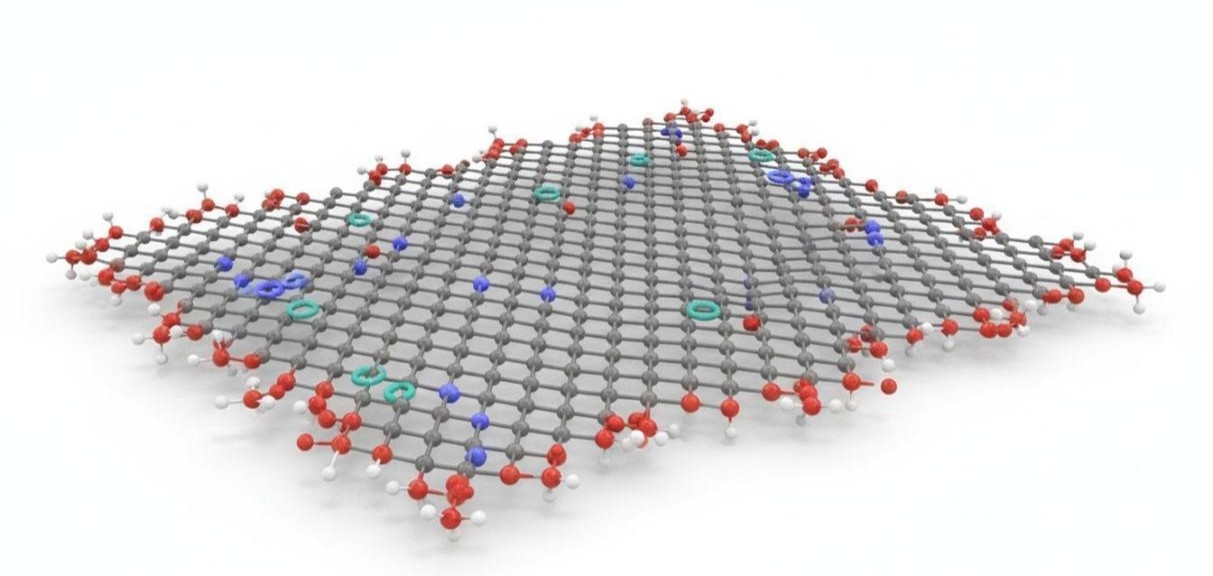 Figure 5: A multifunctionalized graphene oxide sheet displaying carboxyl groups at edges, hydroxyl groups on the surface, and epoxide rings on the basal plane.
Comprehensive Analytical Characterization
Every oxidized and derivatized carbon nanomaterial batch undergoes thorough analytical verification:
- X-ray diffraction measuring interlayer spacing expansion from 3.35 angstroms in graphite to 8-10 angstroms in GO, confirming oxidation and exfoliation
- Raman spectroscopy tracking the D/G intensity ratio as an indicator of defect density introduced during oxidation and functionalization
- Fourier-transform infrared spectroscopy identifying characteristic vibrational modes of C=O, C-O-C, O-H, and newly introduced functional groups
- X-ray photoelectron spectroscopy quantifying elemental composition, oxygen content, and chemical state of carbon and heteroatoms
- Thermogravimetric analysis determining functional group loading and thermal stability profiles under inert and oxidative atmospheres
- Atomic force microscopy and transmission electron microscopy visualizing sheet thickness, lateral dimensions, and nanotube structural integrity
- Dynamic light scattering and zeta potential assessing colloidal stability and surface charge of aqueous dispersions
Applications Across Research Domains
| Application | How Oxidation and Derivatization Enable |
| Drug delivery | Carboxyl/amine groups couple targeting ligands; epoxide opening loads therapeutic molecules; GO acts as drug carrier |
| Biosensing | Amide-coupled antibodies or aptamers on CNT/GO create recognition interfaces with antifouling PEG co-coating |
| Nanocomposites | Oxidized CNTs disperse uniformly in polymer matrices; covalent grafting improves interfacial adhesion |
| Catalysis | Metal nanoparticles anchor to carboxyl/hydroxyl groups; bifunctional GO shows cooperative catalytic effects |
| Energy storage | Functional groups on GO enhance ion intercalation and capacitance in supercapacitor electrodes |
| Corrosion protection | Functionalized GO dispersed in epoxy coatings creates barrier layers with exceptional corrosion resistance |
Begin Your Carbon Nanomaterial Functionalization Project
Whether you require graphene oxide with specific oxidation degrees, carbon nanotubes with tailored carboxyl densities, or complex multifunctional architectures combining targeting, imaging, and therapeutic elements, Eata Nanomaterials delivers precisely controlled oxidation and derivatization solutions backed by comprehensive analytical characterization.
Contact our technical team to discuss your carbon nanomaterial substrate, target functional groups, and application requirements. We provide customized protocols and detailed characterization reports with every project.