

Nanomaterial-Enhanced Lubricant and Grease Formulation Services
Friction accounts for approximately 23 percent of total global energy consumption, with an estimated economic impact exceeding 2 trillion dollars annually. In internal combustion engines alone, frictional losses in the piston ring-liner contact consume up to 7 percent of fuel energy. Bearings, gears, and transmissions in industrial machinery lose 20 to 30 percent of input power to friction and wear. Nanoparticle additives offer a transformative approach to addressing these losses by fundamentally altering the tribological behavior of lubricated contacts.
Eata Nanomaterials specializes in formulating lubricants and greases enhanced with two-dimensional nanomaterials including molybdenum disulfide, tungsten disulfide, graphene, hexagonal boron nitride, and MXene. Our formulations achieve friction coefficient reductions of 30 to 64 percent and wear reductions of 40 to 92 percent compared to base fluids alone, validated through standardized tribological testing. We work with mineral oils, synthetic base stocks, bio-based lubricants, and lithium-complex greases, tailoring nanomaterial selection, concentration, and surface modification to each application.
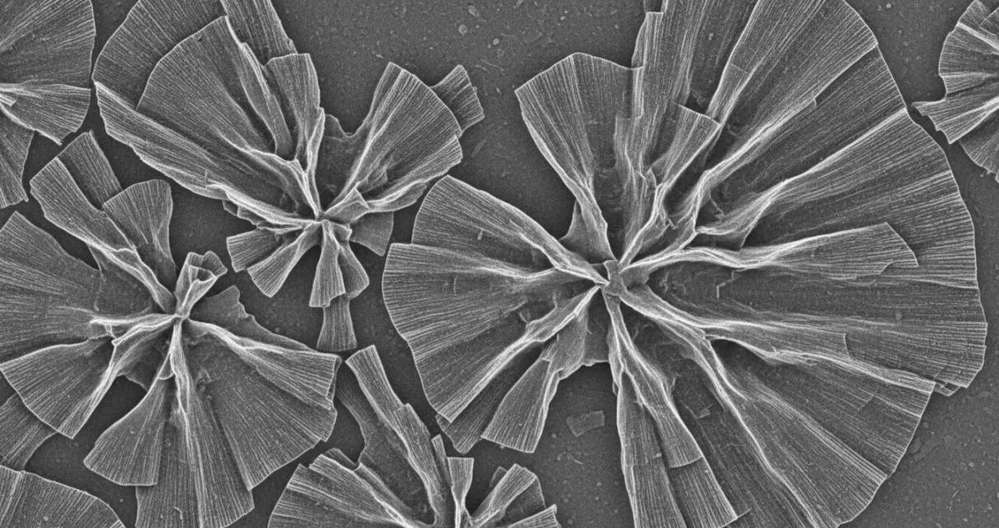 Figure 1: A scanning electron microscope image of flower-like MoS2 nanosheets showing their characteristic layered structure with stacked S-Mo-S atomic layers visible at the edges.
2D Nanomaterial Additive Platforms
The tribological performance of nanolubricants depends critically on the choice of nanomaterial, its surface chemistry, and its compatibility with the base fluid. Eata Nanomaterials offers a portfolio of engineered 2D nanomaterial additives, each optimized for specific lubrication regimes and contact conditions:
- Molybdenum disulfide nanosheets, the most extensively validated nanolubricant additive, exhibit weak van der Waals forces between S-Mo-S layers that enable easy shear under frictional stress. Our surface-modified MoS2 nanosheets dispersed in poly-alpha-olefin achieve friction coefficient reductions of approximately 53 percent and wear volume reductions of approximately 92 percent at just 1 weight percent loading. The lubrication mechanism involves exfoliation of nanosheets onto the friction surface, forming a protective tribofilm alongside tribochemical products such as iron sulfate and magnetite that enhance boundary lubrication
- Graphene and few-layer graphene from both mechanical exfoliation and chemical vapor deposition provide exceptionally strong, atomically thin lubricating films. In ethanol solution, graphene reduces steel wear by four orders of magnitude and friction coefficients by six times. When combined with MoS2 in base oil, graphene and MoS2 composites demonstrate synergistic lubrication effects that outperform either additive alone, attributed to graphene's physical barrier function complementing MoS2's tribochemical reactivity
- Tungsten disulfide micro-nano composites, created by coating nano-MoS2 onto activated micro-WS2, exploit the combined benefits of WS2's layered structure for physical isolation and nano-MoS2's high reactivity for tribofilm formation. This composite architecture reduces wear by 65.3 percent compared to micro-WS2 alone and by 46.4 percent compared to nano-MoS2 alone, demonstrating the value of hierarchical particle design
- Hexagonal boron nitride nanosheets provide an electrically insulating alternative to graphene and MoS2, offering excellent thermal stability and chemical inertness. BN nanosheets are particularly suited for applications where electrical conductivity must be avoided, such as in electric motor bearings and electrical switch contacts
- MXene Ti3C2Tx nanosheets represent the newest addition to our additive portfolio. These transition metal carbide nanosheets form physical barriers between sliding surfaces and facilitate interlayer shearing. Functionalized MXene dispersions in oil demonstrate friction and anti-wear performance comparable to graphene, with additional catalytic surface activity that promotes beneficial tribochemical reactions at the contact interface
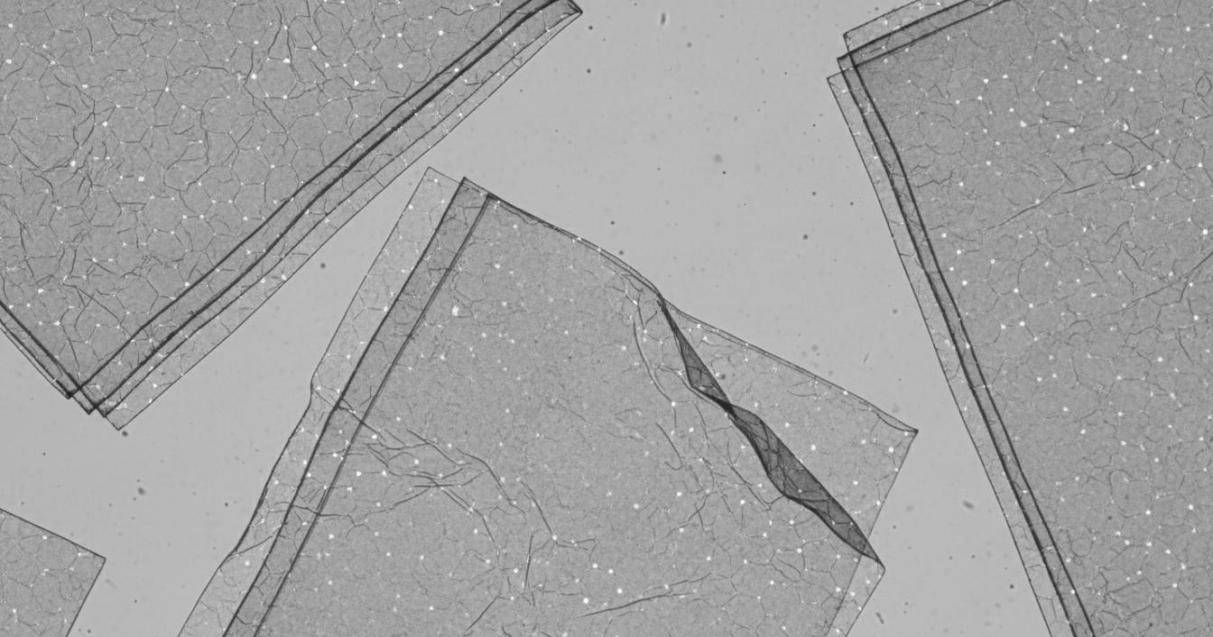 Figure 2: A transmission electron microscope image of ultra-thin graphene nanosheets showing transparent sheets with folded edges, wrinkles, and visible hexagonal lattice structure.
Nanogrease Formulation and Performance
Greases thickened with lithium, calcium, or polyurea soaps serve as semi-solid lubricants for applications where oil retention is critical. The incorporation of nanoparticle additives into grease matrices presents unique challenges due to the viscoelastic nature of the thickener network and the potential for particle-thickener interactions that alter rheological properties. Eata Nanomaterials has developed proprietary formulation strategies that preserve grease consistency while maximizing tribological benefits.
Our nanogrease development services deliver:
- Multi-walled carbon nanotube and aluminum oxide hybrid additives at 4 weight percent in lithium-calcium grease, achieving optimal anti-friction and anti-wear properties with weld point increases of 26 percent, drop point increases of 32 percent, and thermal conductivity enhancement of 75 percent compared to the unadditivated grease. The synergistic combination of CNTs and Al2O3 leverages the rolling effect of nanotubes and the load-bearing capacity of ceramic particles
- Nano-hybrid additives comprising metal borates and transition metal dichalcogenides synthesized by hydrothermal co-precipitation. At just 0.1 weight percent loading in lithium grease, these nanohybrids improve extreme pressure properties by 1.5 times and reduce wear scar diameter beyond the performance of previously reported nanomaterials at comparable concentrations
- Graphene and graphite composite additives for steel wire micro-motor applications. The composite formulation significantly improves anti-wear capability over single-component additives, with the synergistic effect reducing micro-cutting phenomena on wear surfaces and effectively inhibiting material damage in precision friction systems
- C@Ag core-shell nanoparticles that reduce the average friction coefficient of grease by 27.17 percent and decrease wear scar diameter by 26.12 percent. The hard carbon core provides structural support and wear resistance, while the soft silver shell delivers lubrication and self-repair functions through rolling, wear pit filling, and surface regeneration mechanisms
Surface Modification for Dispersion Stability
The single greatest challenge in nanolubricant formulation is maintaining stable dispersion of nanoparticles in non-polar base oils over extended storage and operating periods. Unmodified MoS2 and graphene rapidly aggregate and settle in mineral oils and PAOs, negating their tribological benefits and potentially causing abrasive wear from large agglomerates. Eata Nanomaterials employs advanced surface functionalization chemistry to create additive particles with lasting dispersion stability.
Our surface engineering approaches include:
- Mussel-inspired polydopamine coating combined with Michael addition of alkyl thiols for dense hydrophobic modification of MoS2 nanosheets. This strategy creates organic-inorganic hybrid nanosheets that form homogeneous, stable dispersions in PAO and mineral oils without the environmental concerns of traditional silane or fluorosilane treatments
- Oleic acid and stearic acid surface functionalization for metallic and metal oxide nanoparticles, creating steric stabilization through long alkyl chains that prevent particle aggregation in non-polar media
- Ionic liquid surface modification that simultaneously improves dispersion and provides supplementary lubricity through the ionic liquid boundary film, achieving dual-functionality from a single surface treatment step
- Polymer wrapping with polyvinylpyrrolidone or polydiallyldimethylammonium chloride for aqueous and polar lubricant systems, including water-based metalworking fluids and bio-lubricants
Dispersion stability is rigorously evaluated by visual observation, dynamic light scattering, UV-Vis spectrophotometry, and centrifugal sedimentation testing over 30-day storage periods at elevated temperature.
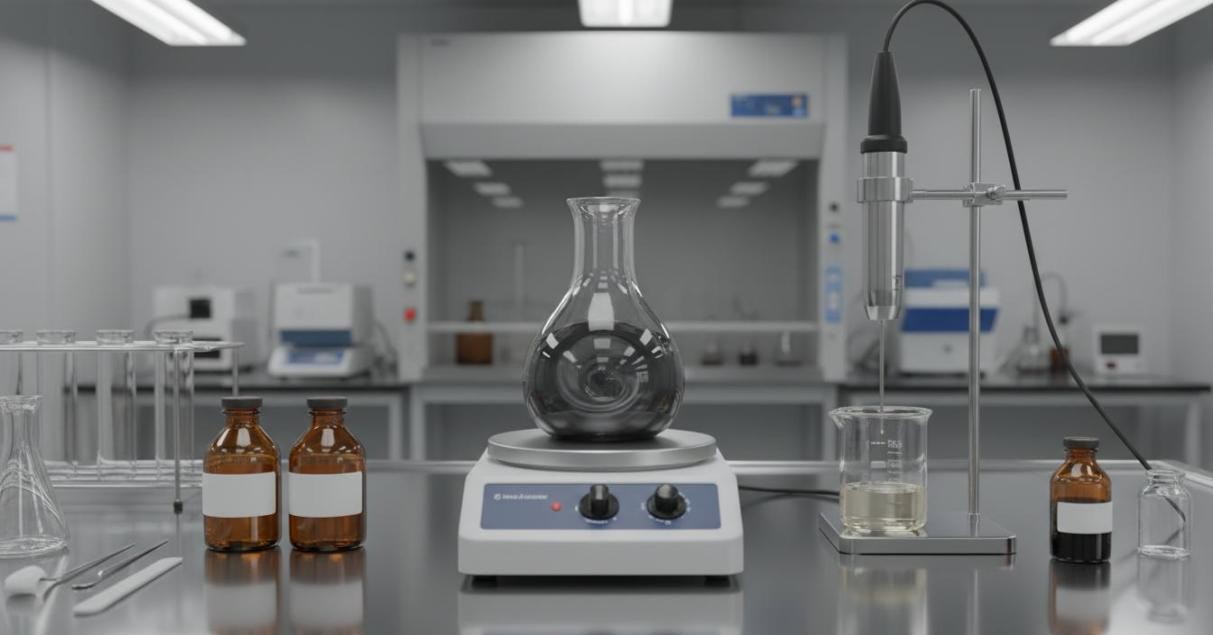 Figure 3: A laboratory setup for nanolubricant formulation showing a magnetic stirrer with base oil, sonicator probe, and bottles of nanoparticle additives on a clean lab bench.
Comprehensive Tribological Testing
All formulated nanolubricants undergo standardized tribological evaluation to quantify friction-reducing, anti-wear, and extreme-pressure performance. Our tribology laboratory is equipped with multiple test platforms conforming to ASTM, DIN, and ISO standards:
- Pin-on-disc tribometry per ASTM G99 for measuring coefficient of friction and wear rate under controlled sliding contact. Tests are performed at loads from 1 to 200 newtons, speeds from 0.001 to 10 meters per second, and temperatures up to 400 degrees Celsius, under both dry and lubricated conditions
- Four-ball tribometer per ASTM D4172 for evaluating anti-wear properties through wear scar diameter measurement on three stationary steel balls after rubbing against a rotating upper ball under 40 kilogram load for 60 minutes. Extreme pressure performance is assessed per ASTM D2783 by determining weld point and load-wear index
- Block-on-ring testing per ASTM D2714 for evaluating friction and wear under high-load, high-speed conditions representative of bearing and gear applications
- Reciprocating tribometer for evaluating lubricant performance under oscillating motion conditions that simulate piston ring-cylinder liner, cam-follower, and valve train contacts
- Post-test surface analysis by optical profilometry, scanning electron microscopy, energy-dispersive X-ray spectroscopy, and Raman spectroscopy to characterize worn surfaces, identify tribofilm compositions, and elucidate lubrication mechanisms
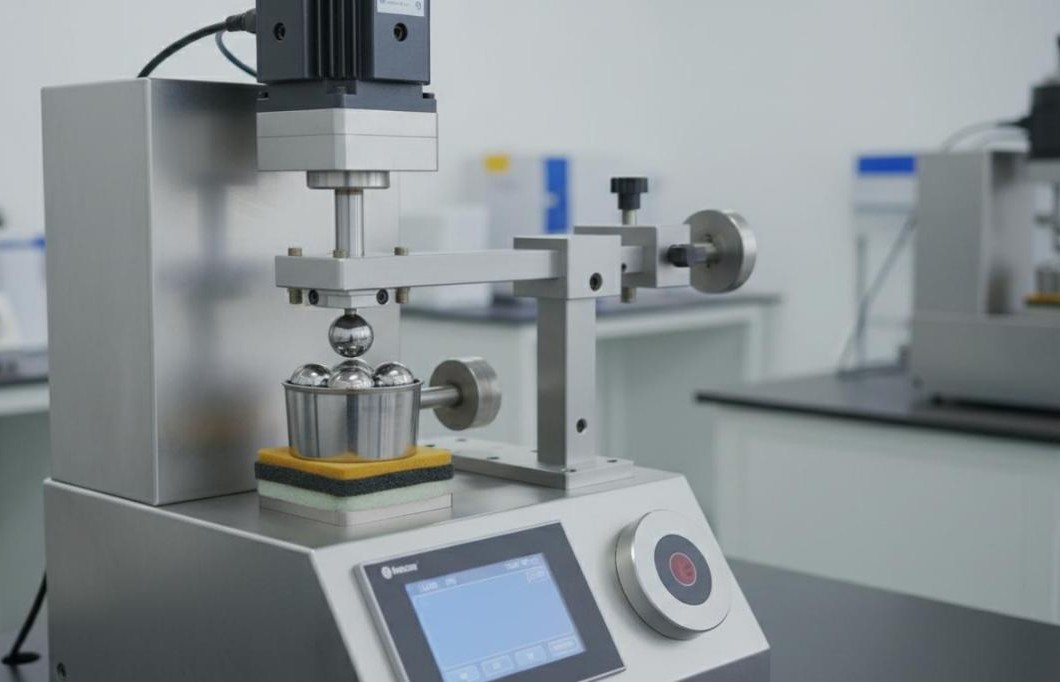 Figure 4: A four-ball tribometer with a rotating steel ball pressing against three stationary balls in a lubricant cup, used for anti-wear and extreme pressure testing of nanolubricants.
Performance Comparison of Nanolubricant Systems
| Additive | Loading | Friction Reduction | Wear Reduction | Base Fluid |
| MoS2-NOM | 1 wt% | ~53% | ~92% | PAO |
| MoS2 (0.1%) | 0.1 wt% | ~64% | ~62% | PAO4 |
| WS2/MoS2 | Composite | Varies | ~65% | Base oil |
| Graphene | 0.05 wt% | ~40% | Significant | Axle oil |
| CNT + Al2O3 | 4 wt% | Varies | ~26% | Li-Ca grease |
| Graphene/MoS2 | Mixed | Synergistic | Synergistic | Paraffin |
Application-Specific Formulation Programs
Our nanolubricant development services address diverse industrial and research applications:
- Automotive engine oils: formulating MoS2 and graphene-enhanced motor oils for piston ring-liner, bearing, and valve train applications, targeting fuel economy improvements of 3 to 7 percent through friction reduction
- Wind turbine gearbox lubricants: developing WS2-enhanced synthetic gear oils that extend service intervals and reduce maintenance costs in the high-load, slow-speed contacts characteristic of wind turbine drivetrains
- Metalworking fluids: formulating water-soluble cutting fluids with boron nitride and MoS2 nanoparticles for improved tool life, surface finish, and chip evacuation in precision machining operations
- Aerospace applications: developing low-outgassing, wide-temperature-range nanogreases for satellite mechanisms, space robotics, and aircraft actuators operating from -100 to 300 degrees Celsius
- Bio-lubricants: enhancing plant-derived base oils such as castor, sesame, and rapeseed oil with graphene and MoS2 additives to match or exceed the tribological performance of mineral oil-based formulations while maintaining biodegradability
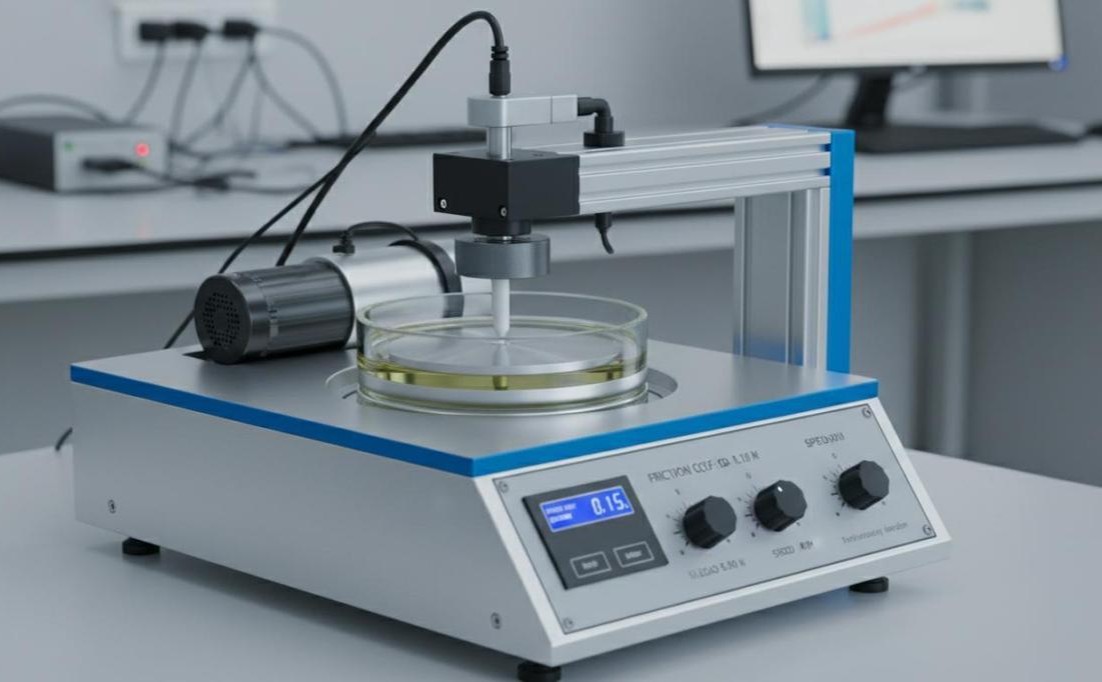 Figure 5: A pin-on-disc tribometer instrument for measuring friction coefficient and wear rate under controlled sliding contact with lubricant reservoir surrounding the contact zone.
Sample Submission and Project Workflow
Clients may submit their own base oils, greases, or nanoparticles for formulation optimization, or request our sourcing services for commercial-grade base stocks and synthesized nanomaterials. For formulation screening projects, we typically evaluate 3 to 5 nanomaterial candidates at 2 to 3 concentration levels in the client-specified base fluid, providing a down-selection report with tribological data.
Optimization projects systematically vary nanoparticle loading, surface modification chemistry, and formulation additives through a design-of-experiments framework to maximize target performance metrics. Validation projects subject optimized formulations to extended testing protocols, thermal aging, and field trials to confirm long-term performance stability. All formulations are delivered with complete compositional data, processing protocols, and characterization results.
If you are interested in our products or services, please don't hesitate to contact us.