

Nanofiber Electrospinning Services
Electrospinning represents one of the most versatile and cost-effective techniques for producing continuous nanofibers with diameters ranging from tens of nanometers to several micrometers. At Eata Nanomaterials, we leverage this powerful technology to fabricate non-woven fibrous mats, aligned fiber arrays, and sophisticated core-shell nanostructures tailored to your specific research and application requirements.
Our electrospinning infrastructure supports both aqueous and organic solvent-based polymer systems, enabling us to process a broad spectrum of materials including biodegradable polyesters, natural polymers, and synthetic thermoplastics. Whether you need random fiber networks for filtration applications or highly aligned scaffolds for directional cell growth, our team possesses the expertise to optimize every aspect of the spinning process.
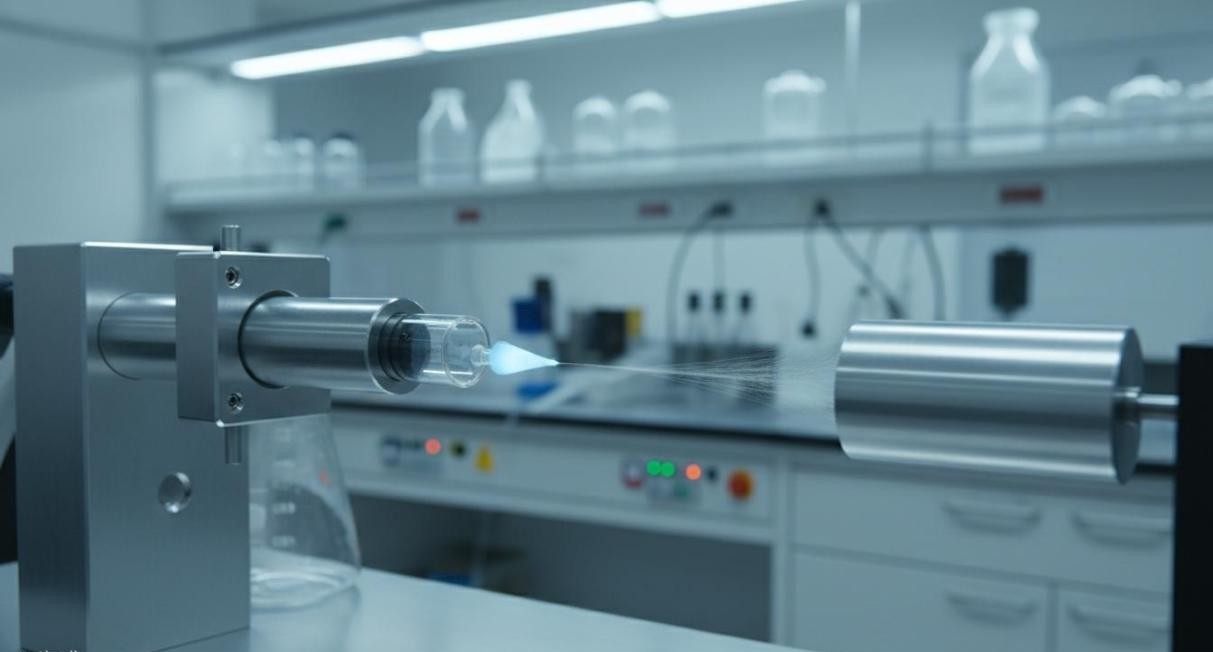 Figure 1: Laboratory-scale electrospinning setup with precision syringe pump and rotating collector.
Conventional Single-Nozzle Electrospinning
Our single-nozzle electrospinning platform forms the foundation of nanofiber production. The process involves applying a high-voltage electric field to a polymer solution droplet at the needle tip, inducing charge accumulation that overcomes surface tension and initiates a fine liquid jet. As the jet travels toward the grounded collector, solvent evaporation solidifies the polymer into nanoscale fibers.
We meticulously control four primary parameters to achieve target fiber morphologies:
- Applied voltage (typically 10-25 kV), which determines electric field strength and jet instability
- Solution flow rate (0.5-10 mL/h), influencing fiber diameter and bead formation
- Tip-to-collector distance (10-25 cm), governing solvent evaporation time
- Polymer concentration and viscosity, directly affecting fiber uniformity and diameter distribution
Our rotating drum and disk collectors enable fabrication of both randomly oriented and preferentially aligned fiber mats. For highly aligned fiber arrays, we employ high-speed rotating mandrels (up to 3,000 rpm) and auxiliary electrode configurations that exert directional electrostatic forces on the whipping jet.
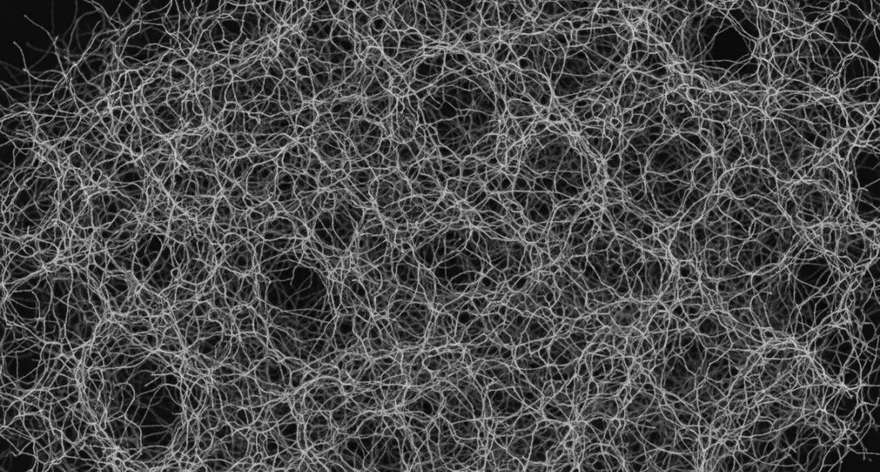 Figure 2: High-magnification SEM image revealing the intricate porous network of electrospun nanofibers.
Coaxial Electrospinning for Core-Shell Nanofibers
Coaxial electrospinning extends conventional methodology by simultaneously feeding two immiscible polymer solutions through a concentric needle configuration. This technique produces nanofibers with a well-defined core-shell architecture, combining distinct functionalities within a single filament. The outer shell provides mechanical stability and surface properties, while the inner core encapsulates bioactive agents, conductive materials, or degradable compounds for programmed release.
The formation of core-shell structures depends on careful matching of solution properties. We optimize the viscoelastic behavior of both fluids to ensure stable coaxial jet formation without interfacial breakup. Key considerations include relative viscosity ratios, solvent compatibility, and interfacial tension between the core and shell phases.
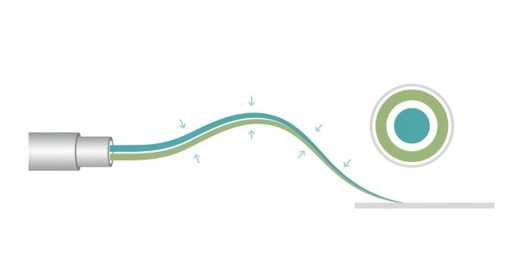 Figure 3: Schematic illustration of coaxial electrospinning producing core-shell nanofibers.
Applications uniquely enabled by our coaxial electrospinning capability include:
- Encapsulation of fragile biomolecules (growth factors, enzymes, antibiotics) within protective polymer shells for sustained release
- Fabrication of hollow nanofibers through selective removal of core material, creating high-surface-area tubular structures
- Integration of conductive polymer cores within insulating shells for sensor and electronic textile applications
- Self-healing composite fibers containing healing-agent reservoirs in the core phase
Polymer Materials and Solvent Systems
The following table summarizes the polymer systems we routinely process via electrospinning, along with their characteristic applications:
| Polymer | Solvent System | Fiber Diameter | Key Applications |
| PVA (Polyvinyl Alcohol) | Water/Ethanol | 50-300 nm | Wound dressings, drug delivery |
| PLGA | Dichloromethane, Acetone | 100-800 nm | Tissue scaffolds, sutures |
| PCL | Chloroform, DCM | 200-1000 nm | Long-term implants, filtration |
| Chitosan | TFA, Acetic Acid | 50-200 nm | Antimicrobial dressings |
| Collagen | HFP, Acetic Acid | 100-400 nm | Skin regeneration, cell culture |
| PVDF | DMF, Acetone | 100-500 nm | Piezoelectric sensors, membranes |
| PU (Polyurethane) | DMF, THF | 200-800 nm | Vascular grafts, wound care |
| PEG-PLA | Chloroform, Acetone | 150-600 nm | Controlled drug release |
Tissue Engineering Scaffold Fabrication
Electrospun nanofiber scaffolds closely mimic the architecture of native extracellular matrix (ECM), providing an ideal microenvironment for cell attachment, proliferation, and differentiation. Our tissue engineering services focus on tailoring scaffold porosity, fiber alignment, and biochemical cues to match specific tissue types.
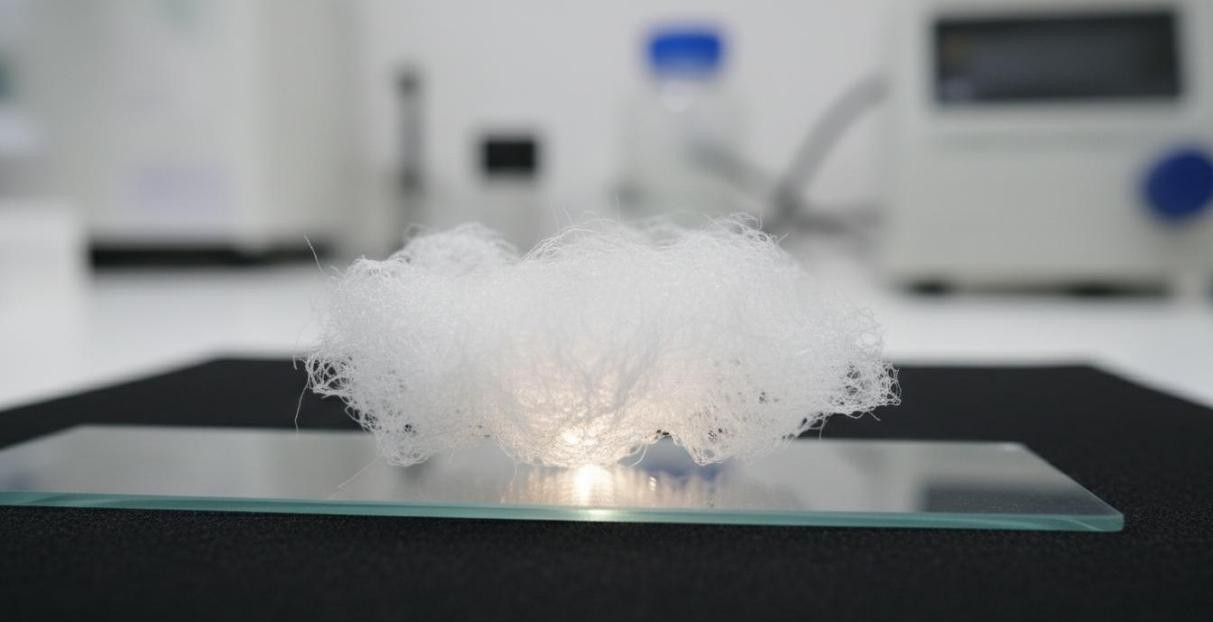 Figure 4: Translucent electrospun nanofiber scaffold for tissue engineering applications.
We offer specialized scaffold fabrication protocols for:
- Skin regeneration: Collagen-blended PCL scaffolds with pore sizes optimized for keratinocyte migration
- Bone tissue engineering: Hydroxyapatite-loaded PLGA nanofibers promoting osteoblast mineralization
- Neural tissue: Aligned PLLA scaffolds with contact guidance cues for neurite outgrowth
- Vascular grafts: Bilayer PU scaffolds combining aligned interior fibers with random exterior networks
- Cardiac patches: Conductive PANi/PCL composite fibers supporting electrical signal propagation
Drug Delivery via Electrospun Nanofibers
Electrospun nanofibers offer exceptional advantages as drug delivery platforms due to their extraordinarily high surface-to-volume ratio, tunable porosity, and capacity for burst or sustained release profiles. We employ multiple strategies for pharmaceutical incorporation:
Surface adsorption: Active compounds adsorbed onto pre-formed fiber mats for rapid burst release in wound healing applications.
Bulk encapsulation: Drugs homogeneously dispersed within polymer solution for diffusion-controlled release kinetics.
Core-shell encapsulation: Coaxial spinning isolates bioactive agents within the core, protecting labile molecules and extending release duration from days to weeks.
Our team has successfully encapsulated antibiotics, anti-inflammatory agents, chemotherapeutics, growth factors, and nucleic acids within electrospun carriers. Release profiles are precisely modulated through polymer selection, fiber diameter control, and architectural design.
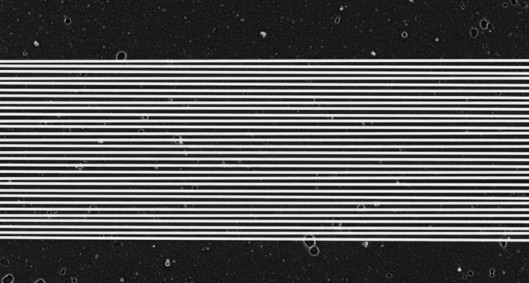 Figure 5: Highly aligned electrospun nanofibers for anisotropic tissue engineering and sensing applications.
Wound Dressings and Filtration Membranes
Beyond tissue engineering, our electrospinning capabilities extend to functional wound dressings and high-performance filtration media. Nanofiber wound dressings create a moist healing environment while permitting gas exchange and preventing bacterial infiltration through pore sizes below microbial dimensions.
For filtration applications, we fabricate nanofiber mats with engineered pore distributions targeting specific particle size ranges. These membranes find application in:
- HEPA-grade air filtration capturing sub-micron particulate matter
- Liquid filtration for biopharmaceutical clarification processes
- Protective face mask media with high breathability and filtration efficiency
- Oil-water separation using surface-functionalized nanofiber meshes
- Battery separator membranes with controlled ion transport pathways
Process Parameter Optimization
Achieving reproducible nanofiber properties requires systematic optimization of processing conditions. Our laboratory employs design-of-experiments (DoE) methodologies to map parameter spaces efficiently. The following table presents typical operating windows for key electrospinning variables:
| Parameter | Typical Range | Effect on Fiber Properties |
| Applied Voltage | 10-25 kV | Higher voltage reduces diameter but increases bead defects |
| Flow Rate | 0.5-10 mL/h | Lower rates favor thinner, uniform fibers |
| Tip-to-Collector Distance | 10-25 cm | Greater distance enhances solvent evaporation |
| Solution Concentration | 5-20 wt% | Affects viscosity and jet stability |
| Collector Speed | 0-3000 rpm | Aligns fibers along rotation direction |
| Relative Humidity | 20-50% | Influences solvent evaporation rate |
Comprehensive Characterization and Quality Control
Every electrospun nanofiber batch undergoes rigorous characterization to ensure conformity with client specifications. Our analytical capabilities encompass:
- Scanning electron microscopy (SEM) with automated fiber diameter analysis using ImageJ algorithms
- Atomic force microscopy (AFM) for nanoscale topographic mapping and surface roughness quantification
- X-ray diffraction (XRD) to assess polymer crystallinity and phase composition
- Fourier-transform infrared spectroscopy (FTIR) for chemical composition verification
- Mechanical testing (tensile, compression) on universal testing equipment
- Contact angle goniometry for hydrophilicity/hydrophobicity characterization
- Mercury intrusion porosimetry and BET surface area analysis
We provide a comprehensive characterization report with each project deliverable, including statistical fiber diameter distributions, representative micrographs, mechanical property summaries, and comparative analysis against target specifications.
Start Your Nanofiber Project with Eata Nanomaterials
Whether you require exploratory prototype fabrication or scaled production of nanofiber materials, Eata Nanomaterials delivers precision-engineered solutions backed by scientific rigor. Our collaborative approach ensures that every electrospinning parameter is optimized for your intended application.
Contact our technical team today to discuss your nanofiber requirements and receive a customized project proposal tailored to your research objectives.