
MXene Synthesis and Delamination Services
Since the first report of Ti3C2 in 2011, MXenes have emerged as one of the most exciting frontiers in two-dimensional materials science. These transition metal carbides, carbonitrides, and nitrides are produced by selectively etching the A-group element from MAX phase precursors, yielding a unique combination of metallic conductivity, hydrophilic surfaces, and exceptional mechanical flexibility that no other 2D material family can match. With over 40 compositions experimentally realized and hundreds more theoretically predicted, MXenes are powering advances in energy storage, electromagnetic interference shielding, sensors, catalysis, and biomedicine.
At Eata Nanomaterials, we provide comprehensive MXene synthesis and delamination services that span the entire production workflow — from MAX phase preparation and selective etching to delamination, surface termination engineering, and thorough analytical characterization. Our platform supports both established compositions like Ti3C2Tx and emerging variants including Mo2CTx, V2CTx, and Nb2CTx, produced through fluoride-based, HF-free, and molten salt etching routes to match your application requirements and safety preferences.
MAX Phase Precursor Synthesis & Preparation
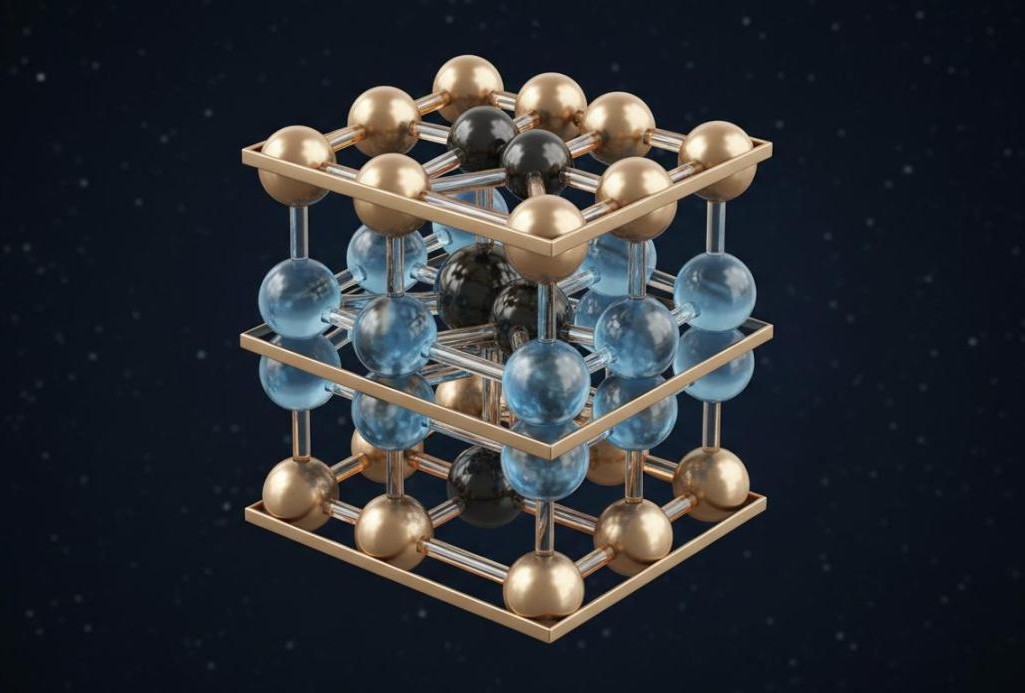 Figure 1: Ti3AlC2 MAX phase crystal structure showing hexagonal layered arrangement of titanium, aluminum, and carbon atoms
The quality of the final MXene product is fundamentally tied to the purity, stoichiometry, and crystallinity of its MAX phase precursor. MAX phases follow the general formula Mn+1AXn, where M is an early transition metal, A is an A-group element (typically Al, Si, or Ga), and X is carbon or nitrogen. We synthesize MAX phase powders in-house to ensure full control over precursor quality, or we can work with commercially sourced materials that meet your specifications.
Our MAX phase preparation service addresses critical pre-etch processing steps that are often overlooked but significantly impact final MXene quality. Impurity removal, particle size fractionation, and stoichiometric optimization all contribute to higher etching yields, fewer defects, and more consistent delamination outcomes.
MAX phase capabilities:
- In-house MAX phase synthesis: Pressureless sintering and hot isostatic pressing of elemental powders at 1350-1500 C under flowing argon; stoichiometric control of Ti3AlC2, Ti2AlC, Mo2Ga2C, and other compositions.
- Pre-etch purification: Removal of excess aluminum, oxide contaminants, and unreacted precursor phases through selective acid washing and density-based separation.
- Particle size control: Ball milling and sieving to achieve target particle sizes from sub-micron to 40-plus microns; larger particles translate directly to larger final MXene flakes.
- Morphology engineering: Synthesis of hexagonal, plate-like, and spherical MAX phase particles to influence the final MXene flake geometry.
- Custom MAX phase development: Collaborative development of non-standard MAX phase compositions for exploratory MXene research.
Selective Etching of MAX to Multilayer MXene
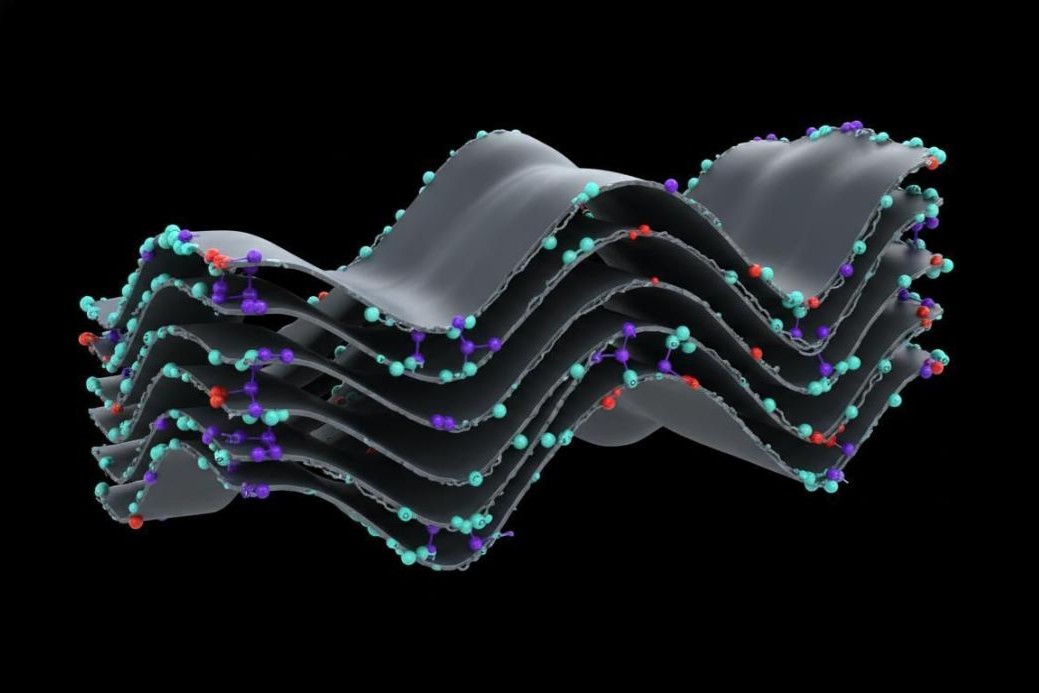 Figure 2: Multilayer Ti3C2Tx MXene showing accordion-like morphology with surface termination groups after selective etching of aluminum from Ti3AlC2
Selective etching is the pivotal step that transforms a dense MAX phase crystal into a layered MXene material. During etching, the A-element layers are selectively removed while the Mn+1Xn backbone remains intact, creating a material with dramatically expanded interlayer spacing and a rich surface chemistry defined by mixed termination groups (-OH, -F, =O, -Cl). The choice of etching method profoundly affects MXene quality, safety, scalability, and the resulting surface termination profile.
We offer multiple etching routes, each optimized for specific MAX phase compositions and application requirements. Our HF-based methods deliver the highest-quality products with well-established protocols, while our HF-free alternatives provide safer processing with comparable or superior outcomes for many compositions.
| Etching Method | Conditions | Characteristics |
| HF direct | 10-50 wt% HF, 18-72 h, 25-55 C | Highest quality; mixed -F, -OH, =O terminations; high single-layer yield 60-80% |
| LiF/HCl (MIN) | LiF plus 9 M HCl, 24-48 h, 35-45 C | Safer in-situ HF generation; clay-like product; scalable; reduced F content |
| Molten salt | ZnCl2 or CuCl2, 500-800 C | Halide terminations (-Cl, -Br); no fluorine; suitable for non-aqueous electrolytes |
| Electrochemical | 2-5 V in NH4Cl/HCl, 2-6 h | HF-free; -Cl, -OH, =O terminations; minimal F (<2 at%); green approach |
| Alkali hydrothermal | NaOH/KOH, 150-200 C, 12-24 h | Predominantly -OH and =O; no halides; partially oxidized product possible |
| Microwave-assisted | HF/HCl, 30 min, 40 C | Rapid processing; high quality; dramatically reduced etching time and temperature |
MXene Delamination & Few-Layer Flake Production
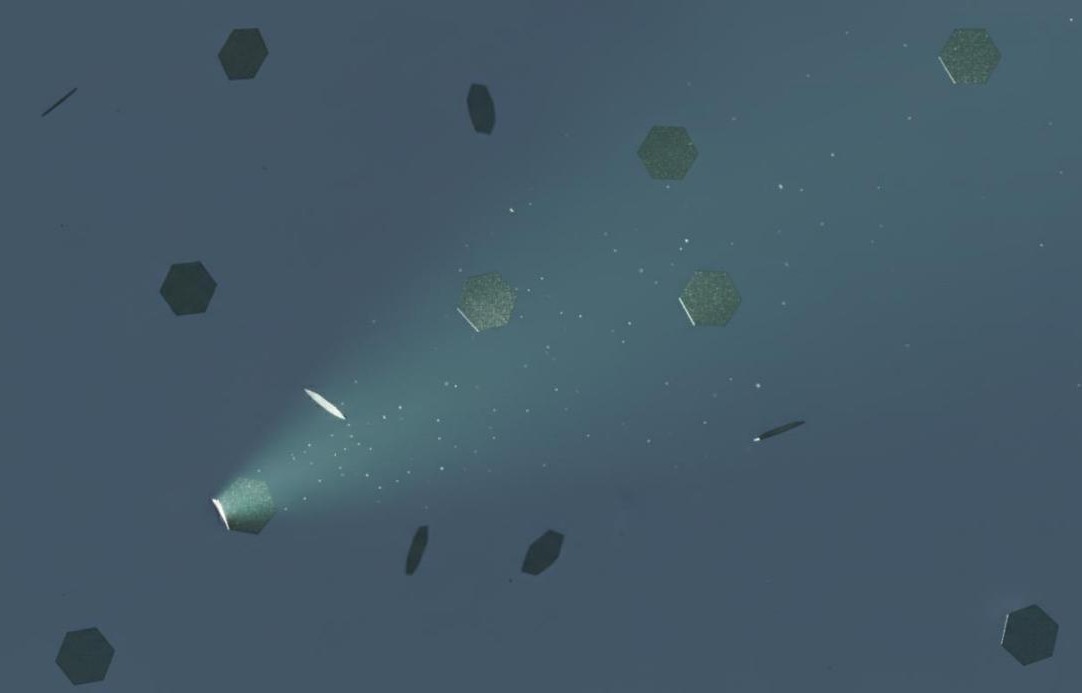 Figure 3: Delaminated few-layer Ti3C2Tx MXene nanosheets dispersed as a stable aqueous colloid with hexagonal flake morphology
The etched multilayer MXene consists of stacks of 2D sheets held together by van der Waals forces and hydrogen bonding. To unlock the full potential of MXenes, these stacks must be delaminated into individual or few-layer flakes that can be processed into films, composites, and devices. Our delamination service employs a range of chemical intercalation, physical shear, and soft-processing methods to achieve this critical separation with high yield and preserved flake quality.
We optimize the delamination protocol for each MXene composition and intended application. Chemical intercalation using lithium ions, organic molecules, or quaternary ammonium compounds expands interlayer spacing and weakens inter-sheet adhesion. Physical shearing using high-shear mixers or three-roll mills applies mechanical force to separate layers without introducing chemical intercalants. Our soft delamination protocols minimize sonication and mechanical stress, preserving the hexagonal morphology and large lateral dimensions inherited from the parent MAX phase.
Delamination methods we offer:
- LiCl intercalation: Immersing multilayer MXene in LiCl solution at 65 C with argon bubbling; Li ions insert between layers promoting electrostatic repulsion and swelling; followed by gentle shaking to separate flakes.
- DMSO/TMAOH intercalation: Organic molecule insertion using dimethyl sulfoxide or tetramethylammonium hydroxide; expands interlayer spacing from ~1.0 nm to 1.2-1.5 nm for easier exfoliation.
- TBAOH-assisted delamination: Tetrabutylammonium hydroxide provides large organic cations that force layer separation; yields large, thin flakes suitable for transparent conductive films.
- Shear delamination: High-shear three-roll milling or Taylor vortex flow systems; purely physical separation without chemical intercalants; preserves pristine surface chemistry.
- Soft delamination: Gentle immersion in LiCl solution with gravity settling; no centrifugation or sonication; preserves hexagonal morphology and lateral sizes up to 40 um.
MXene Composition Portfolio
Beyond the flagship Ti3C2Tx, the MXene family encompasses dozens of compositions with diverse electronic, optical, and chemical properties. We have developed synthesis and delamination protocols for a growing portfolio of MXene materials, each offering distinct advantages for specific application domains.
| Composition | Precursor | Properties & Applications |
| Ti3C2Tx | Ti3AlC2 | Most widely studied; conductivity ~4600-21000 S/cm; energy storage, EMI shielding, sensors |
| Ti2CTx | Ti2AlC | Larger interlayer spacing; higher specific capacity; lightweight battery electrodes |
| Mo2CTx | Mo2Ga2C | Double-transition-metal; unique catalytic properties; hydrogen evolution reaction |
| V2CTx | V2AlC | Distinct electronic structure; high pseudocapacitance; catalysis and sensing |
| Nb2CTx | Nb2AlC | Metallic conductivity; charge density wave behavior; electronics applications |
| Nb4C3Tx | Nb4AlC3 | Ordered double-M MXene; larger layer thickness; enhanced mechanical properties |
| Mo2Ti2C3Tx | Mo2Ti2AlC3 | Solid solution MXene; tunable properties via M-element ratio; multifunctional platforms |
Surface Termination Engineering & Functionalization
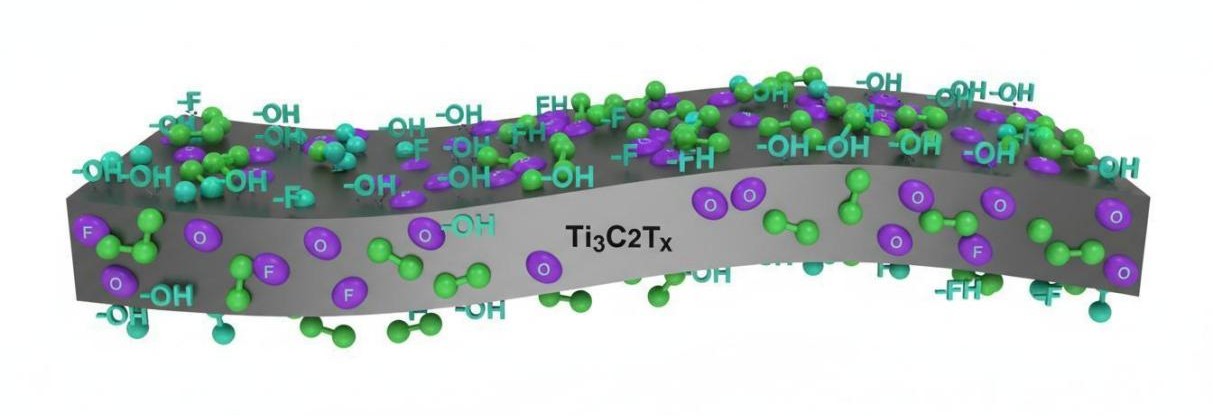 Figure 4: Ti3C2Tx MXene nanosheet showing mixed surface termination groups including hydroxyl, fluorine, and oxygen functionalities
The surface terminations (Tx) of MXenes are not merely byproducts of synthesis — they are active functional groups that profoundly influence electronic structure, electrochemical behavior, dispersibility, and chemical reactivity. The ability to engineer these terminations represents one of MXenes' most powerful customization opportunities. Our surface termination engineering service provides precise control over the type, ratio, and density of functional groups to optimize MXene performance for your target application.
Different applications demand distinct termination profiles. Energy storage applications benefit from -OH and =O rich surfaces that provide redox-active pseudocapacitive sites. EMI shielding favors reduced oxygen content for maximum conductivity. Biomedical applications require hydrophilic, biocompatible surfaces with minimal fluoride content. Our post-synthesis modification strategies enable transformation between these termination profiles.
- Thermal annealing: Calcium vapor treatment at 600-800 C reduces oxygen content from 25-30 at% to 5-10 at%; NH3 atmosphere introduces -NH2 terminations for enhanced bioactivity.
- Molten salt treatment: Immersion in molten alkali halide mixtures at 500-700 C enables halide exchange; replaces -F and -OH with -Br, -Cl, or -I for tunable electronic properties.
- Alkali treatment: Controlled NaOH or KOH processing enriches -OH terminations while removing fluoride; improves hydrophilicity and pseudocapacitance.
- Organosilane grafting: APTES and other silanes react with surface -OH groups to introduce amine, thiol, or polymer-compatible functionalities.
- Doping strategies: Nitrogen and phosphorus co-doping via ammonium polyphosphate crosslinking and heat treatment; enhances redox activity and conductivity.
Comprehensive MXene Characterization
Rigorous characterization is essential to confirm successful etching, quantify delamination quality, and establish the surface chemistry profile of each MXene batch. Our analytical platform provides a complete structural, chemical, and physical assessment that enables informed material selection and process optimization.
- Structural analysis: X-ray diffraction for interlayer spacing and phase purity; scanning electron microscopy for accordion morphology and flake size; transmission electron microscopy for layer counting and crystallinity; atomic force microscopy for precise flake thickness.
- Chemical characterization: X-ray photoelectron spectroscopy for termination group quantification (-OH, -F, =O ratios); energy-dispersive X-ray spectroscopy for elemental mapping; Fourier-transform infrared spectroscopy for surface functional group confirmation.
- Physical properties: Four-point probe for sheet resistance and DC conductivity; dynamic light scattering for colloidal dispersion size; zeta potential for surface charge and dispersion stability; Brunauer-Emmett-Teller analysis for surface area.
- Dispersion quality: UV-Vis spectroscopy for concentration determination; Tyndall effect observation; long-term sedimentation monitoring for colloidal stability assessment.
Application-Focused MXene Development
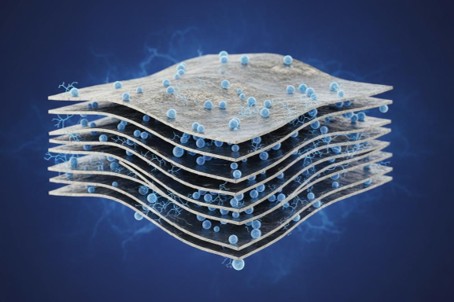 Figure 5: Ti3C2Tx MXene stacked layers serving as supercapacitor electrode material with ions intercalating between layers for pseudocapacitive charge storage
The exceptional properties of MXenes translate into game-changing performance across a broad spectrum of applications. We work closely with clients to develop application-specific MXene materials that maximize performance in their target devices and systems. By aligning synthesis method, termination chemistry, and delamination protocol with end-use requirements, we deliver MXenes that perform optimally from the first experiment.
- Energy storage: Ti3C2Tx with optimized -OH/-O ratio for pseudocapacitive supercapacitors achieving 380-450 F/g; LiCl-intercalated MXenes for Li-ion battery anodes with 320-410 mAh/g capacity; few-layer flakes for zinc-ion batteries.
- EMI shielding: Large-flake, low-oxygen Ti3C2Tx films with electrical conductivity exceeding 10,000 S/cm; ultrathin films achieving >50 dB shielding effectiveness at micrometer thicknesses.
- Sensors & biosensors: Termination-engineered MXenes with -NH2 or -COOH groups for biomolecule immobilization; Mo2CTx for electrochemical gas sensing; Nb2CTx for photonic applications.
- Catalysis: Surface-etched MXenes with exposed active metal sites for hydrogen evolution reaction; Mo2CTx and W-based MXenes for electrocatalytic nitrogen reduction.
- Biomedical: Low-fluoride, PEGylated Ti3C2Tx for photothermal therapy; antimicrobial coatings leveraging sharp edges and surface chemistry; bioscaffold reinforcement.
Accelerate Your MXene Research with Custom Synthesis and Delamination
Get in touch with Eata Nanomaterials to discuss your MXene requirements. Whether you need Ti3C2Tx by the LiF/HCl method, fluoride-free variants for biomedical work, or exploratory compositions like Mo2CTx and Nb2CTx, our team will develop a tailored synthesis and delamination program for your project.