

Products
- High-Quality Graphene
- CVD Graphene, Graphene-Like Materials
- Graphene-Like Series
- Defect-Free Single-Crystal Graphene and Graphene-Like Materials (Mechanical Exfoliation)
- Quantum Dot Series
- Aggregation-Induced Emission (AIE)
- Near-Infrared II (NIR-II) Fluorescent Dyes
- Graphdiyne
- Two-Dimensional Transition Metal Carbides/Nitrides/Borides (MXene)
- Metal Nanomaterials and Other Functional Bio-Nanomaterials
- Metal-Organic Frameworks (MOF)
- Covalent Organic Frameworks (COF)
- Two-Dimensional Layered Metal Oxides (LDH)
- Carbon Nanotube Powders, Pastes
- Carbon Nanotube Arrays and Special Carbon Nanotube Materials
- High-Quality Metallic and Semiconducting High-Purity Single-Walled Carbon Nanotubes
- Carbon Nanotube Sponges
- Mesoporous Carbon and Carbon Nanomaterials
- High-Quality Fullerenes
- One-Dimensional Nanomaterials
- Molecular Sieves
- Inorganic Nanomaterials
- Perovskite Materials
- Highly Oriented Pyrolytic Graphite (HOPG)
- Organic Materials
- Single-Atom Catalysts
- Thermoelectric Materials
- Sodium Storage Materials
- Industrial-Grade Nanomaterials
- Solid-State Lithium Batteries
- Hydrogel Series and Consumables
Online Inquiry
Single-Atom Catalysts
In a conventional nanoparticle catalyst, only a fraction of the metal atoms are exposed to reactants. The majority remain buried inside the particle bulk, inaccessible and inactive — an expensive waste of precious metal. Single-atom catalysts shatter this paradigm by isolating every metal atom individually on a support surface, achieving a theoretical atom utilization of 100%. Each metal atom is coordinated by neighboring atoms from the support — typically nitrogen, oxygen, or sulfur — forming a well-defined active site with an electronic structure distinct from both the bulk metal and conventional nanoclusters. This atomic dispersion frequently produces catalytic activities, selectivities, and stabilities that exceed those of nanoparticle counterparts, sometimes by orders of magnitude.
Eata Nanomaterials offers an extensive portfolio of single-atom catalysts for electrocatalysis, photocatalysis, and thermocatalysis research. Our M-N-C series anchors transition metal atoms (Fe, Co, Ni, Cu, Mn) on nitrogen-doped porous carbon derived from metal-organic frameworks or polymer precursors, optimized for the oxygen reduction reaction, hydrogen evolution, and CO2 electroreduction. We supply noble metal single-atom catalysts (Pt, Pd, Ru, Au) on carbon, metal oxide, and MOF supports for selective hydrogenation and C-C coupling. Our characterization protocol combines aberration-corrected HAADF-STEM, synchrotron XAFS, and XPS to verify atomic dispersion and elucidate the coordination environment of every batch.
The M-Nx Active Site: Structure and Electronic Properties
The defining structural motif of a single-atom catalyst is the metal coordination site — an isolated metal atom anchored to the support through directional bonds with neighboring heteroatoms. In the archetypal Fe-N4 configuration on nitrogen-doped carbon, an iron atom sits at the center of a porphyrin-like square-planar arrangement of four pyridinic nitrogen atoms embedded in a graphene sheet. This M-N4 motif, and its variants M-N2, M-N3, and M-NxCy (where C denotes carbon or sulfur coordination), constitute the majority of non-precious metal single-atom catalysts for electrocatalysis. Extended X-ray absorption fine structure (EXAFS) analysis confirms the absence of metal-metal scattering peaks, establishing that each iron atom is truly isolated rather than present as sub-nanometer clusters.
The electronic structure of these M-Nx sites is profoundly different from bulk metal. The undercoordinated metal atom, lacking neighboring metal atoms for d-d orbital hybridization, develops a narrowed d-band with enhanced density of states near the Fermi level. This electronic configuration optimizes the adsorption energies of reaction intermediates — O*, OH*, OOH* for oxygen reduction, H* for hydrogen evolution, COOH* and CO* for CO2 reduction — according to the Sabatier principle. Density functional theory calculations demonstrate that Fe-N4 sites bind O* with an intermediate strength that is neither too weak (as on bulk Fe, where reduction is slow) nor too strong (as on Pt, where product desorption is rate-limiting), explaining the remarkable ORR activity of Fe-N-C catalysts that approaches and sometimes exceeds commercial Pt/C.
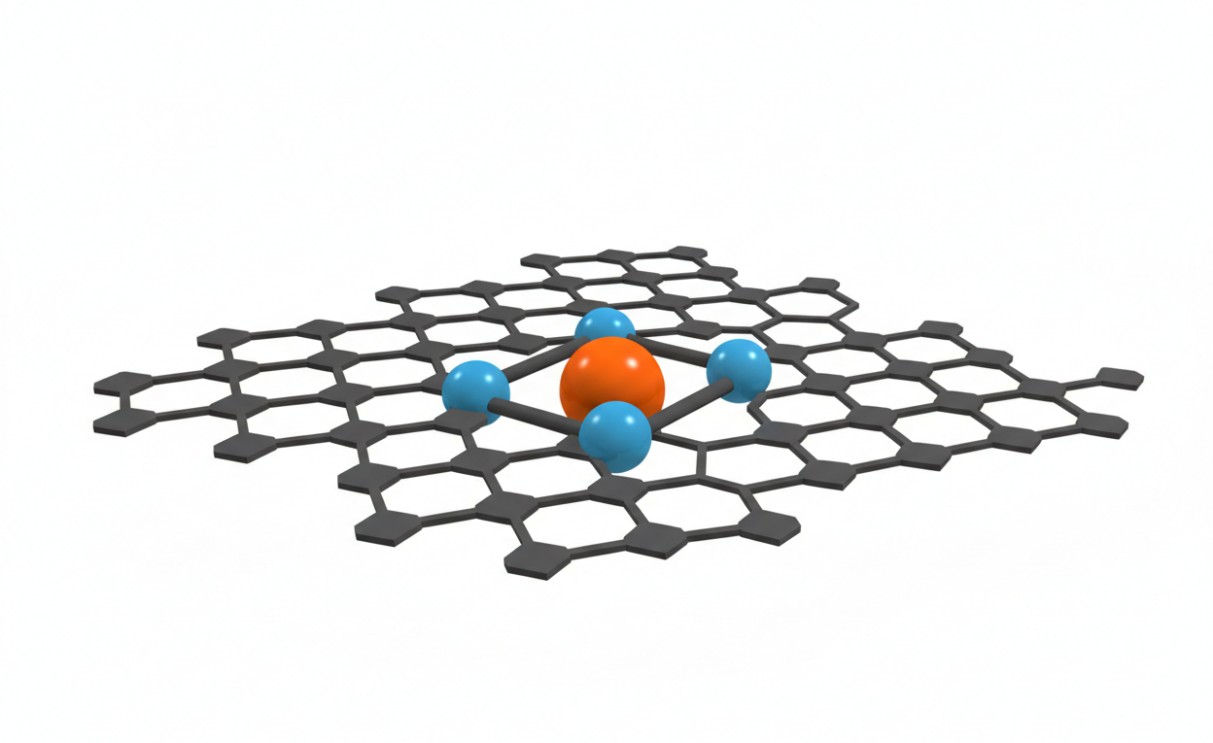 Illustration of an M-N4 single-atom catalytic site with a central transition metal atom coordinated by four nitrogen atoms in a graphene sheet
Electrocatalysis: ORR, OER, HER, and CO2 Reduction
Single-atom catalysts have demonstrated exceptional performance across the spectrum of electrocatalytic reactions relevant to sustainable energy conversion. For the oxygen reduction reaction (ORR) at fuel cell cathodes, Fe-N-C catalysts achieve half-wave potentials of 0.80–0.85 V versus RHE in alkaline media, comparable to 20 wt% Pt/C, with superior methanol tolerance and significantly lower cost. The four-electron reduction pathway dominates on well-coordinated Fe-N4 sites, minimizing the production of hydrogen peroxide that degrades polymer electrolyte membranes. In acidic media, where ORR kinetics are more demanding, optimized Fe-N-C catalysts with increased graphitic nitrogen content and hierarchically porous structures achieve power densities exceeding 1 W/cm^2 in hydrogen-air fuel cell tests.
For water splitting, Co-N4 and Ni-N4 sites on nitrogen-doped carbon catalyze the hydrogen evolution reaction (HER) with overpotentials below 50 mV at 10 mA/cm^2 in alkaline electrolyte, rivaling Pt-based catalysts. The oxygen evolution reaction (OER) benefits from asymmetrically coordinated single atoms — such as Fe-N3 or Co-N2S2 sites — where the lower coordination number creates undercoordinated metal centers with optimized binding of OOH* intermediates. In CO2 electroreduction, Ni-N-C catalysts selectively reduce CO2 to CO with Faradaic efficiencies exceeding 90% at overpotentials below 500 mV, while Cu-N-C catalysts produce multi-carbon products including ethanol and ethylene through C-C coupling on adjacent Cu-Nx sites.
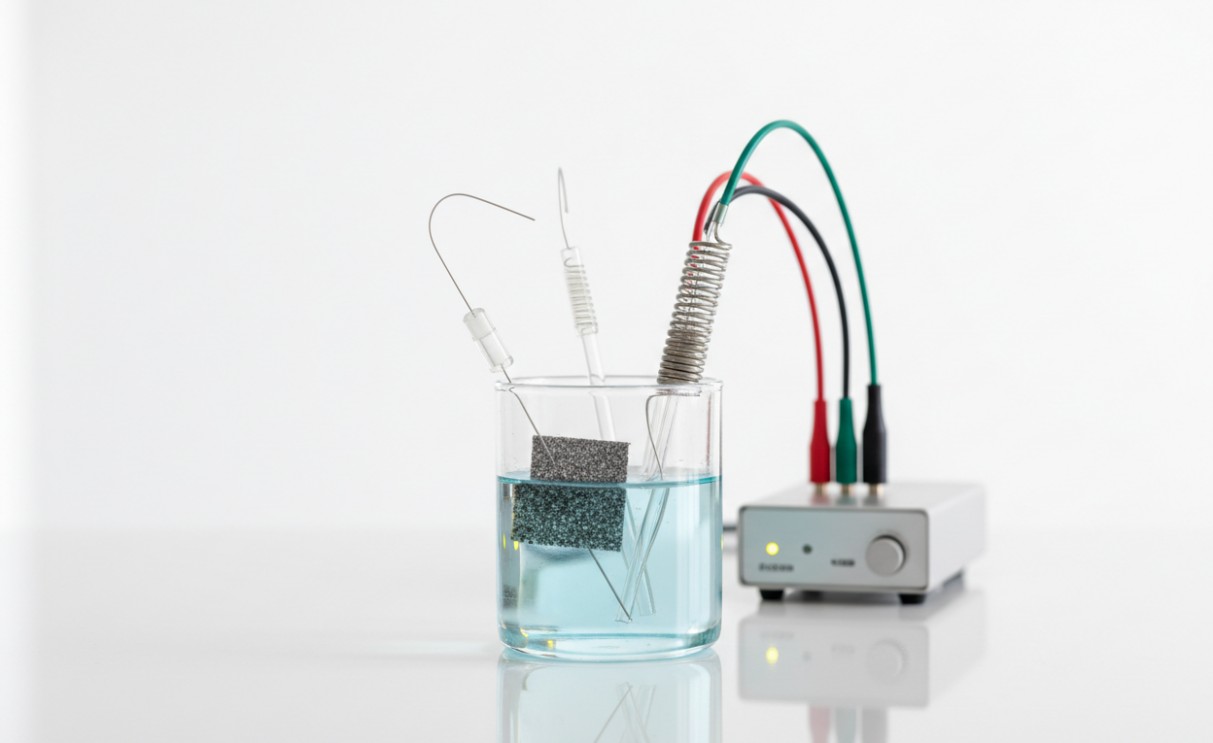 Three-electrode electrochemical cell setup for evaluating single-atom catalyst performance in electrolyte solution
Synthesis Strategies: Pyrolysis, MOF-Derivation, and Beyond
The synthesis of single-atom catalysts demands strategies that prevent metal aggregation during the high-temperature processing required for carbonization and nitrogen doping. Our primary approach leverages metal-organic frameworks — particularly ZIF-8 and its derivatives — as self-sacrificial templates. The MOF structure provides atomically dispersed metal centers coordinated by nitrogen-rich organic linkers; upon pyrolysis at 800–1100 C under inert or ammonia atmosphere, the organic framework converts to nitrogen-doped porous carbon while the metal ions are trapped and stabilized by the newly formed N-doped carbon matrix. The resulting SACs inherit the high surface area and porosity of the parent MOF, ensuring excellent mass transport and active site accessibility.
For higher metal loadings, we employ a cascade anchoring strategy: metal ions are first chelated with glucose or other polymeric chelating agents, then adsorbed onto oxygen-rich porous carbon supports, and finally pyrolyzed at moderate temperatures where nitrogen species from the carbon support bind and stabilize the single metal atoms. This approach has achieved metal loadings up to 12 wt% while maintaining atomic dispersion. For noble metal SACs, photochemical reduction, galvanic replacement, and spatial confinement within mesoporous silica or MOF cages offer milder alternatives that preserve the delicate electronic structure of precious metal single atoms. Post-synthesis acid leaching removes any residual nanoparticles, ensuring that only truly atomically dispersed metal remains.
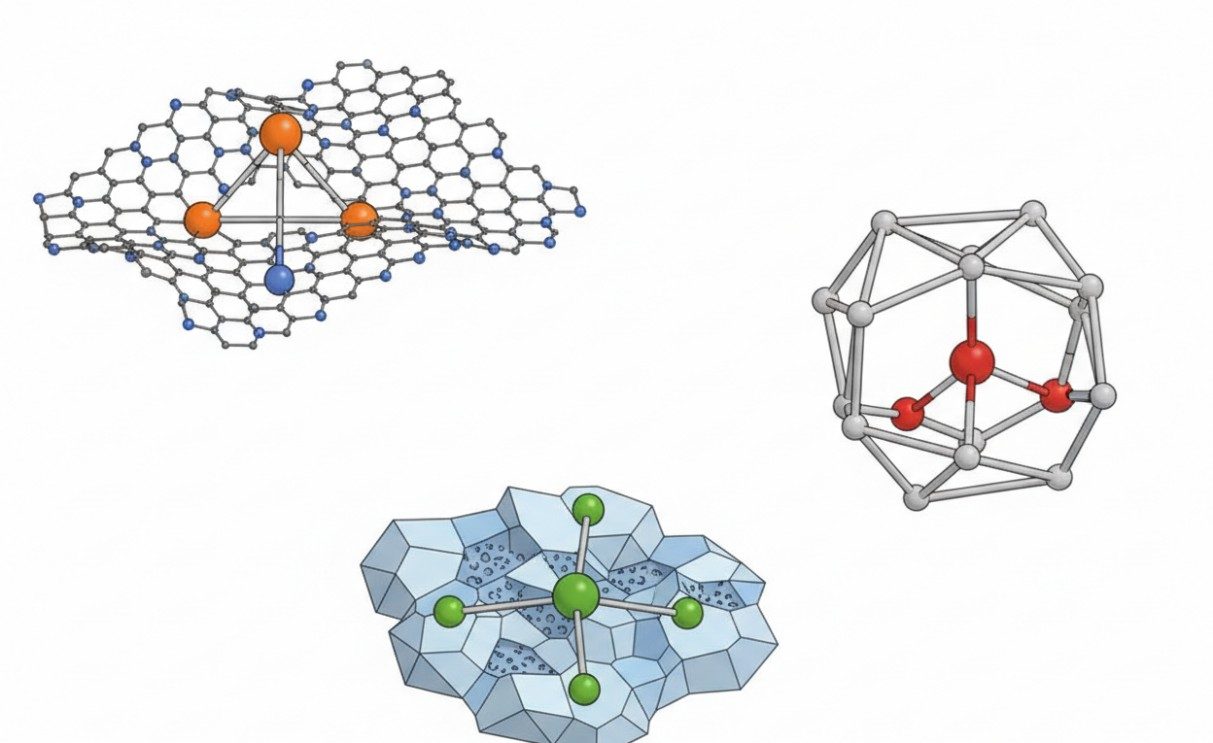 Illustration showing single metal atoms anchored on diverse supports including nitrogen-doped graphene, metal oxide surface, and metal-organic framework
Advanced Characterization: Verifying Atomic Dispersion
Distinguishing genuine single atoms from sub-nanometer clusters requires a multi-technique characterization approach. Aberration-corrected high-angle annular dark-field scanning transmission electron microscopy (HAADF-STEM) provides direct visual evidence: isolated metal atoms appear as bright dots against the darker support, with intensities proportional to the atomic number. The absence of bright extended features rules out nanoparticle contamination. However, HAADF-STEM samples only a tiny fraction of the catalyst volume and can miss rare clusters, necessitating complementary techniques.
X-ray absorption spectroscopy (XAS) at synchrotron facilities is the gold standard for SAC characterization. X-ray absorption near-edge structure (XANES) reveals the oxidation state and electronic configuration of the metal center, while extended X-ray absorption fine structure (EXAFS) quantifies the coordination environment — coordination number, bond distances, and disorder — confirming the absence of metal-metal bonds. Fourier-transform infrared spectroscopy of adsorbed CO probes the vibrational signature of CO bound to single-atom sites, which differs characteristically from CO on nanoparticles. X-ray photoelectron spectroscopy (XPS) monitors the binding energy shifts of both the metal and coordinating heteroatoms, providing additional evidence of the metal-support interaction. Every batch of our single-atom catalysts ships with a comprehensive characterization report.
 HAADF-STEM image showing isolated bright dots corresponding to single metal atoms uniformly dispersed on a carbon support
Photocatalysis and Environmental Applications
Single-atom catalysts extend their influence beyond electrochemistry into photocatalysis, where they function as cocatalysts that accelerate surface redox reactions while the semiconductor support harvests light. Loading single Pt or Co atoms onto TiO2, g-C3N4, or MOF photocatalysts dramatically enhances hydrogen evolution from water splitting by providing catalytically active sites for proton reduction without the light-blocking and charge-recombination penalties of larger nanoparticles. In photocatalytic CO2 reduction, Ru and Co single atoms on carbon nitride supports achieve CO production rates several times higher than their nanoparticle counterparts, with near-unity selectivity for CO over hydrogen.
Environmental remediation applications leverage the high specific activity and tunable selectivity of single-atom catalysts for advanced oxidation processes. Fe-N-C catalysts activate peroxymonosulfate (PMS) and persulfate to generate sulfate radicals that degrade recalcitrant organic pollutants — antibiotics, dyes, and endocrine disruptors — in wastewater. Co-N4 sites on carbon catalyze the activation of O2 for selective oxidation of volatile organic compounds at ambient temperature, with conversion efficiencies exceeding those of conventional noble metal catalysts. The stability of M-N-C catalysts under oxidative conditions, combined with their low leaching rates, addresses longstanding concerns about secondary metal contamination in treated water.
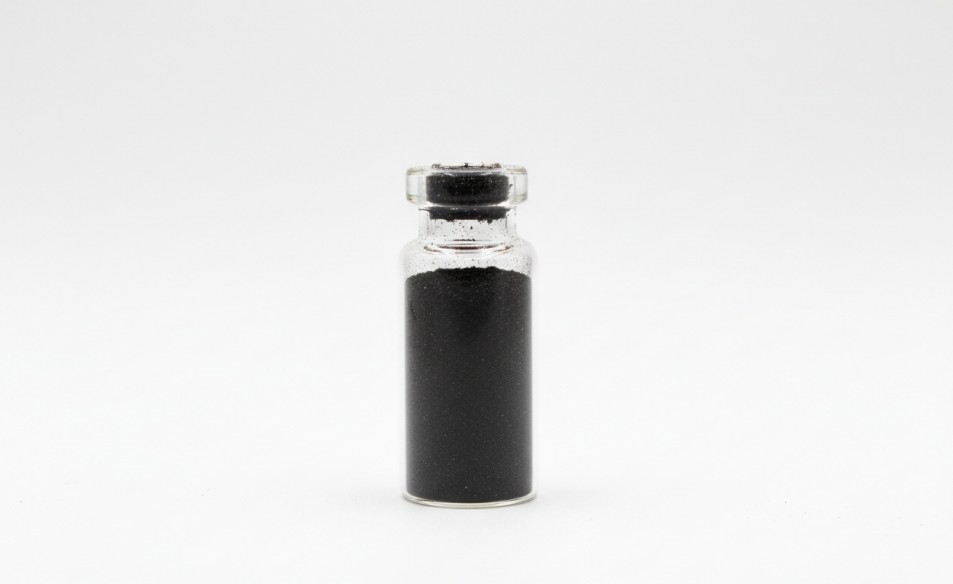 Dark powder of a nitrogen-doped carbon-supported single-atom catalyst in a glass vial
Featured Products
| Products | Specifications | Applications |
| Fe-N-C SAC | Loading: 1-5 wt%; Coordination: Fe-N4 | ORR, fuel cell cathodes |
| Co-N-C SAC | Loading: 1-5 wt%; Coordination: Co-N4 | HER, OER, water splitting |
| Ni-N-C SAC | Loading: 1-5 wt%; Coordination: Ni-N4 | CO2 reduction to CO |
| Cu-N-C SAC | Loading: 1-5 wt%; Coordination: Cu-Nx | CO2 to ethanol, C2+ |
| Pt SAC on carbon | Loading: 0.5-2 wt%; Atomically dispersed | HER, selective hydrogenation |
| Ru SAC on C3N4 | Loading: 1-3 wt%; Photocatalytic | Photocatalytic CO2 reduction |
| Dual-atom catalyst | Fe-Co, Ni-Cu pairs; Synergistic | Enhanced ORR, OER |
| MOF-derived SAC | ZIF-8, UiO-66 precursor; High SSA | General electrocatalysis |
Application Landscape
Fuel Cell Cathodes: Fe-N-C catalysts achieve ORR half-wave potentials of 0.80-0.85 V vs RHE in alkaline media with superior methanol tolerance, approaching Pt/C performance at a fraction of the cost.
Water Electrolysis: Co-N4 and Ni-N4 sites catalyze HER with overpotentials below 50 mV at 10 mA/cm^2; asymmetric Fe-N3 sites optimize OER through enhanced OOH* binding.
CO2 Electroreduction: Ni-N-C selectively reduces CO2 to CO with >90% Faradaic efficiency; Cu-N-C produces multi-carbon products including ethanol through C-C coupling.
Photocatalytic Water Splitting: Single Pt and Co atoms on TiO2 and g-C3N4 accelerate H2 evolution without light-blocking penalties of nanoparticle cocatalysts.
Advanced Oxidation: Fe-N-C activates persulfate to generate sulfate radicals for degrading antibiotics and organic pollutants in wastewater treatment.
Selective Hydrogenation: Pt and Pd single atoms on MOF and oxide supports catalyze chemoselective hydrogenation of alpha,beta-unsaturated aldehydes with >95% selectivity.
Quality Assurance and Characterization
Every single-atom catalyst batch undergoes comprehensive analytical characterization before release. Aberration-corrected HAADF-STEM provides direct imaging of atomically dispersed metal centers. Synchrotron XAFS (XANES and EXAFS) confirms the oxidation state and coordination environment while ruling out the presence of metal-metal bonds. X-ray photoelectron spectroscopy quantifies the elemental composition and oxidation state of both the metal and coordinating heteroatoms. Inductively coupled plasma optical emission spectroscopy (ICP-OES) determines total metal loading. Brunauer-Emmett-Teller (BET) analysis measures surface area and pore structure. For electrocatalytic grades, we additionally perform rotating disk electrode (RDE) measurements to determine ORR half-wave potential, Tafel slope, and electron transfer number. All data are compiled into a detailed certificate of analysis.
Custom Synthesis and Collaborative Development
We welcome collaborative projects that develop bespoke single-atom catalysts for specialized applications. Our capabilities include custom metal selection across the periodic table from 3d transition metals to rare earth elements; tailored coordination environments through support engineering — M-N4, M-N3, M-N2S2, M-O4, and mixed coordination; dual-atom and multi-atom site catalysts with synergistic electronic interactions; hierarchical pore architecture design for optimized mass transport; and scale-up from gram-level laboratory batches to kilogram quantities for pilot testing. Whether your project demands a novel active site for a specific reaction, a support architecture optimized for a particular reactor configuration, or a comprehensive structure-property study, our synthesis and characterization team is prepared to deliver.
Request a Quote— Contact Eata Nanomaterials to discuss your single-atom catalyst requirements, request product samples, or explore a custom synthesis collaboration for your electrocatalysis, photocatalysis, or environmental research program.
| Catalog Number | Product Name | Order | Quantity |
|---|---|---|---|
| SAC-0001 | Ru-N-C Single-Atom Catalyst |
-
+
|
|
| SAC-0002 | Lu-N-C Single-Atom Catalyst (Lutetium on Nitrogen-Doped Carbon) |
-
+
|
|
| SAC-0003 | Ho-N-C Diatomic Catalyst (Holmium on Nitrogen-Doped Carbon) |
-
+
|
|
| SAC-0004 | Rh-N-C Single-Atom Catalyst (Rhodium on Nitrogen-Doped Carbon) |
-
+
|
|
| SAC-0005 | Ir-N-C Single-Atom Catalyst (Iridium on Nitrogen-Doped Carbon) |
-
+
|
|
| SAC-0006 | Er-N-C Single-Atom Catalyst (Erbium on Nitrogen-Doped Carbon) |
-
+
|
|
| SAC-0007 | Ni-N-C Single-Atom Catalyst (Nickel on Nitrogen-Doped Carbon) |
-
+
|
|
| SAC-0008 | FeNi-N-C Diatomic Catalyst (Iron-Nickel on Nitrogen-Doped Carbon) |
-
+
|
|
| SAC-0009 | CoNi-N-C Diatomic Catalyst (Cobalt-Nickel on Nitrogen-Doped Carbon) |
-
+
|
|
| SAC-0010 | Layered Nitrogen-Doped Carbon Powder (Cu Single-Atom Catalyst Carrier) |
-
+
|
For Research or Industrial Raw Materials, Not For Personal Medical Use!