

Products
- High-Quality Graphene
- CVD Graphene, Graphene-Like Materials
- Graphene-Like Series
- Defect-Free Single-Crystal Graphene and Graphene-Like Materials (Mechanical Exfoliation)
- Quantum Dot Series
- Aggregation-Induced Emission (AIE)
- Near-Infrared II (NIR-II) Fluorescent Dyes
- Graphdiyne
- Two-Dimensional Transition Metal Carbides/Nitrides/Borides (MXene)
- Metal Nanomaterials and Other Functional Bio-Nanomaterials
- Metal-Organic Frameworks (MOF)
- Covalent Organic Frameworks (COF)
- Two-Dimensional Layered Metal Oxides (LDH)
- Carbon Nanotube Powders, Pastes
- Carbon Nanotube Arrays and Special Carbon Nanotube Materials
- High-Quality Metallic and Semiconducting High-Purity Single-Walled Carbon Nanotubes
- Carbon Nanotube Sponges
- Mesoporous Carbon and Carbon Nanomaterials
- High-Quality Fullerenes
- One-Dimensional Nanomaterials
- Molecular Sieves
- Inorganic Nanomaterials
- Perovskite Materials
- Highly Oriented Pyrolytic Graphite (HOPG)
- Organic Materials
- Single-Atom Catalysts
- Thermoelectric Materials
- Sodium Storage Materials
- Industrial-Grade Nanomaterials
- Solid-State Lithium Batteries
- Hydrogel Series and Consumables
Online Inquiry
High-Quality Fullerenes
Discovered in 1985 and celebrated with a Nobel Prize in 1996, fullerenes represent the third allotropic form of carbon — after diamond and graphite — and arguably the most geometrically elegant. Sixty carbon atoms lock together into a truncated icosahedron, a hollow sphere of hexagons and pentagons that resembles a soccer ball at the nanoscale. This cage, known as C60 or buckminsterfullerene, is only 0.7 nanometers in diameter, yet it possesses a remarkable set of properties: exceptional electron affinity that makes it one of the best electron acceptors known, a delocalized pi-electron system that supports six reversible reduction steps, thermal stability up to 400 C in inert atmosphere, and a surface chemistry that invites functionalization at virtually every carbon atom.
Eata Nanomaterials supplies high-purity fullerenes and their derivatives to research institutions and technology companies worldwide. Our product range spans pristine C60 and C70 isolated by HPLC to >99.5% purity, benchmark derivatives such as PCBM and PC70BM for photovoltaic research, functionalized variants including fullerenol and malonic acid adducts for biomedical exploration, and endohedral metallofullerenes that trap metal atoms inside the carbon cage for magnetic resonance imaging and quantum device studies. Every batch is characterized by UV-Vis spectroscopy, HPLC, and mass spectrometry, with certificates of analysis provided as standard.
Synthesis and Purification
Fullerenes are produced by striking an electric arc between two graphite electrodes in a helium or argon atmosphere. The intense heat vaporizes carbon, which reassembles into fullerene cages as the plasma cools. The resulting soot contains C60, C70, and trace amounts of higher fullerenes (C76, C78, C84) along with amorphous carbon and graphite fragments. The C60 content typically reaches 10–15% of the soot by mass, while C70 accounts for 1–3%. We operate arc discharge reactors with precision control over current, gap distance, gas pressure, and cooling rate to maximize fullerene yield and minimize byproduct formation.
Raw soot undergoes a rigorous purification pipeline. Soxhlet extraction with toluene, xylene, or carbon disulfide dissolves the fullerenes while leaving insoluble carbon behind. The extracted solution is then subjected to high-performance liquid chromatography (HPLC) using a two-stage Buckyprep or Buckyprep-M column system with toluene eluent to achieve baseline separation of C60 and C70. Final purity exceeds 99.5% for C60 and 99% for C70 as verified by HPLC peak area analysis. For customers requiring the absolute highest grade, we offer sublimation-purified material with trace metal content below 1 ppm.
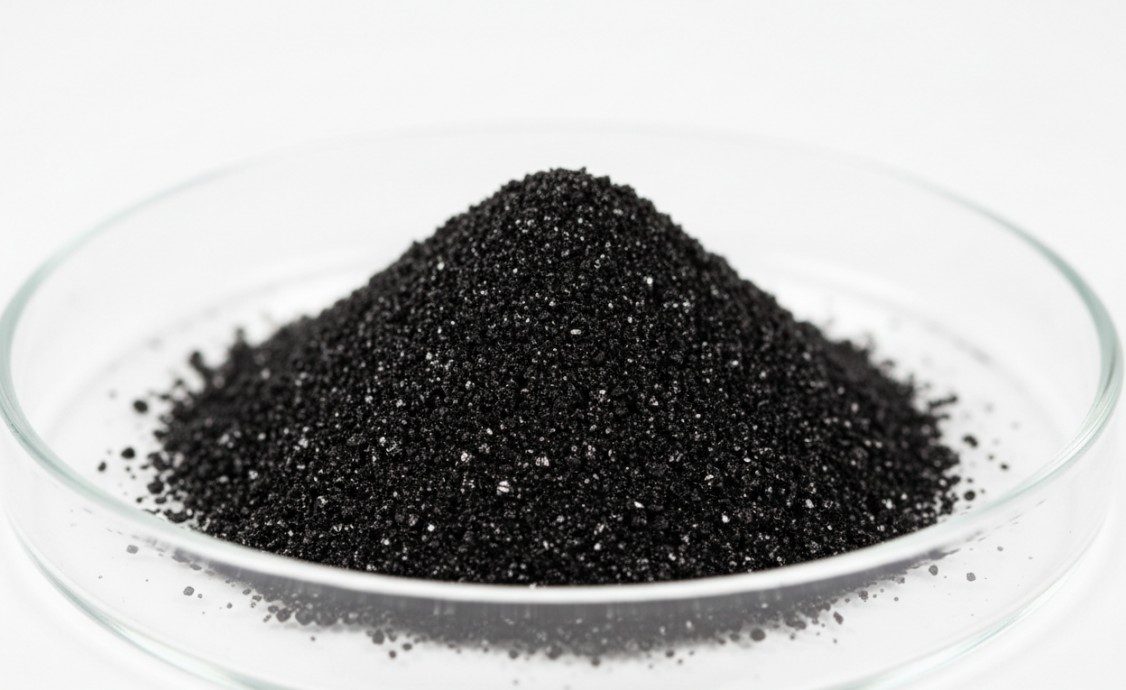 High-purity C60 fullerene crystalline powder showing characteristic deep black color with a subtle metallic luster
Fullerene Derivatives for Organic Electronics
The spherical symmetry and electron-accepting power of C60 make it an outstanding electron transport material, but its poor solubility in common solvents limits processability. Chemical functionalization overcomes this barrier while tuning electronic properties for specific applications. Our catalog includes the derivatives most widely used in photovoltaic and electronic research.
PCBM (phenyl-C61-butyric acid methyl ester, CAS 160848-22-6) remains the benchmark electron acceptor in organic photovoltaics. The solubilizing side chain enables spin coating and printing, while the phenylbutyrate group raises the LUMO level slightly compared to pristine C60, increasing open-circuit voltage in bulk heterojunction devices. PC70BM (CAS 609771-63-3) extends absorption deeper into the visible spectrum due to the lower symmetry of the C70 cage, boosting short-circuit current in devices paired with wide-bandgap donors. ICBA (indene-C60 bisadduct, CAS 1207461-57-1) elevates the LUMO by over 140 mV relative to PCBM, enabling Voc values approaching 0.9 V in polymer solar cells. Bis-PCBM offers higher LUMO still through the bisadduct configuration, though with a trade-off in electron mobility.
For researchers investigating non-fullerene acceptor systems who nevertheless require fullerene components for comparison or ternary blend stabilization, we offer isomerically enriched PCBM fractions. Studies have shown that separating PCBM isomers can tune orbital depths by up to 170 meV and enhance electron mobility by an order of magnitude compared to the standard isomer mixture, translating directly into improved device efficiency.
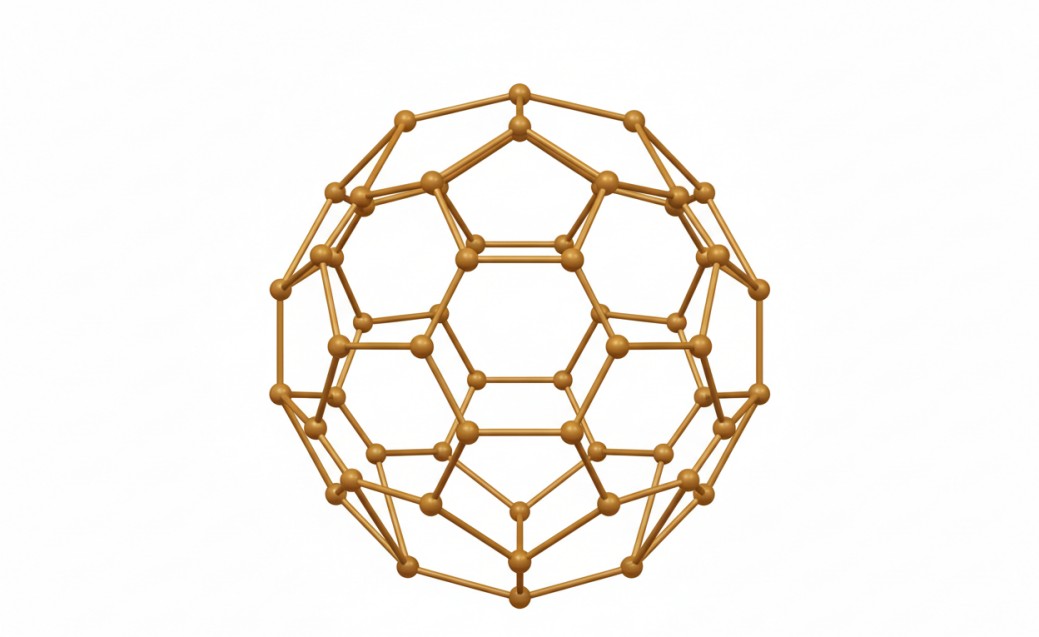 Buckminsterfullerene C60 molecular structure showing the truncated icosahedron of 60 carbon atoms arranged in hexagons and pentagons
Photovoltaics: Organic and Perovskite Solar Cells
Fullerene acceptors have underpinned the development of organic photovoltaics for more than two decades. In bulk heterojunction devices, the donor polymer and fullerene acceptor form an interpenetrating nanoscale network where excitons dissociate at the interface within picoseconds. PCBM's high electron affinity promotes charge separation, its isotropic electron mobility ensures efficient extraction, and its tendency to crystallize into domains of optimal size drives favorable morphology. Despite the emergence of non-fullerene acceptors such as ITIC and Y6, fullerenes remain the reference standard for mechanistic studies and continue to play essential roles as stabilizing additives in ternary systems.
In perovskite solar cells, PCBM serves as the electron transport layer in inverted (p-i-n) architectures. It reduces surface defects on the perovskite, suppresses hysteresis, and enables power conversion efficiencies exceeding 26%. Recent advances in interface engineering — such as UV-induced n-doping of PCBM with tetramethylthiuram disulfide — have boosted conductivity and electron mobility, yielding certified efficiencies of 25.39% with enhanced stability under damp heat testing. Whether your focus is organic, perovskite, or hybrid tandem systems, our fullerene derivatives provide the electron transport performance that drives record-breaking devices.
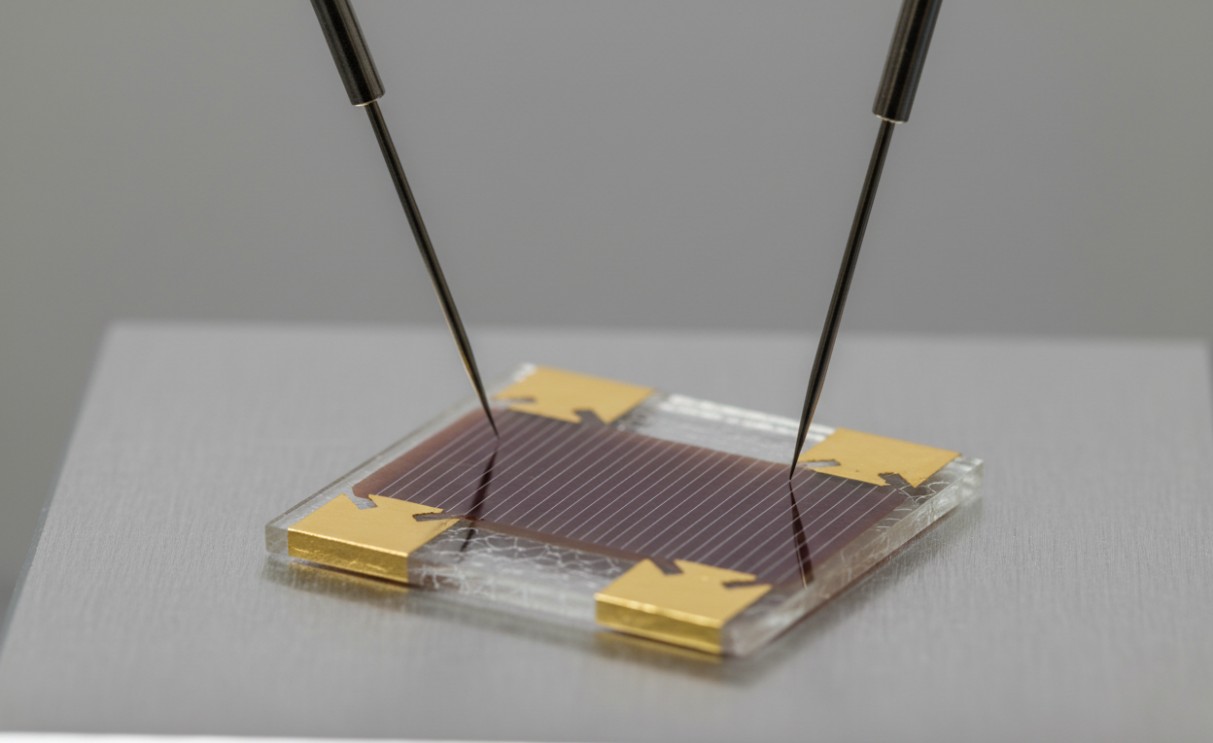 Photovoltaic device featuring a fullerene-based electron transport layer with gold electrode contacts on a transparent substrate
Biomedical Applications: Antioxidants and Drug Delivery
Beyond electronics, the unique cage structure of C60 opens doors to biomedical innovation. The fullerene surface acts as a radical sponge, scavenging reactive oxygen species with an efficiency hundreds of times greater than conventional antioxidants. This property has been harnessed in neuroprotection studies where water-soluble C60 derivatives significantly reduced oxidative stress markers in neuronal tissue. The mechanism is elegant: the delocalized electron system stabilizes unpaired electrons from free radicals, effectively neutralizing them without being consumed in the process.
Functionalized fullerenes serve as versatile drug delivery vehicles. The hollow interior can encapsulate hydrophobic drugs that would otherwise suffer from poor bioavailability, while covalently attached targeting ligands on the exterior guide the complex to specific tissues or cell types. Fullerenol C60 — the polyhydroxylated derivative — improves water solubility and biocompatibility while retaining the antioxidant core. Malonic acid-functionalized C60 provides reactive carboxyl groups for coupling with peptides, antibodies, or imaging agents. Research has demonstrated applications in photodynamic therapy, where fullerene-sensitized singlet oxygen generation kills cancer cells under light irradiation, and in MRI contrast enhancement using gadolinium-containing endohedral metallofullerenes.
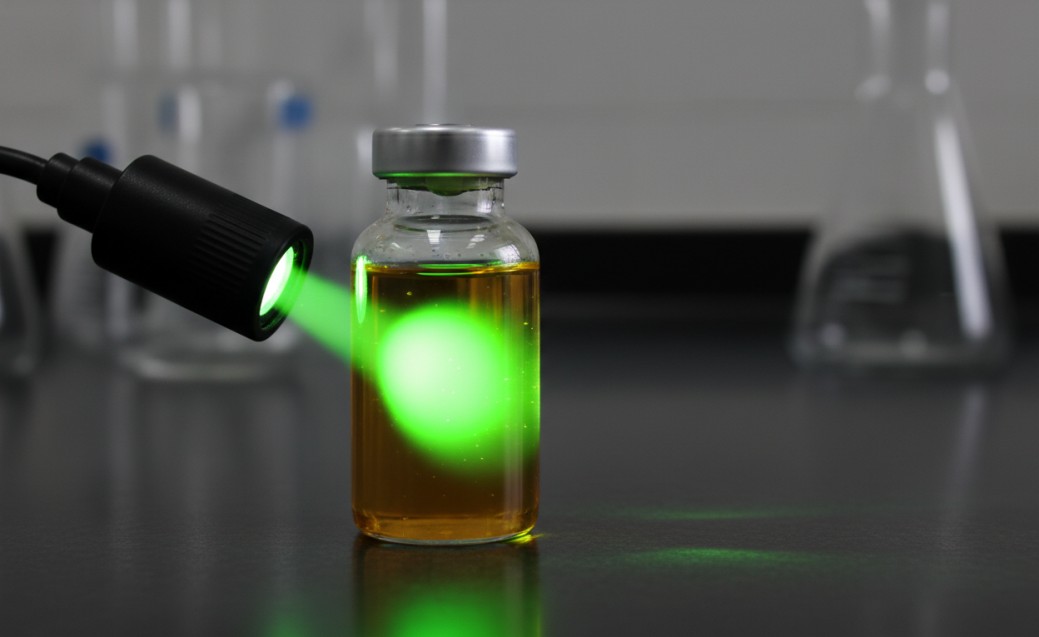 Fullerene solution in a glass vial exhibiting characteristic green fluorescence under ultraviolet light irradiation
Endohedral Metallofullerenes
Endohedral metallofullerenes represent one of the most fascinating subclasses of fullerene materials: metal atoms or clusters trapped inside the carbon cage, shielded from the external environment by a robust carbon shell. The carbon cage protects the encapsulated species from oxidation and degradation, while the metal cluster imparts magnetic, electronic, or catalytic functionality that would be impossible in the bare atomic state. Common encapsulates include gadolinium (for MRI contrast agents), lanthanum and scandium (for electronic studies), and nitrogen atom pairs such as Sc3N and Gd3N (for quantum device research).
We synthesize endohedral metallofullerenes by co-vaporizing graphite rods impregnated with metal oxides or carbides during the arc discharge process. The resulting metallofullerene-containing soot is extracted and separated by a combination of solvent extraction and multi-stage HPLC to isolate specific species such as Gd@C82, La@C82, or Sc3N@C80. Purity levels exceed 98% for standard grades. These materials are supplied as toluene solutions or as vacuum-dried powders under argon, with detailed mass spectrometry and HPLC chromatograms provided for each batch. Applications span from next-generation MRI contrast agents to single-molecule magnets and quantum computing qubits.
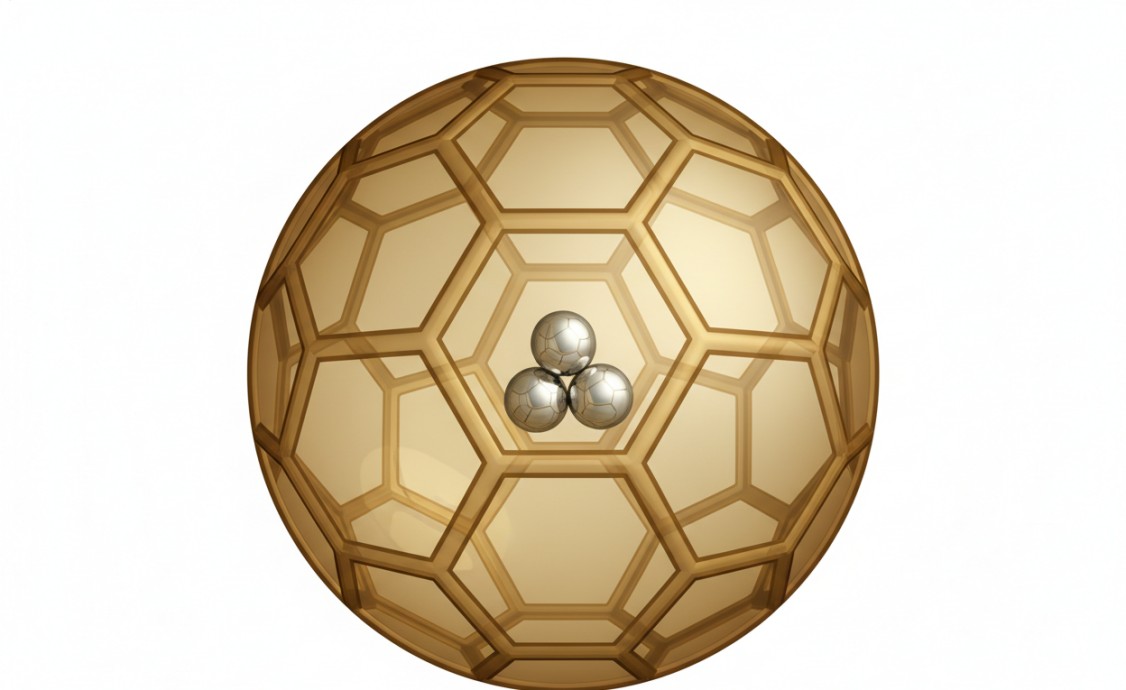 Endohedral metallofullerene structure showing metal atoms encapsulated inside a translucent fullerene carbon cage
Featured Products
| Products | Specifications | Applications |
| C60 fullerene | Purity: >99.5%; Color: black crystals | Photovoltaics, antioxidants |
| C70 fullerene | Purity: >99%; CAS 115383-22-7 | OPV acceptors, electronics |
| PCBM | CAS 160848-22-6; LUMO: -3.7 eV | OPV, perovskite ETL |
| PC70BM | CAS 609771-63-3; Broader absorption | High-Jsc solar cells |
| Bis-PCBM / ICBA | CAS 1207461-57-1; Higher LUMO | Higher Voc devices |
| Fullerenol C60 | Polyhydroxylated; Water-soluble | Biomedical, drug delivery |
| Endohedral Gd@C82 | Purity: >98%; MRI contrast | Medical imaging, quantum |
| Sublimed C60 | Trace metals: <1 ppm; Ultra-pure | Fundamental research |
Application Landscape
Organic Solar Cells: PCBM and PC70BM serve as benchmark electron acceptors in bulk heterojunction photovoltaics, enabling charge separation and transport with power conversion efficiencies exceeding 10% in optimized devices.
Perovskite Solar Cells: PCBM functions as the electron transport layer in inverted perovskite architectures, passivating surface defects and enabling certified efficiencies above 25% with enhanced stability.
Antioxidant Research: Water-soluble C60 derivatives scavenge reactive oxygen species with exceptional efficiency, protecting cells from oxidative stress in neuroprotection and anti-aging studies.
Drug Delivery: Functionalized fullerenes encapsulate hydrophobic drugs, improve bioavailability, and enable targeted delivery through covalent attachment of targeting ligands.
MRI Contrast Agents: Gadolinium-containing endohedral metallofullerenes such as Gd@C82 and Gd3N@C80 offer high relaxivity and biocompatibility for next-generation magnetic resonance imaging.
Organic Electronics: Fullerene derivatives serve as electron transport and buffer layers in organic photodetectors, thin-film transistors, and light-emitting diodes.
Quality Control and Characterization
Every fullerene product that leaves our facility is backed by comprehensive analytical data. HPLC with UV-Vis detection at 325 nm confirms purity and identifies any residual higher fullerenes or isomeric impurities. UV-Vis spectroscopy records the characteristic absorption pattern — C60 shows peaks at 213, 257, and 329 nm, while C70 exhibits its distinctive triple-peak structure at 330, 360, and 380 nm — providing a fingerprint for identity verification. Matrix-assisted laser desorption ionization time-of-flight mass spectrometry (MALDI-TOF MS) confirms molecular weight and cage integrity. For derivatives, nuclear magnetic resonance spectroscopy (^1H NMR and ^13C NMR) verifies the degree and pattern of functionalization. Thermogravimetric analysis determines thermal stability, while dynamic light scattering measures aggregate size in solution. These data are compiled into a certificate of analysis that accompanies every shipment.
Custom Synthesis and Derivatization
Our fullerene chemistry capabilities extend well beyond the standard catalog. We undertake custom synthesis of novel fullerene derivatives through established methodologies including Bingel cyclopropanation, Diels-Alder cycloaddition, Prato reaction, and 1,3-dipolar cycloaddition. Whether you need a specific adduct for bandgap engineering, a water-soluble derivative for biological studies, a polymer-grafted fullerene for composite materials, or a site-specifically functionalized cage for targeted drug delivery, our synthetic team can design and execute the route from milligram to multi-gram scale. For endohedral metallofullerenes, we accommodate custom metal encapsulates and cage sizes subject to synthetic feasibility. Contact us to discuss your specific fullerene requirements.
Request a Quote— Contact Eata Nanomaterials to discuss your fullerene requirements, request product samples, or explore custom synthesis and derivatization services tailored to your research program.
| Catalog Number | Product Name | Order | Quantity |
|---|---|---|---|
| HQF-0001 | Polyhydroxylated Fullerene (C60) |
-
+
|
|
| HQF-0002 | Fullerene Soot |
-
+
|
|
| HQF-0003 | Amino-Modified Fullerene (C60) |
-
+
|
|
| HQF-0004 | Fullerene C84 (Sublimed, >99.0%) |
-
+
|
|
| HQF-0005 | Fullerene Mixture (C60/C70/ Higher) |
-
+
|
|
| HQF-0006 | Fullerene C70 (Sublimed, 99.5%) |
-
+
|
|
| HQF-0007 | Fullerene C60 (Arc-Discharge, 99.95%) |
-
+
|
|
| HQF-0008 | Fullerene C60 (99.9%) |
-
+
|
|
| HQF-0009 | Fullerene C84 (>99.0%) |
-
+
|
|
| HQF-0010 | Fullerene C76 (>98.0%) |
-
+
|
For Research or Industrial Raw Materials, Not For Personal Medical Use!