

Silane Coupling and Surface Coating Services
Organosilane chemistry stands among the most versatile and robust approaches for modifying nanoparticle surfaces. Silane coupling agents create covalent Si-O-M bonds with oxide surfaces while presenting organic functional groups that enable further chemical derivatization, biomolecule attachment, or polymer grafting. This dual nature makes silanization indispensable for transforming bare inorganic nanoparticles into functional building blocks for advanced materials.
At Eata Nanomaterials, our silane coupling and surface coating services cover the full spectrum from surface activation and monolayer formation to multilayer coating and silica shell encapsulation. We work with diverse substrates including iron oxide, silica, titania, zinc oxide, and other metal oxides, tailoring each protocol to your specific particle system and intended application.
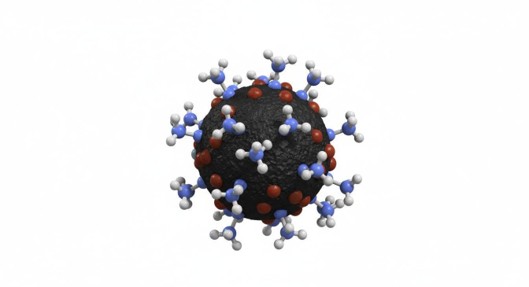 Figure 1: Organosilane molecules covalently attached to a metal oxide nanoparticle surface, presenting reactive amino functional groups.
Silane Coupling Agent Functionalization
Silane coupling agents consist of an organofunctional group connected to a silicon atom bearing hydrolyzable alkoxy substituents. Upon exposure to moisture, these alkoxy groups hydrolyze to silanols that condense with surface hydroxyl groups on oxide substrates, forming stable siloxane linkages. The organic tail extends outward, providing the desired surface functionality.
We routinely employ the following silane coupling agents in our modification protocols:
| Silane Agent | Functional Group | Application |
| APTES | Amino (-NH2) | Bioconjugation, EDC/NHS coupling, antibody attachment |
| MPTMS / MPTES | Thiol (-SH) | Gold-thiol binding, maleimide conjugation, metal chelation |
| GPTMS | Epoxy / Glycidyl | Amine-reactive, ring-opening conjugation chemistry |
| CPTES / CPTS | Chloro / Isocyanate | Highly reactive toward amines and alcohols |
| OTES / OTMS | Methyl / Octyl | Hydrophobic surface modification, water repellency |
| PTEO / PhTES | Phenyl | Hydrophobic coating, aromatic interactions |
| Si-PEG | Methoxy-PEG | Stealth coating, protein resistance, biocompatibility |
| VTS / VTMS | Vinyl | Thiol-ene click, polymer grafting, crosslinking |
The silanization process requires careful control of water content, solvent polarity, temperature, and reaction time to achieve monolayer coverage without uncontrolled polymerization. Our optimized protocols deliver reproducible surface functionalization with defined grafting densities and minimal aggregation.
APTES Functionalization and Amine Surface Engineering
3-aminopropyltriethoxysilane (APTES) ranks as the most widely utilized silane coupling agent in nanomaterials research. Its primary amine terminus serves as a versatile reactive site for immobilizing biomolecules, attaching fluorescent dyes, and crosslinking with other functional systems. Our APTES functionalization services encompass:
- Solution-phase silanization in anhydrous organic solvents (toluene, ethanol) for controlled monolayer formation on silica, iron oxide, and titania surfaces
- Vapor-phase deposition for creating ultrathin, uniform silane films without solvent-induced aggregation, ideal for sensitive nanoparticle systems
- Base-catalyzed hydroxylation pretreatment to maximize surface hydroxyl density and enhance grafting efficiency, particularly for iron oxide systems
- Acid pretreatment protocols for silica surfaces to activate silanol groups and promote dense APTES monolayer assembly
- TEOS-assisted sequential silanization forming a silica interlayer prior to APTES grafting, yielding higher amine density and improved colloidal stability
Surface hydroxyl group density critically influences silanization efficiency. We evaluate this parameter through FTIR spectroscopy and zeta potential measurements, adjusting pretreatment conditions to ensure optimal coupling yields for your specific particle system.
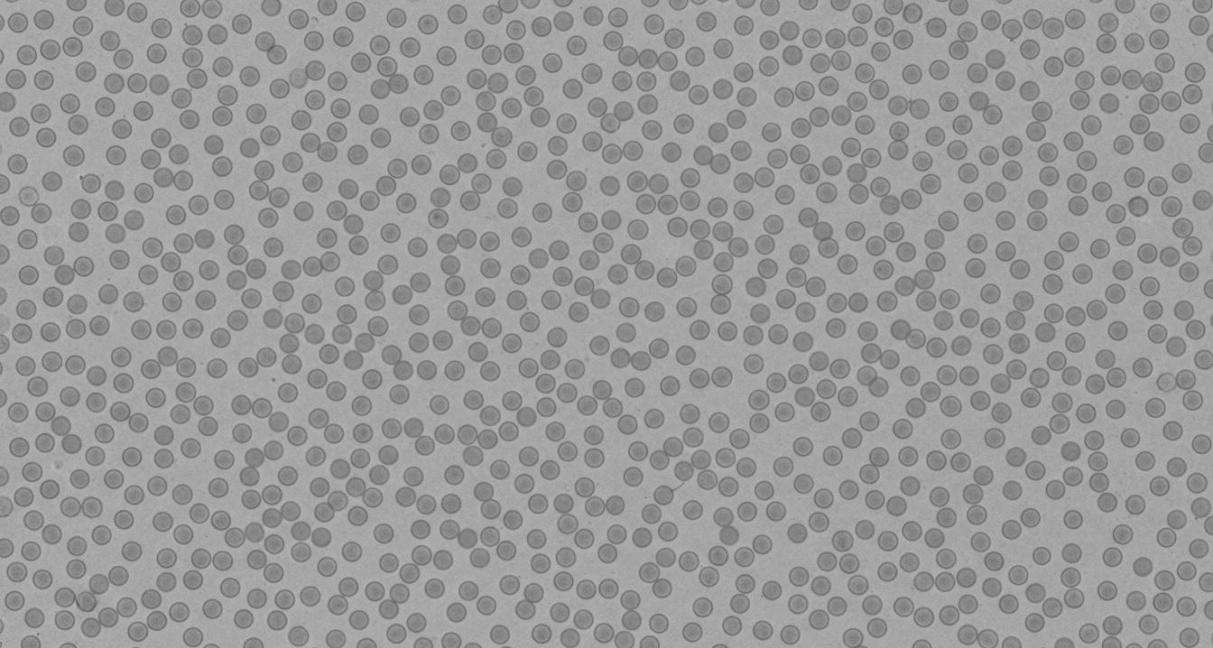 Figure 2: TEM image of monodisperse core-shell nanoparticles with uniform silica coating surrounding each core.
Silica Shell Coating via Sol-Gel and Stober Methods
Silica coating provides a chemically inert, biocompatible, and optically transparent protective layer around nanoparticle cores. The Stober method, involving base-catalyzed hydrolysis and condensation of tetraethyl orthosilicate (TEOS), enables precise control over shell thickness from ultrathin layers below 5 nm to thick shells exceeding 100 nm.
Our silica coating capabilities include:
- Direct silica coating of metal nanoparticles (gold, silver) through priming with bifunctional silanes such as MPTMS or APS, followed by TEOS growth
- Core-shell magnetic silica nanoparticles (Fe3O4@SiO2) combining superparamagnetic functionality with silica surface versatility for separation and targeting applications
- Mesoporous silica coating enabling high surface area and controlled pore sizes for drug loading, catalysis, and molecular sieving
- Reverse microemulsion silica encapsulation for coating individual quantum dots and small clusters with precise thickness control
- Fluorescent silica coating incorporating organic dyes within the silica matrix for brightly luminescent, photostable nanoparticles
Key process parameters we optimize include TEOS concentration, ammonia catalyst loading, water-to-ethanol ratio, and reaction temperature. These variables govern hydrolysis and condensation kinetics, directly influencing shell thickness, porosity, and surface roughness.
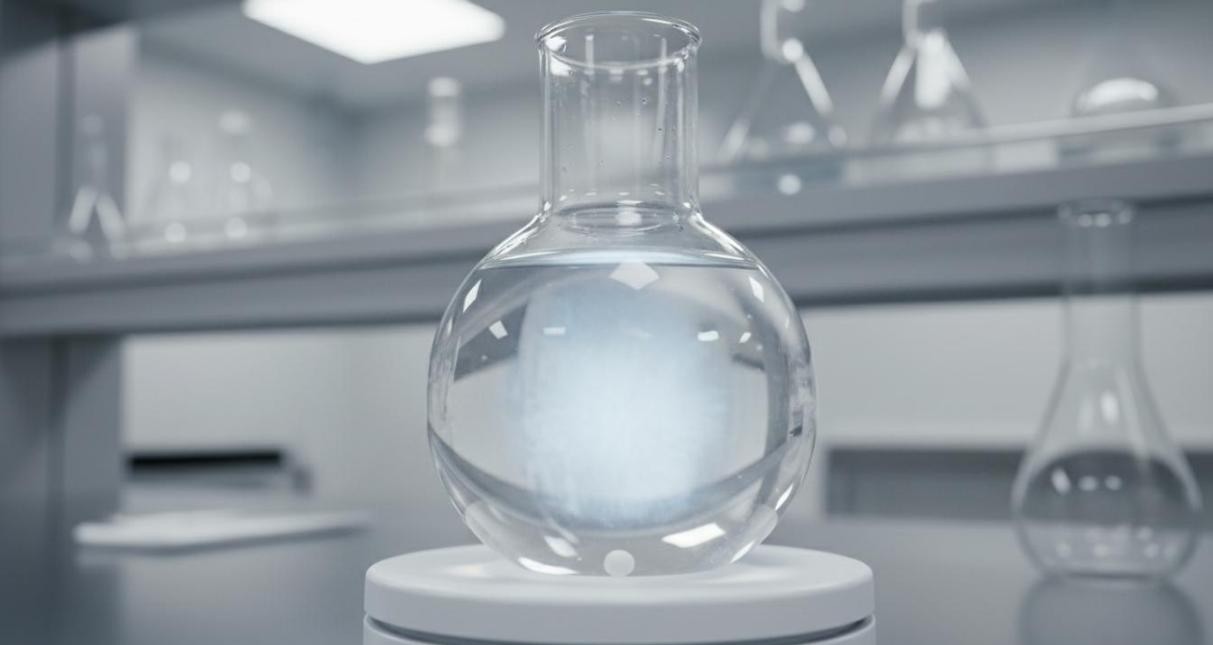 Figure 3: A round-bottom flask containing opalescent colloidal silica sol prepared via the Stober method.
Hydrophobic and Hydrophilic Surface Modification
Controlling surface wettability profoundly impacts nanoparticle dispersion behavior, protein interactions, and compatibility with different matrices. We engineer both hydrophilic and hydrophobic surfaces through strategic silane selection:
Hydrophilic surfaces: Achieved through silanes presenting hydroxyl, amino, carboxyl, or PEG groups. These surfaces promote aqueous dispersibility, resist protein adsorption, and facilitate bioconjugation. Hydrophilic coatings are essential for biomedical applications requiring stealth properties and minimal immune recognition.
Hydrophobic surfaces: Created using alkylsilanes (OTES, CTMS) or phenylsilanes presenting nonpolar organic chains. Hydrophobic coatings enhance compatibility with organic solvents, polymers, and oil-based matrices. They are valuable for nanocomposite reinforcement, hydrophobic drug encapsulation, and applications requiring water repellency.
Beyond binary hydrophilic-hydrophobic design, we fabricate amphiphilic surfaces combining both polar and nonpolar domains on the same particle, enabling surfactant-like behavior and Janus particle functionality.
Functionalization Across Oxide Nanoparticle Platforms
Different oxide substrates present distinct surface chemistries that influence silanization efficiency and coating quality. Our expertise spans the full range of oxide nanomaterials:
- Silica (SiO2): Native silanol-rich surfaces make silica the most straightforward substrate for silanization. We achieve dense monolayer coverage with minimal pretreatment requirements.
- Iron Oxide (Fe3O4 / gamma-Fe2O3): Magnetic cores requiring hydroxylation activation and careful control of base-catalyzed conditions to prevent aggregation during coating.
- Titania (TiO2): Strong photocatalytic surfaces benefit from silica interlayers that block reactive oxygen species while maintaining optical transparency.
- Zinc Oxide (ZnO): pH-sensitive substrates requiring mild silanization conditions to prevent dissolution during functionalization.
- Alumina (Al2O3): High surface acidity influencing silane hydrolysis kinetics, requiring tailored solvent systems for uniform coverage.
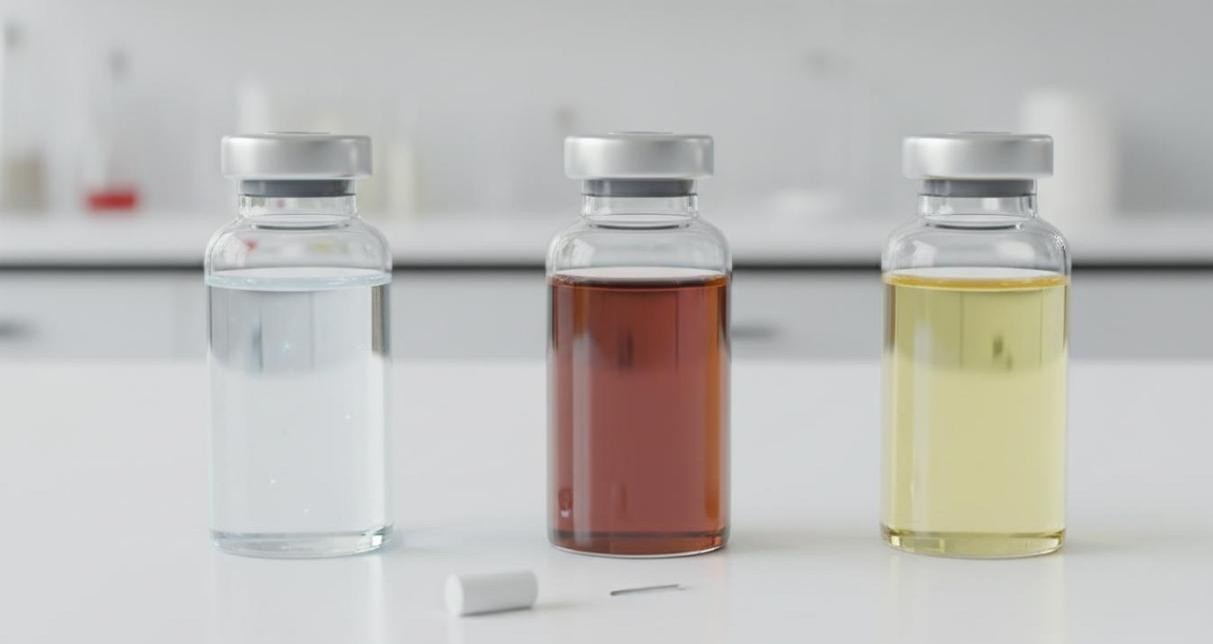 Figure 4: Three vials displaying differently coated nanoparticle dispersions: opalescent silica sol, brown iron oxide, and pale yellow titania.
Comprehensive Analytical Characterization
Every silanization and coating project undergoes rigorous analytical verification to confirm successful surface modification and assess product quality:
- Fourier-transform infrared (FTIR) spectroscopy identifying characteristic Si-O-Si, Si-O-M, and organic functional group vibrational modes
- Thermogravimetric analysis (TGA) quantifying organic content and calculating grafting density of silane monolayers
- X-ray photoelectron spectroscopy (XPS) providing elemental composition and chemical state analysis of modified surfaces
- Zeta potential measurements documenting surface charge shifts upon functionalization and predicting colloidal stability
- Dynamic light scattering (DLS) monitoring hydrodynamic diameter changes indicative of coating thickness and aggregation state
- Transmission electron microscopy (TEM) directly visualizing core-shell architectures and coating uniformity
- Energy-dispersive X-ray spectroscopy (EDX) mapping elemental distribution within core-shell structures
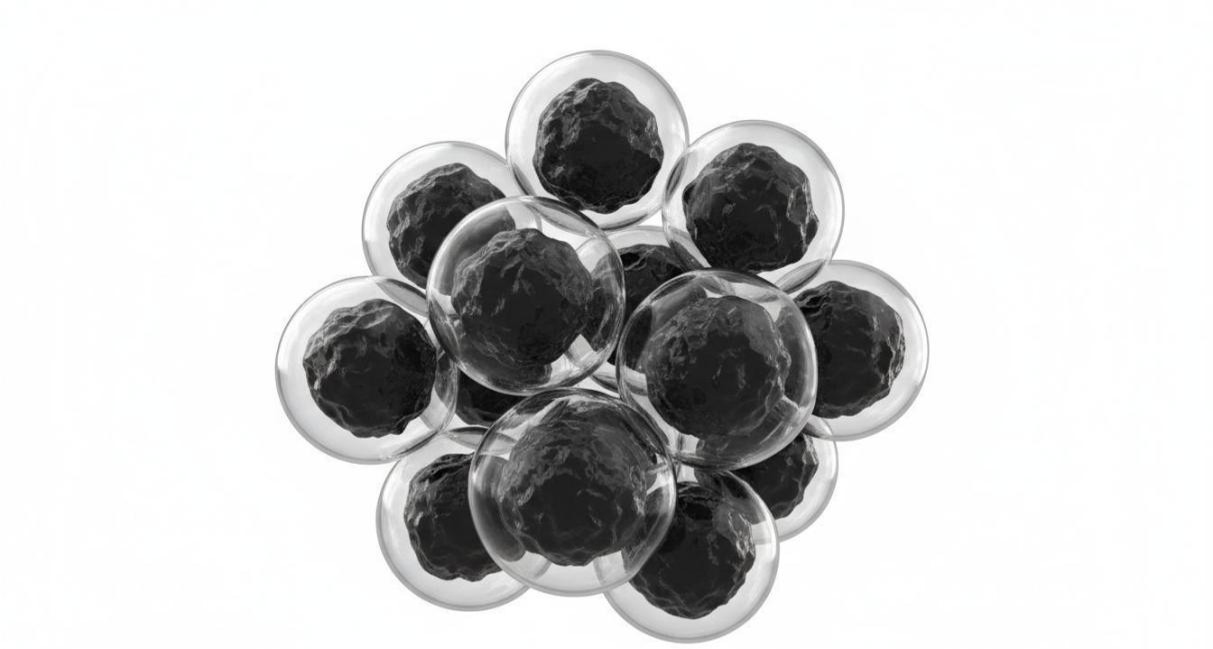 Figure 5: 3D rendering of silica-coated magnetic nanoparticles showing dark iron oxide cores encased in translucent glassy silica shells.
Applications of Silane-Modified and Coated Nanoparticles
| Application | How Silane / Coating Enables |
| Targeted drug delivery | APTES amine groups couple targeting ligands; silica shells encapsulate hydrophobic drugs |
| Magnetic separation | Silica-coated magnetic beads resist aggregation and provide durable bioconjugation sites |
| Biosensing | Organosilane monolayers immobilize bioreceptors with controlled orientation and density |
| Catalysis | Silica shells stabilize metal catalyst cores and enable molecular sieving via controlled porosity |
| Nanocomposites | Silane coupling improves nanoparticle dispersion and interfacial adhesion in polymer matrices |
| Corrosion protection | Hydrophobic silane layers create moisture barriers on metal and oxide surfaces |
Initiate Your Silane Coupling or Surface Coating Project
Whether you need to functionalize iron oxide nanoparticles with amino groups for antibody coupling, encapsulate quantum dots in a protective silica shell, or engineer hydrophobic surfaces for polymer nanocomposites, Eata Nanomaterials delivers precisely controlled silane chemistry solutions backed by comprehensive analytical characterization.
Contact our specialists to discuss your nanoparticle substrate, desired surface chemistry, and application requirements. We provide customized protocols and detailed characterization reports with every project.