

Gold/Silver/Magnetic Particle Conjugation and Modification Services
Nanoparticle Bioconjugation at Eata Nanomaterials
Surface functionalization and bioconjugation of metallic and magnetic nanoparticles unlock transformative capabilities across diagnostics, therapeutics, and materials science. At Eata Nanomaterials, we provide specialized conjugation services for gold nanoparticles, silver nanoparticles, and iron oxide magnetic particles, tailoring each system to meet precise research objectives through meticulously optimized coupling chemistry.
Our conjugation workflows bridge inorganic nanomaterials with biological recognition elements, therapeutic agents, and functional ligands. Whether you require antibody-decorated gold nanoprobes for lateral flow assays, silver nanoparticle immunolabels for enhanced Raman scattering, or magnetic particles with stimulus-responsive coatings for targeted delivery, our team delivers rigorously characterized products with batch-to-batch consistency.
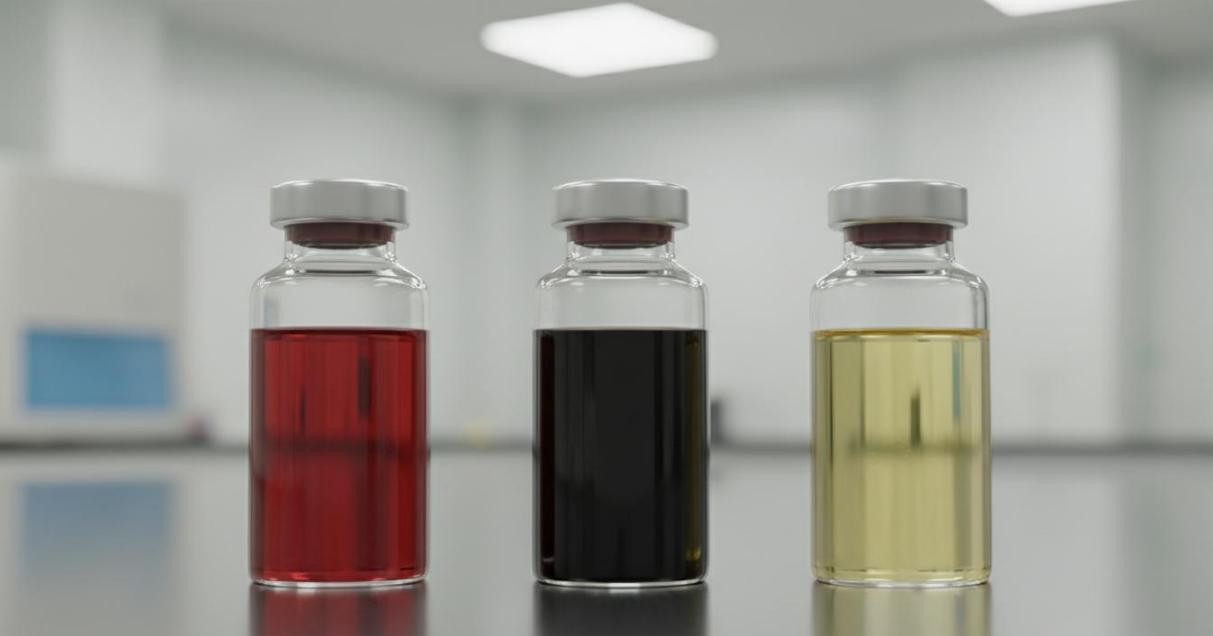 Figure 1: Colloidal dispersions of gold (red), magnetic (black), and silver (yellow) nanoparticles exhibiting characteristic plasmonic and magnetic properties.
Gold Nanoparticle Conjugation Services
Gold nanoparticles have emerged as the premier platform for bioconjugation owing to the unique affinity between gold surfaces and thiol-containing molecules. This robust yet mild interaction enables precise anchoring of antibodies, peptides, aptamers, oligonucleotides, and small-molecule ligands without compromising their biological function.
We offer multiple gold conjugation strategies tailored to your target molecules:
- Passive adsorption for antibodies and proteins onto citrate-capped gold surfaces, optimized through careful pH adjustment to approach the isoelectric point of the adsorbate
- Thiol-mediated covalent coupling utilizing heterobifunctional linkers for stable, oriented attachment of thiolated DNA, peptides, and engineered proteins
- EDC/NHS carbodiimide chemistry for coupling amine-bearing ligands to carboxyl-functionalized gold nanoparticles through stable amide bond formation
- Click chemistry approaches including copper-catalyzed azide-alkyne cycloaddition for bioorthogonal conjugation under mild aqueous conditions
Applications of our gold nanoparticle conjugates span diverse research domains:
- Lateral flow immunoassays with enhanced sensitivity and colorimetric contrast for point-of-care diagnostics
- Surface-enhanced Raman scattering (SERS) tags for ultrasensitive molecular detection and multiplexed bioanalysis
- Photothermal therapy agents leveraging near-infrared plasmonic absorption for localized hyperthermia
- Electron microscopy contrast enhancers for correlative light and electron microscopy studies
 Figure 2: Wine-red colloidal gold nanoparticle solution showing the characteristic surface plasmon resonance absorption band.
Silver Nanoparticle Conjugation and Stabilization
Silver nanoparticles exhibit exceptionally strong surface plasmon resonance with remarkable light scattering and antimicrobial properties, positioning them as valuable tools for biosensing, imaging, and infection control. Our conjugation services address the inherent challenges of silver nanoparticle stability by implementing robust surface functionalization prior to biomolecule attachment.
Our silver nanoparticle modification capabilities encompass:
- Thiol and PEG stabilization to prevent oxidative dissolution and aggregation in physiological buffers
- Chitosan and biopolymer coating for enhanced biocompatibility and controlled release of silver ions
- Antibody and aptamer conjugation through optimized carbodiimide chemistry for targeted detection platforms
- Multivalent carbohydrate functionalization leveraging the antimicrobial synergy between silver and glycomaterials
Silver nanoparticle-antibody conjugates from Eata Nanomaterials serve as powerful detection elements in immunoassay formats. The intense plasmonic scattering of silver enables single-particle resolution in dark-field microscopy, while the catalytic activity of immobilized silver toward specific chromogenic substrates provides signal amplification beyond conventional enzymatic labels.
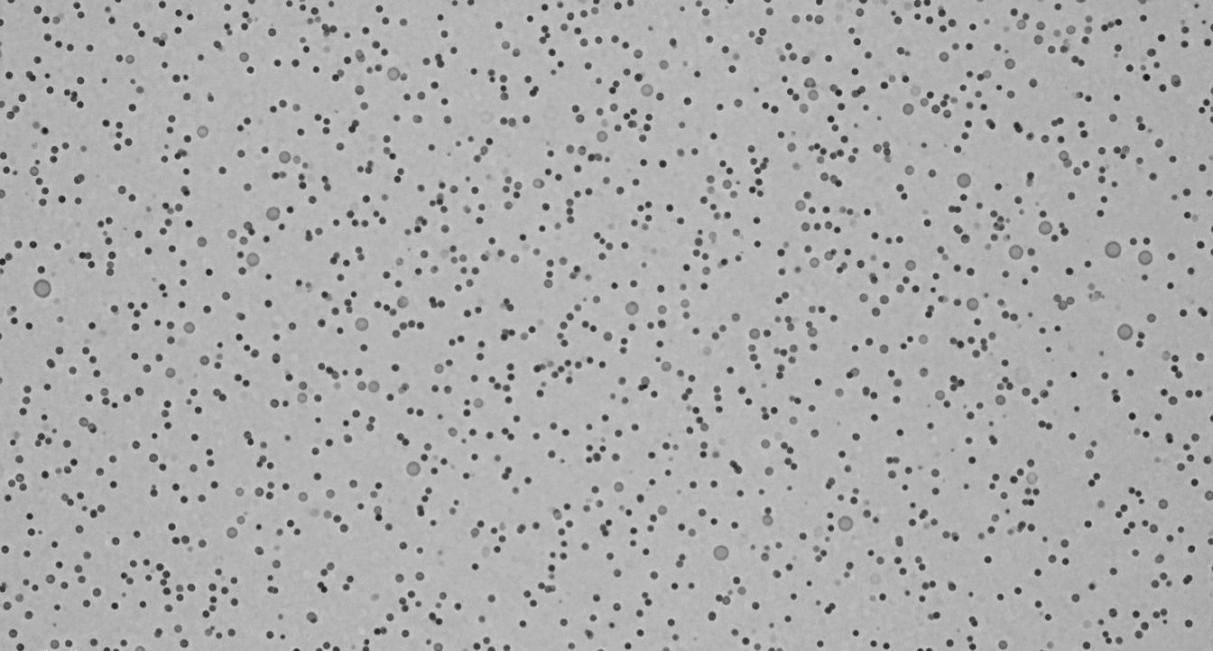 Figure 3: Transmission electron micrograph showing monodisperse spherical silver nanoparticles with uniform size distribution.
Magnetic Nanoparticle Surface Modification and Functionalization
Iron oxide magnetic nanoparticles, predominantly magnetite (Fe3O4) and maghemite (Fe2O3), offer unparalleled versatility when endowed with tailored surface chemistry. Superparamagnetism enables rapid magnetic separation, targeted guidance under external fields, and magnetic hyperthermia, while surface engineering dictates colloidal stability, biocompatibility, and conjugation capacity.
We deploy a comprehensive suite of modification strategies to functionalize magnetic nanoparticles:
| Modification Type | Chemistry / Coating | Functional Outcome |
| Silica Coating | Sol-gel TEOS hydrolysis | Protected core, silanol groups for further coupling |
| Polymer Grafting | PEG, PEI, PAA attachment | Stealth properties, charge modulation |
| Amino Functionalization | APTES silanization | Reactive -NH2 for amide coupling |
| Carboxyl Functionalization | Carboxyethylsilane or oxidation | EDC/NHS bioconjugation platform |
| DMSA Ligand Exchange | Meso-2,3-dimercaptosuccinic acid | Carboxyl-terminated, biocompatible |
| Gold Shell Coating | Seeded reduction of Au(III) | Thiol-based bioconjugation surface |
Applications driving the selection of magnetic nanoparticle functionalization include magnetic resonance imaging (MRI) contrast enhancement, magnetic-activated cell sorting (MACS), magnetofection for nucleic acid delivery, and magnetically guided drug delivery systems.
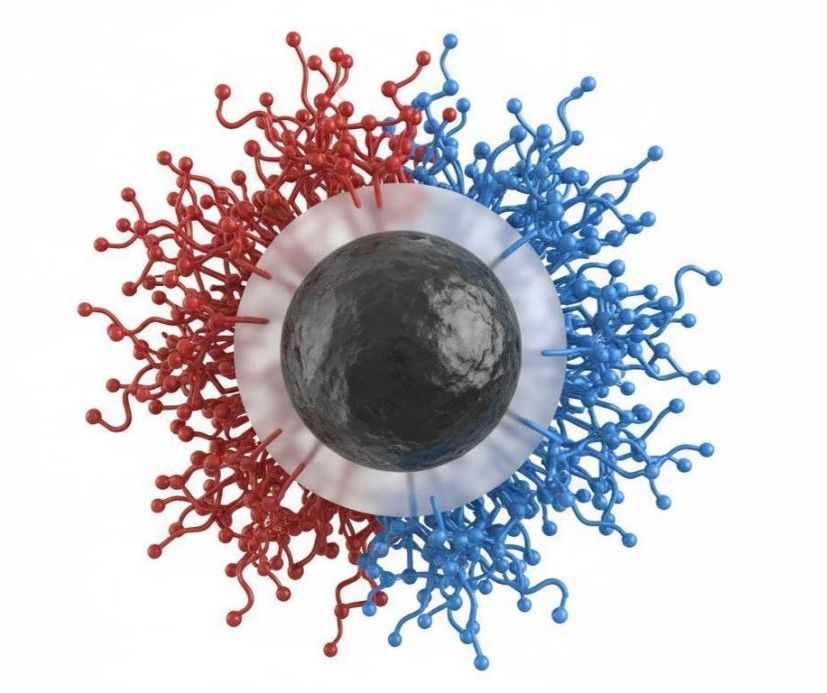 Figure 4: 3D visualization of a surface-functionalized magnetic nanoparticle with core-shell architecture and polymeric ligands.
Conjugation Chemistry and Crosslinking Strategies
The selection of conjugation chemistry profoundly influences the stability, orientation, and activity of the resulting bioconjugates. At Eata Nanomaterials, we match crosslinking strategies to the functional groups available on both nanoparticle surfaces and target biomolecules:
Thiol-gold bond formation: Exploits the strong dative bond between sulfur and gold surfaces. Ideal for direct conjugation of cysteine-containing peptides, thiolated oligonucleotides, and disulfide-reduced antibodies to gold and gold-coated particles.
Carbodiimide coupling (EDC/NHS): Activates carboxyl groups for nucleophilic attack by primary amines, forming stable amide bonds. Widely applicable for coupling antibodies, proteins, and amine-modified ligands to carboxyl-functionalized gold, silver, and magnetic particles.
Maleimide-thiol reaction: Highly specific coupling between maleimide-activated nanoparticle surfaces and free sulfhydryl groups on biomolecules. Operates under mild aqueous conditions with excellent chemoselectivity.
Click chemistry (CuAAC / SPAAC): Bioorthogonal reactions between azide and alkyne/DBCO groups that proceed with high efficiency and minimal side reactions, enabling controlled stoichiometry and site-specific labeling.
Streptavidin-biotin bridging: Utilizes the extraordinarily high affinity between streptavidin and biotin for versatile modular conjugation. Streptavidin-coated particles readily bind any biotinylated ligand with femtomolar affinity.
Passive electrostatic adsorption: Relies on optimized pH conditions to promote electrostatic attraction between charged nanoparticle surfaces and oppositely charged biomolecules. Effective for antibody adsorption onto citrate-gold and amino-magnetic particles.
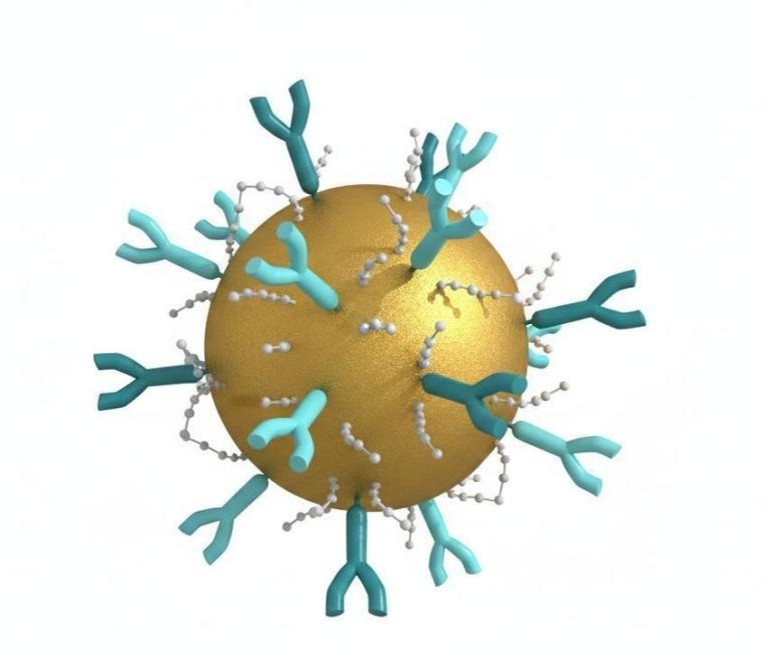 Figure 5: Schematic representation of a gold nanoparticle decorated with Y-shaped antibody molecules via linker chemistry.
Purification and Quality Control Protocols
Following conjugation, every preparation undergoes systematic purification to remove unreacted reagents, uncoupled biomolecules, and aggregated material. Our standard purification repertoire includes gel filtration chromatography, magnetic separation and washing, centrifugal ultrafiltration, and preparative sucrose density gradient ultracentrifugation.
Rigorous quality control ensures that each conjugate batch meets defined specifications before release:
- UV-Vis spectroscopy confirms plasmonic peak integrity and estimates conjugation efficiency through absorbance shifts
- Dynamic light scattering (DLS) verifies hydrodynamic diameter changes indicative of successful surface modification
- Zeta potential measurements document surface charge alterations following conjugation
- Transmission electron microscopy (TEM) provides direct visualization of particle morphology and conjugate architecture
- Fourier-transform infrared (FTIR) spectroscopy identifies characteristic vibrational modes of coupled ligands
- X-ray photoelectron spectroscopy (XPS) delivers elemental composition data confirming surface chemistry
- Superconducting quantum interference device (SQUID) magnetometry quantifies saturation magnetization and coercivity for magnetic conjugates
Research Applications by Particle Type
| Application Area | Gold Nanoparticles | Silver Nanoparticles | Magnetic Nanoparticles |
| Diagnostics | Lateral flow assays, SERS probes | Immunolabeling, plasmonic sensing | MRI contrast, magnetic biosensors |
| Therapeutics | Photothermal therapy | Antimicrobial coatings | Magnetic hyperthermia, drug targeting |
| Imaging | Dark-field microscopy | Enhanced Raman imaging | MRI, MPI, magnetic cell tracking |
| Separation | Not applicable | Not applicable | MACS, magnetic extraction, purification |
| Delivery | Nucleic acid vectors | Wound healing formulations | Magnetofection, guided delivery |
Partner with Eata Nanomaterials for Your Conjugation Projects
Our nanoparticle conjugation services combine deep expertise in surface chemistry, biomolecular engineering, and nanomaterial characterization to deliver high-performance bioconjugates for demanding research applications. From exploratory pilot studies requiring milligram-scale material to ongoing programs demanding consistent multi-batch production, we adapt our processes to your scale and specifications.
Reach out to our technical specialists to discuss your conjugation requirements, review available customization options, and obtain a tailored proposal aligned with your research timeline and objectives.