

Carbon Nanotube Synthesis and Purification Services
Carbon nanotubes stand as one of the most extensively studied nanomaterials since their discovery, and for compelling reasons. Their unique combination of mechanical strength, electrical conductivity, thermal stability, and chemical versatility has opened doors across electronics, energy storage, structural composites, biomedical devices, and environmental remediation. However, the gap between commercially available carbon nanotubes and those that meet the exacting demands of advanced research remains significant. At Eata Nanomaterials, we bridge that gap by offering fully customizable synthesis, purification, and functionalization services that deliver carbon nanotubes with precisely defined diameters, lengths, wall numbers, and surface chemistries.
Whether your work calls for individually suspended single-walled nanotubes with specific chiralities, high-purity vertically aligned forests for device fabrication, or surface-functionalized multi-walled tubes for composite reinforcement, our platform provides the flexibility and control you need. Every synthesis campaign is designed around your application, characterized exhaustively, and optimized for reproducibility across batches.
Single-Walled & Multi-Walled Carbon Nanotube Synthesis
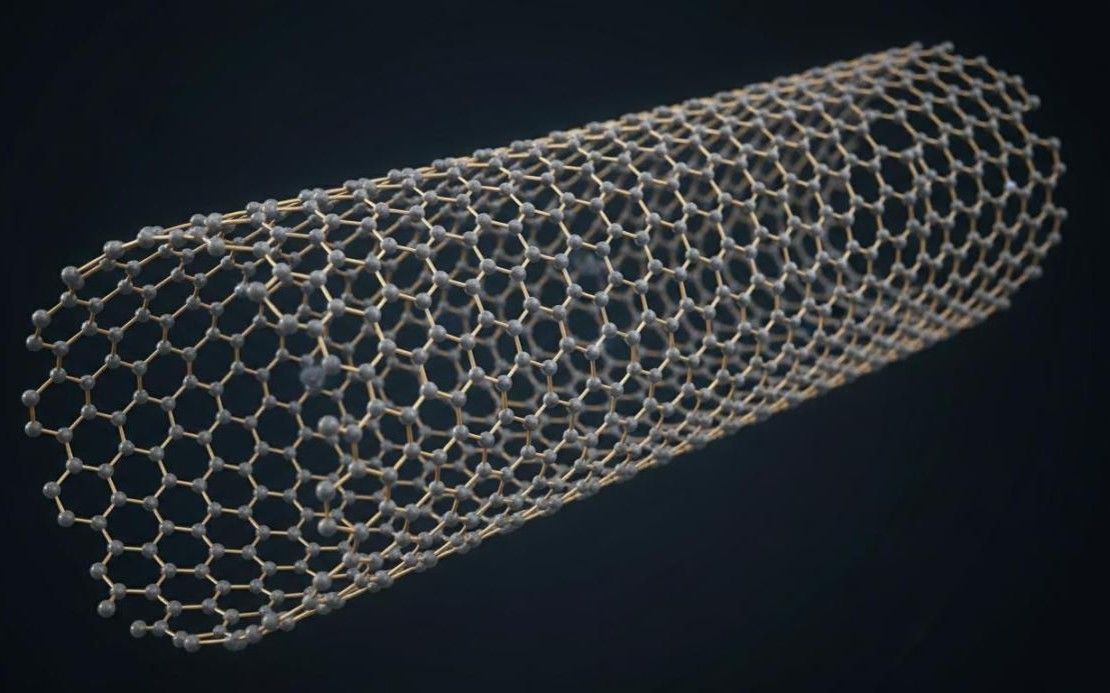 Figure 1: Single-walled carbon nanotube showing seamless cylindrical graphene lattice structure with visible hexagonal carbon arrangement
The wall number of a carbon nanotube fundamentally dictates its properties and applications. Single-walled carbon nanotubes (SWCNTs) behave as either metals or semiconductors depending on their chirality — the precise geometric roll-up vector that determines electronic structure. This makes them extraordinarily valuable for transistor channels, chemical sensors, and transparent conductive films. Multi-walled carbon nanotubes (MWCNTs), comprising multiple concentric graphene cylinders, offer superior mechanical robustness, easier processing, and lower cost — ideal for structural composites, conductive fillers, and energy storage electrodes.
We synthesize both SWCNTs and MWCNTs through catalytic chemical vapor deposition (CVD), the most versatile and controllable method for producing high-quality nanotubes. By carefully tuning catalyst composition, growth temperature, carbon feedstock, and gas flow dynamics, we achieve precise control over nanotube diameter, length, wall number, and alignment.
Synthesis parameters we control:
- Catalyst engineering: Bimetallic Fe-Mo, Co-Mo, and Ni-based catalysts supported on alumina, silica, or magnesium oxide; catalyst particle size determines nanotube diameter with sub-nanometer precision.
- Carbon feedstock selection: Methane, ethylene, acetylene, and ethanol as carbon sources; each yields distinct nanotube quality, growth rate, and defect density profiles.
- Growth mode control: Floating catalyst for bulk powder production; fixed-bed CVD for substrate-aligned growth; water-assisted "supergrowth" for ultra-long, dense nanotube forests.
- Diameter tuning: SWCNTs from 0.8 to 2.5 nm; MWCNTs with inner diameters 5-10 nm, outer diameters 10-50 nm, and 3-20 walls — all adjustable through catalyst and process optimization.
- Length control: Micron-scale powder nanotubes for composite applications; millimeter to centimeter-long aligned forests for device fabrication and mechanical property studies.
Vertically Aligned Carbon Nanotube Forest Growth
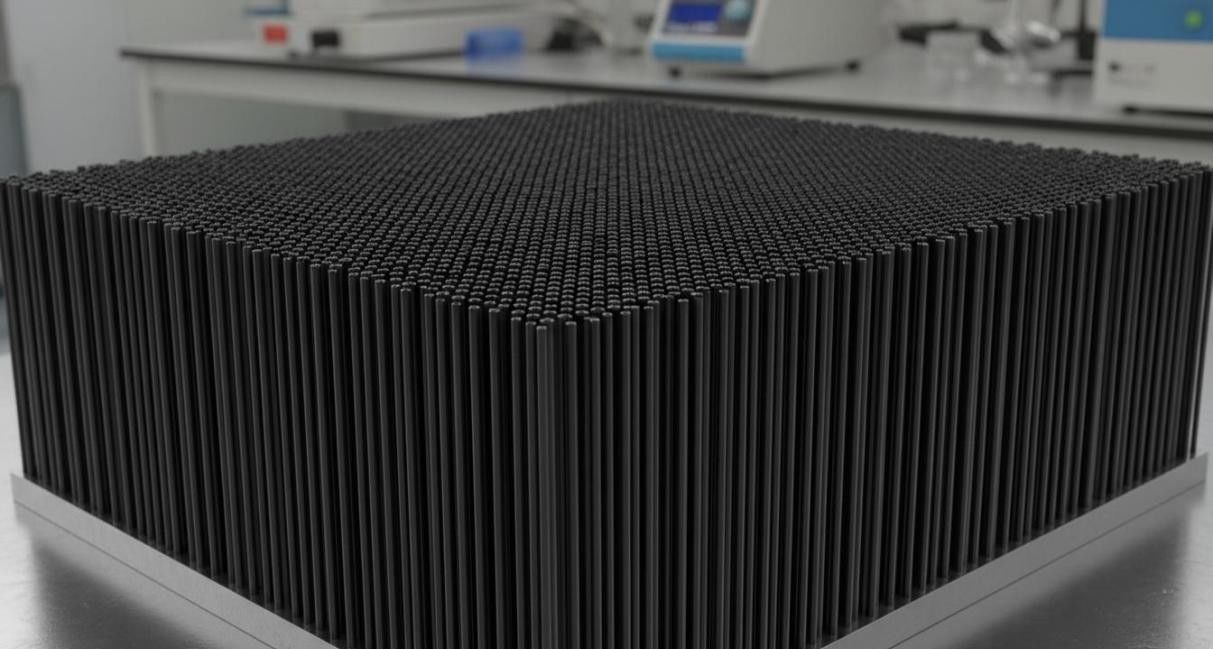 Figure 2: Vertically aligned multi-walled carbon nanotube forest grown on silicon substrate by CVD showing dense perpendicular nanotube array
Vertically aligned carbon nanotube arrays — often called nanotube forests — represent one of the most architecturally distinctive forms of these materials. In these structures, thousands of nanotubes grow perpendicular to a substrate surface in a mutually parallel arrangement, creating a carpet-like morphology with exceptional anisotropic properties. The aligned geometry enables directional thermal and electrical conduction, mechanical compliance in compression, and a uniquely high surface area accessible from the top of the array.
Our aligned CNT growth service produces nanotube forests on silicon, quartz, metal foil, and flexible polymer substrates with controllable areal density, height, and tube diameter. We employ both thermal CVD and plasma-enhanced CVD (PECVD) systems, with PECVD offering the advantage of lower growth temperatures compatible with CMOS and polymer substrates. Forest heights range from microns to several millimeters depending on growth time and conditions.
Applications we target with aligned CNT growth:
- Field emission devices: Dense, uniform emitter arrays with low turn-on electric fields and high emission current stability.
- Thermal interface materials: Compliant, high-conductivity interfaces between heat-generating components and heat sinks.
- Energy storage electrodes: High surface area, binder-free supercapacitor and battery electrodes with rapid ion transport.
- Membrane filtration: Aligned CNT membranes with atomically smooth inner walls enabling ultra-fast fluid transport and selective molecular sieving.
- Dry adhesive & buckypaper: Gecko-inspired adhesives and mechanically robust buckypaper sheets for structural and electrical applications.
Advanced Purification & Impurity Removal
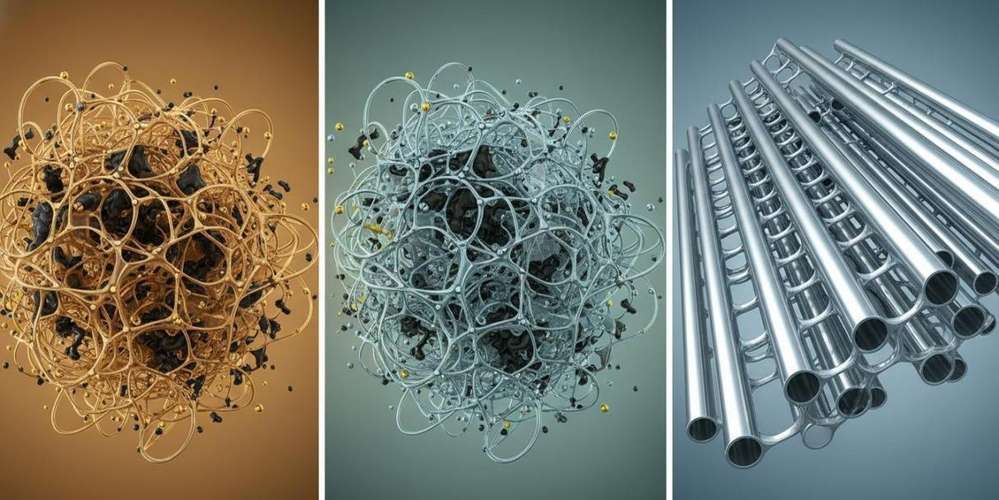 Figure 3: Carbon nanotube purification process showing three stages: raw soot with impurities, acid-treated intermediate, and final pristine nanotubes
As-synthesized carbon nanotubes inevitably contain impurities — residual metal catalyst particles, amorphous carbon, fullerenes, and carbonaceous nanoparticles — that can severely compromise their performance in sensitive applications. Our purification service employs a carefully designed sequence of treatments to remove these contaminants while preserving the structural integrity and intrinsic properties of the nanotubes.
The purification protocol is tailored to the specific impurity profile of each synthesis batch and the sensitivity of the target application. Aggressive purification can introduce defects and shorten nanotubes, so we optimize the treatment conditions to achieve the highest possible purity with minimal collateral damage. Our typical purification protocols achieve metal contents below 0.2 wt% and dramatically reduce amorphous carbon fractions.
| Method | Target Impurities | Outcome |
| Acid reflux (HCl/HNO3) | Metal catalysts (Fe, Co, Ni, Mo) | Dissolves and removes residual metal oxides; metal content <0.2 wt% |
| Air oxidation (300-500 C) | Amorphous carbon, fullerenes | Selectively oxidizes disordered carbon; preserves intact nanotubes |
| H2O2 treatment | Amorphous carbon, surface contaminants | Mild oxidative cleaning with minimal nanotube damage |
| Thermal annealing (Ar/H2) | Surface functional groups, oxides | Removes oxygen-containing groups; restores graphitic structure |
| Microwave heating | Amorphous carbon shell around metals | Localized heating at metal sites oxidizes surrounding carbon |
| Density gradient ultracentrifugation | Carbonaceous impurities, bundles | Separates by buoyant density; yields chirality-enriched fractions |
Multi-Walled Carbon Nanotube Engineering
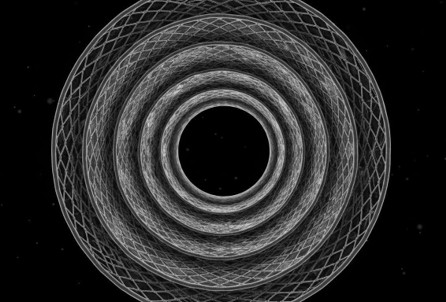 Figure 4: Cross-sectional view of a multi-walled carbon nanotube showing concentric graphene cylindrical layers with hollow core center
Multi-walled carbon nanotubes offer a pragmatic and cost-effective pathway to harnessing nanotube properties in real-world applications. Their multiple concentric walls provide mechanical redundancy, enhanced thermal stability, and greater tolerance to chemical functionalization compared to their single-walled counterparts. MWCNTs also exhibit metallic behavior regardless of chirality, simplifying their use in conductive and electromagnetic applications.
We engineer MWCNTs with precisely controlled wall numbers, inner and outer diameters, and aspect ratios to match application requirements. Few-walled nanotubes (3-5 walls) occupy an attractive middle ground — offering many of the electrical and mechanical advantages of SWCNTs with improved processability. Thick-walled MWCNTs provide maximum mechanical reinforcement and electrical conductivity per unit volume for composite and coating applications.
MWCNT customization options:
- Diameter engineering: Inner diameter 3-20 nm, outer diameter 10-80 nm; controlled by catalyst particle size and growth temperature.
- Wall number control: 3-5 walls (few-walled), 5-10 walls (thin MWCNTs), 10-30 walls (thick MWCNTs) — selectable through growth recipe optimization.
- Length specification: Short (1-10 um) for enhanced dispersion in composites; long (50-200 um) for mechanical property maximization.
- Straight vs. coiled morphology: Conventional straight MWCNTs or helically coiled nanotubes with unique mechanical and electromagnetic properties.
- Hollow vs. bamboo morphology: Open-ended hollow tubes for filling and encapsulation; compartmentalized bamboo structures for selective adsorption.
Surface Functionalization & Dispersion Engineering
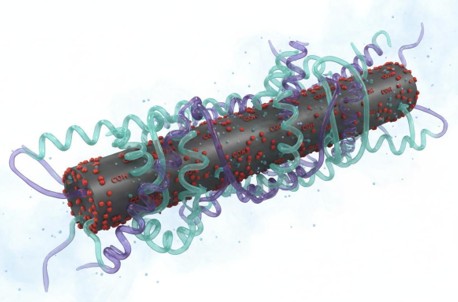 Figure 5: Polymer-functionalized carbon nanotube with carboxyl groups and PEG chains grafted to the sidewalls for enhanced dispersibility
Pristine carbon nanotubes are intrinsically hydrophobic and tend to aggregate into tightly bound bundles through strong van der Waals interactions. This poor dispersibility in both aqueous and organic media has historically been one of the most significant barriers to their practical application. Our surface functionalization service systematically overcomes this challenge by chemically or physically modifying nanotube surfaces to render them compatible with target solvents, polymer matrices, and biological environments.
We employ both covalent and non-covalent functionalization strategies. Covalent approaches create permanent chemical bonds on nanotube end caps and sidewalls — opening the way for strong polymer grafting, biomolecule conjugation, and targeted drug delivery. Non-covalent approaches wrap nanotubes in surfactants, polymers, or biomolecules through pi-stacking and hydrophobic interactions, preserving the pristine electronic structure while enabling excellent dispersion stability.
| Functionalization | Description & Applications |
| Carboxylation (-COOH) | Strong acid oxidation introduces carboxyl groups; enables amide coupling, esterification, and biomolecule attachment for biosensing and drug delivery |
| Hydroxylation (-OH) | Hydroxyl groups via H2SO4/HNO3 or H2O2 treatment; improves hydrophilicity and reactivity for polymer grafting |
| Amine functionalization | Ethylenediamine or APTES grafting; positive surface charge for gene delivery, cell adhesion, and layer-by-layer assembly |
| PEGylation | PEG chain attachment for biocompatibility, stealth properties, and enhanced solubility in aqueous and physiological media |
| Polymer grafting (ATRP/RAFT) | "Grafting-from" and "grafting-to" approaches for PMMA, PS, PVA, and polyamide brushes; maximizes composite interfacial adhesion |
| Fluorination | Direct fluorination with F2 gas; transforms conductivity and wetting properties; enables subsequent nucleophilic substitution |
| Surfactant wrapping | SDS, SDBS, CTAB, Pluronic F127, and DNA wrapping for stable aqueous dispersions without covalent damage |
Comprehensive Carbon Nanotube Characterization
Reliable characterization is fundamental to carbon nanotube quality assurance and application success. Our analytical laboratory is equipped with state-of-the-art instrumentation to fully characterize the structural, chemical, and physical properties of every nanotube batch we produce. We provide detailed characterization reports with all data, enabling confident integration into your research workflow.
- Structural analysis: Raman spectroscopy (D/G ratio for defect density, RBM for diameter, G-band splitting for chirality); TEM and HRTEM (wall number, diameter, morphology, crystallinity); SEM (length, bundling, alignment quality).
- Chemical characterization: X-ray photoelectron spectroscopy (elemental composition, C/O ratio, functional group identification); thermogravimetric analysis (purity, thermal stability, metal content quantification); FTIR spectroscopy (confirmation of surface functional groups).
- Physical properties: UV-Vis-NIR absorption spectroscopy (electronic transitions for chirality assessment); dynamic light scattering and zeta potential (dispersion quality and colloidal stability); Brunauer-Emmett-Teller analysis (specific surface area).
- Magnetic & electrical properties: Vibrating sample magnetometry (residual catalyst magnetic signature); four-point probe measurements (electrical conductivity and sheet resistance of CNT films and buckypaper).
Application-Driven CNT Development Programs
Carbon nanotubes serve as enabling materials across an extraordinarily broad range of applications. Rather than offering one-size-fits-all products, we structure our development programs around the specific demands of each application domain — optimizing synthesis, purification, and functionalization parameters to maximize performance in the target use case.
- Structural composites: High aspect ratio MWCNTs with optimized surface chemistry for polymer, metal, and ceramic matrix reinforcement; improved tensile strength, electrical conductivity, and EMI shielding.
- Energy storage: High-purity SWCNTs and MWCNTs for supercapacitor electrodes and Li-ion battery conductive additives; aligned CNT forests for binder-free electrodes.
- Biomedical & drug delivery: Short, purified, and functionalized MWCNTs for in vitro and in vivo applications; PEGylated and targeting-ligand-modified nanotubes for cancer theranostics.
- Transparent conductors: High-quality, purified SWCNT networks for flexible transparent electrodes in displays, touchscreens, and photovoltaic devices.
- Sensors & actuators: Individual or network SWCNT devices for chemical vapor sensing, strain sensing, and electromechanical actuation.
Secure High-Quality Carbon Nanotubes Tailored to Your Research
Contact Eata Nanomaterials to discuss your carbon nanotube synthesis, purification, and functionalization requirements. Our materials scientists will design a custom production and characterization program aligned with your specific application needs.