

Plasma Surface Treatment Services
Plasma surface treatment offers a uniquely powerful approach to modifying nanomaterial surfaces without the constraints of wet chemistry. By generating a partially ionized gas containing energetic electrons, ions, free radicals, and excited neutral species, plasma processes can activate, functionalize, coat, or etch surfaces under precisely controlled conditions that conventional chemical methods cannot replicate.
At Eata Nanomaterials, we operate a comprehensive suite of plasma treatment platforms spanning non-thermal atmospheric pressure systems and low-pressure radio-frequency reactors. Our capabilities encompass nanoparticle surface activation, polymer hydrophilization, carbon nanomaterial functionalization, plasma polymerization, and controlled surface etching, serving researchers across biomedicine, catalysis, energy storage, and nanocomposite development.
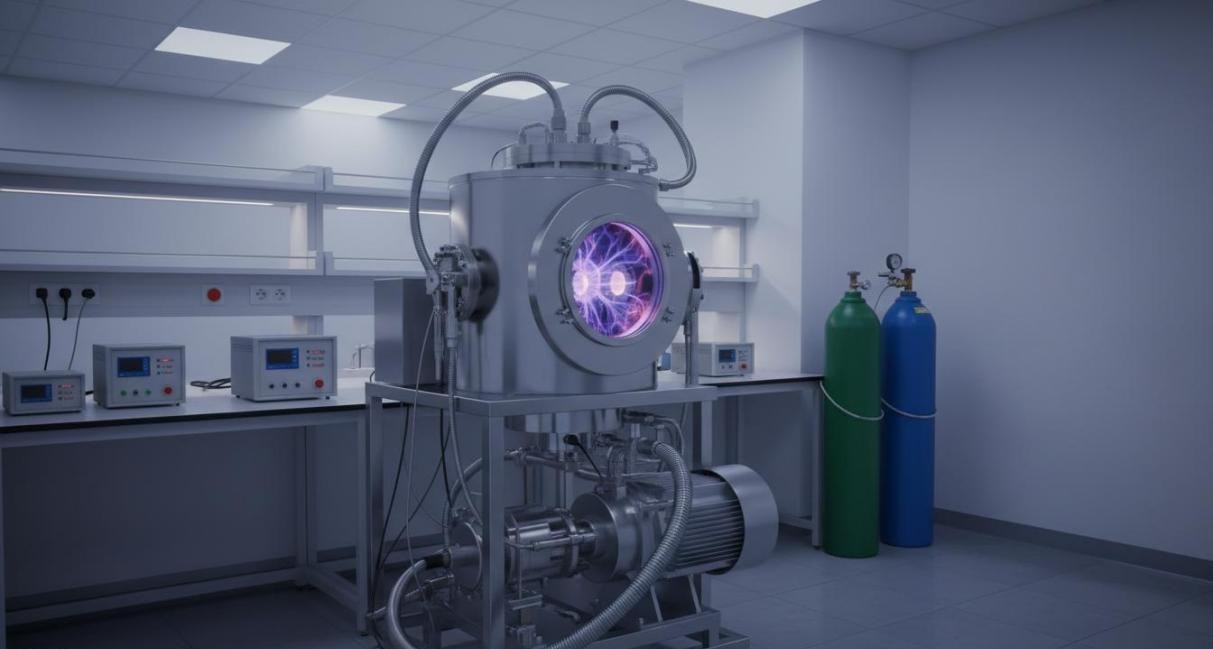 Figure 1: A radio-frequency plasma reactor system operating with purple-blue discharge for surface modification of nanomaterials.
Plasma Treatment Platforms
We maintain multiple plasma systems to match the processing requirements of diverse substrates and applications. Each platform offers distinct advantages in terms of treatment uniformity, penetration depth, thermal load, and scalability:
Dielectric Barrier Discharge (DBD): Operates at atmospheric pressure in air or controlled gas mixtures, generating a uniform glow discharge between asymmetric electrodes separated by a dielectric barrier. Ideal for activating planar substrates, polymer films, and textile surfaces without vacuum requirements. Treatment times range from seconds to minutes.
Radio-Frequency (RF) Low-Pressure Plasma: A cylindrical stainless steel chamber powered at 13.56 MHz with precise control over gas composition, pressure, power, and treatment time. Base pressure below 5e-5 Torr ensures minimal contamination. Suited for delicate nanoparticles requiring gentle yet highly controlled surface modification.
Atmospheric Pressure Plasma Jet (APPJ): Delivers a directed plasma plume at ambient conditions, enabling localized treatment with high spatial precision. The jet creates a visible stream of reactive species that can be scanned across substrates for patterned functionalization.
Inductively Coupled Plasma (ICP) Polymerization: Employs a rotating barrel configuration for uniform coating of particulate materials. RF power drives monomer fragmentation and polymerization, depositing thin functional films on nanoparticle surfaces with conformal coverage.
Nanoparticle Surface Activation
When nanoparticles are exposed to plasma, their surfaces acquire a negative charge due to the high kinetic velocity of electrons. This charging attracts positively charged ions, leading to effective collisions that modify surface chemistry. The mechanism involves energetic electrons ionizing and exciting gas molecules, creating reactive species that induce direct surface reactions.
Our nanoparticle activation services deliver:
- Introduction of oxygen-containing polar groups (carboxyl, hydroxyl, carbonyl) through O2 or air plasma treatment, dramatically enhancing aqueous dispersibility
- Amine functionalization via NH3/N2 plasma discharge, creating reactive -NH2 groups for subsequent bioconjugation without aggressive wet chemistry
- Controlled surface etching that increases surface roughness and area, improving interfacial adhesion in nanocomposite formulations
- Removal of organic contaminants and surface passivation layers to expose pristine reactive sites for downstream coupling reactions
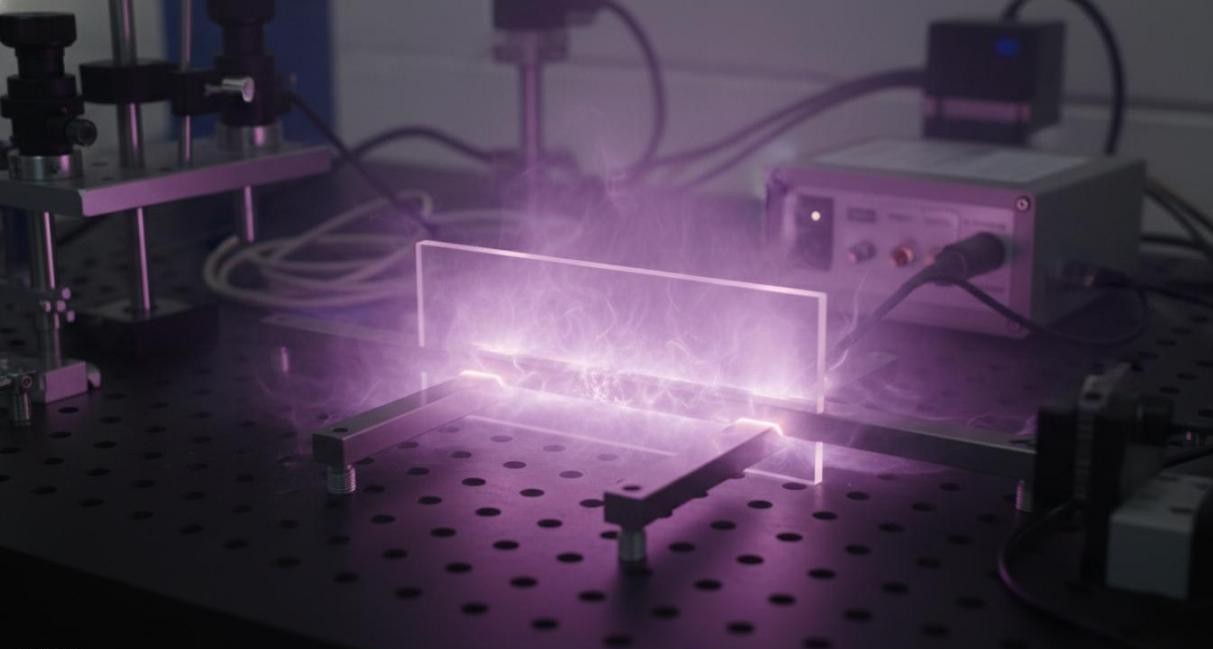 Figure 2: A dielectric barrier discharge system producing uniform purple-pink glow plasma between parallel plate electrodes.
Carbon Nanomaterial Functionalization
Plasma treatment has emerged as a leading method for modifying carbon nanomaterials including graphene, carbon nanotubes, and carbon quantum dots. Unlike harsh acid oxidation that introduces structural damage, non-thermal plasma introduces functional groups under mild, solvent-free conditions while preserving the intrinsic properties of the carbon backbone.
Our carbon nanomaterial plasma functionalization capabilities include:
- O2 plasma oxidation of graphene introducing C-O-C and C=O groups that enhance NH3 gas sensing through vacancy-type defect interactions
- H2 plasma hydrogenation converting sp2 carbon to sp3 graphane with tunable bandgap opening for electronic applications
- Ar plasma generating dangling bonds that react with atmospheric O2 and moisture to create controlled oxygen functionalities
- NH3/N2 atmospheric discharge incorporating amine groups on CNT surfaces for biosensor scaffold fabrication
- He DBD plasma activation followed by ammonia chemisorption, yielding amine-rich MWCNT surfaces for biomolecule immobilization
Functionalization density is precisely controlled through treatment time and plasma power. Short treatments (5-20 seconds) generate highly active sites for chemisorption, while extended treatments create additional defects that moderate adsorption strength and improve sensing cyclability.
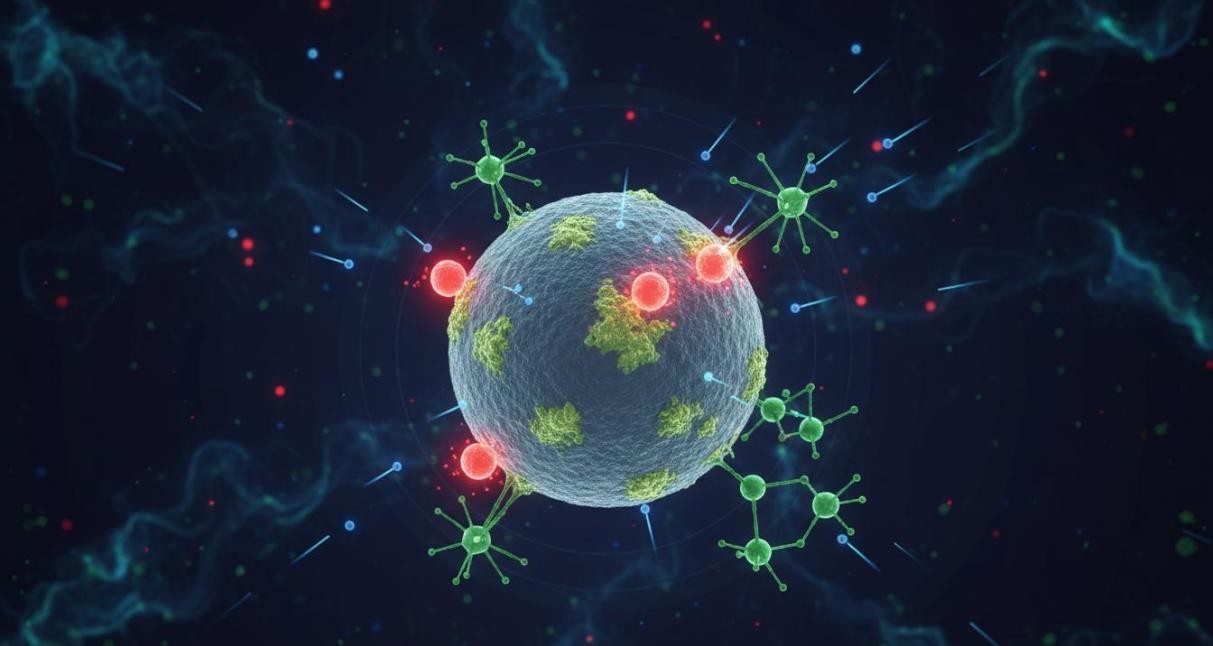 Figure 3: A nanoparticle being bombarded by plasma species including electrons, ions, and radicals, inducing surface chemical modifications.
Polymer and Nanofiber Surface Modification
Non-thermal plasma ranks among the most advanced techniques for modifying polymeric surfaces without affecting bulk properties. Since ions and neutral species remain at or near room temperature, temperature-sensitive polymers including PCL, PLGA, zein, and electrospun nanofiber scaffolds can be safely treated without thermal degradation.
Our polymer plasma treatment services provide:
- Hydrophilization of hydrophobic polymer surfaces through introduction of polar -COOH and -OH groups, reducing water contact angles by more than 50 percent within minutes
- Surface etching creating nanoscale roughness that enhances cell adhesion and proliferation on tissue engineering scaffolds
- Crosslinking of surface polymer chains to improve mechanical durability and chemical resistance
- Grafting of biologically active compounds and ligands for integrin binding on tissue culture substrates
- Long-term hydrophilic retention through plasma-induced polymerization of phospholipid-mimetic coatings maintaining contact angles below 10 degrees for over 100 days
Plasma Polymerization and Thin Film Deposition
Plasma-enhanced chemical vapor deposition (PECVD) enables direct coating of nanomaterial surfaces with thin functional polymer films. Unlike conventional polymerization, plasma polymerization does not require precise stoichiometry or volatile precursors, operating instead through fragmentation and recombination of monomer vapors in the plasma zone.
| Monomer / Precursor | Coating Property | Application |
| Acetylene / Ethylene | Hydrophobic carbon film | Protective coating, barrier layer |
| Acrylic acid | Hydrophilic, carboxyl-rich | Bioconjugation platform |
| Thiophene | Sulfur-rich, hydrophobic | Metal chelation, catalyst support |
| Hexafluoropropylene | Superhydrophobic fluoropolymer | Anti-fouling, anti-corrosion |
| Siloxanes | Silica-like, biocompatible | Medical device coating |
| MPC (phospholipid) | Ultra-hydrophilic zwitterionic | Microfluidic channels, biosensors |
Plasma polymerized nanoparticles (PPNs) can also be collected as free-standing particles for use as multifunctional diagnostic, targeting, and therapeutic probes. Our custom-built cylindrical reactor produces PPNs through RF discharge of argon, nitrogen, and acetylene gas mixtures at controlled flow rates and pressure.
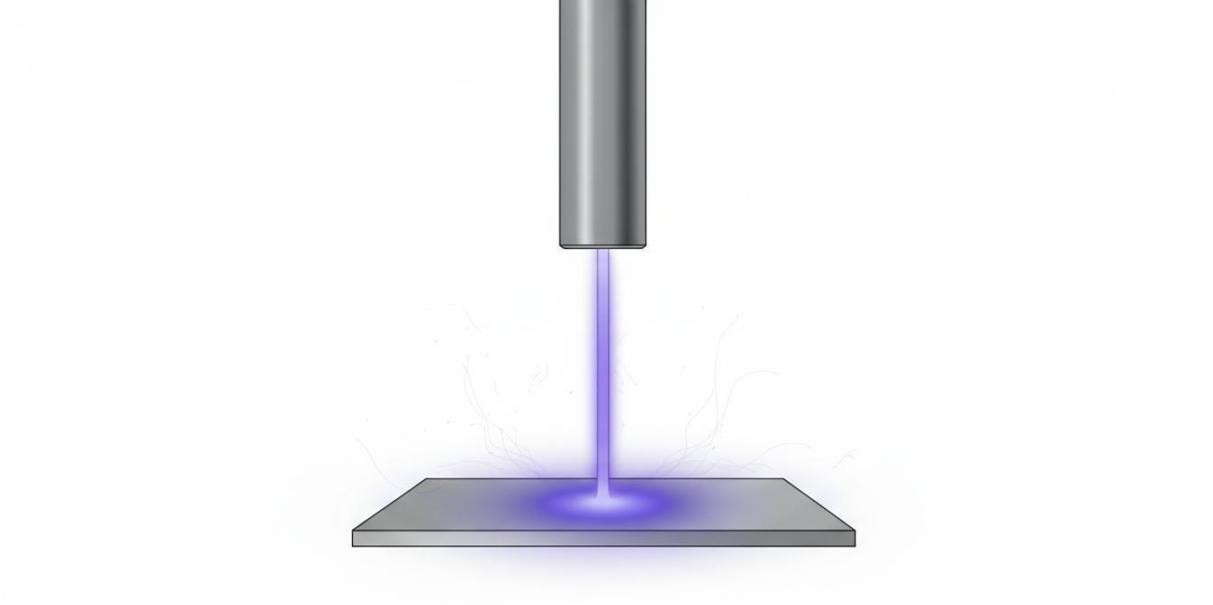 Figure 4: An atmospheric pressure plasma jet directing a reactive plasma stream onto a substrate surface for localized functionalization.
Wettability Engineering and Contact Angle Control
Plasma treatment offers exceptional control over surface wettability, spanning the full spectrum from superhydrophilic to superhydrophobic. The key process parameters governing wettability outcomes include:
- Gas selection: O2 and air plasma promote hydrophilicity through polar group introduction; fluorocarbon plasma creates hydrophobic fluorinated surfaces; NH3 plasma yields amine-rich hydrophilic surfaces
- Treatment time: Short exposures (5-30 seconds) typically achieve maximal hydrophilicity; prolonged treatment can induce surface etching that increases roughness and enhances hydrophobic recovery effects
- Power density: Higher power increases functional group density but may cause thermal damage or excessive crosslinking on sensitive substrates
- Post-treatment aging: Hydrophobic recovery occurs over hours to days as surface chains reorient; stabilization protocols including immediate coating or crosslinking can lock in the treated wettability
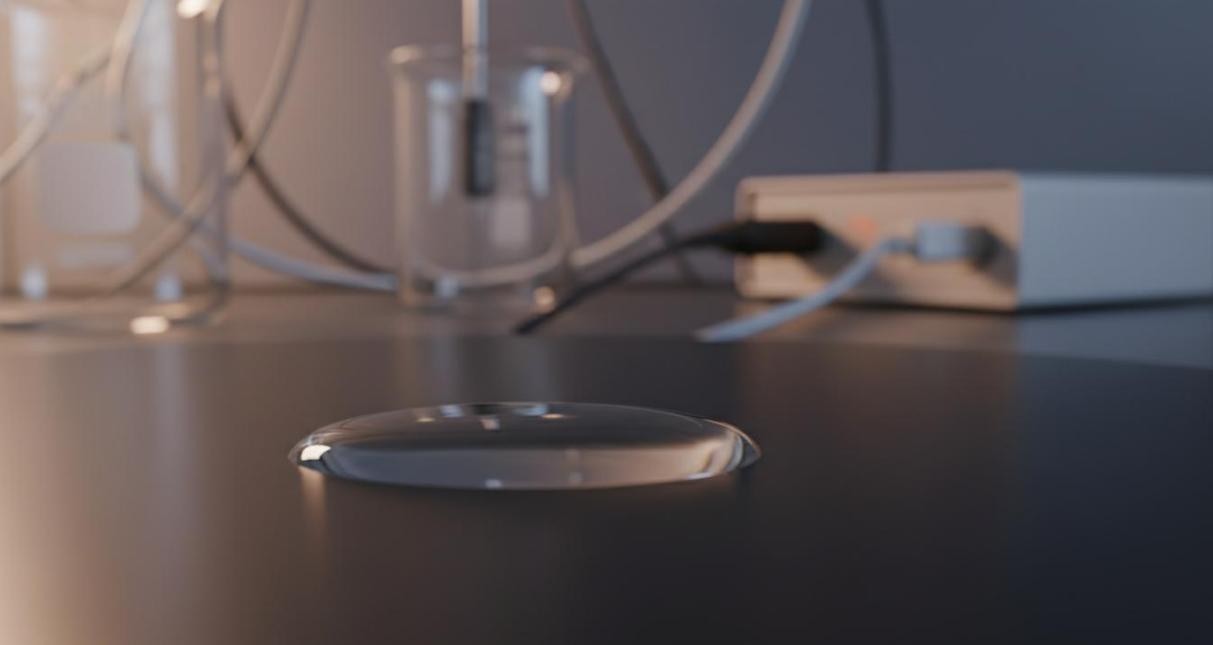 Figure 5: A water droplet on a plasma-treated surface showing a low contact angle indicative of successful hydrophilization.
Analytical Characterization and Quality Control
Every plasma-treated sample undergoes analytical verification to confirm surface modification success and quantify key parameters:
- Water contact angle goniometry quantifying wettability changes before and after plasma treatment
- X-ray photoelectron spectroscopy (XPS) identifying introduced functional groups and their chemical states
- Atomic force microscopy (AFM) measuring surface roughness changes and nanoscale topography
- Fourier-transform infrared (FTIR) spectroscopy detecting characteristic vibrational modes of new surface functionalities
- Zeta potential analysis documenting surface charge changes following plasma functionalization
- Scanning electron microscopy (SEM) and transmission electron microscopy (TEM) assessing structural integrity of treated nanomaterials
Research Applications
| Research Domain | How Plasma Treatment Enables |
| Biomedicine | Hydrophilization of scaffolds; amine functionalization for biomolecule immobilization; biocompatible plasma polymer coatings |
| Catalysis | Controlled defect engineering; metal nanoparticle dispersion enhancement; surface area increase through etching |
| Gas sensing | Oxygen group introduction creating vacancy defects with strong analyte interaction; hydrogenation tuning bandgap |
| Energy storage | Surface activation for improved electrolyte wetting; conductive polymer coating of electrode materials |
| Nanocomposites | Surface roughening for mechanical interlocking; polar group introduction for polymer matrix compatibility |
| Microfluidics | Ultra-hydrophilic channel coating with long-term stability; patterned surface energy control |
Engage Eata Nanomaterials for Your Plasma Surface Treatment Needs
Whether you seek to activate nanoparticles for bioconjugation, engineer wettability on polymer substrates, functionalize carbon nanomaterials without structural damage, or deposit conformal plasma polymer coatings, our multi-platform capabilities deliver precise, reproducible outcomes supported by comprehensive analytical characterization.
Contact our technical specialists to discuss your substrate material, target surface properties, and application requirements. We will recommend the optimal plasma platform and process parameters for your research project.