

Products
- High-Quality Graphene
- CVD Graphene, Graphene-Like Materials
- Graphene-Like Series
- Defect-Free Single-Crystal Graphene and Graphene-Like Materials (Mechanical Exfoliation)
- Quantum Dot Series
- Aggregation-Induced Emission (AIE)
- Near-Infrared II (NIR-II) Fluorescent Dyes
- Graphdiyne
- Two-Dimensional Transition Metal Carbides/Nitrides/Borides (MXene)
- Metal Nanomaterials and Other Functional Bio-Nanomaterials
- Metal-Organic Frameworks (MOF)
- Covalent Organic Frameworks (COF)
- Two-Dimensional Layered Metal Oxides (LDH)
- Carbon Nanotube Powders, Pastes
- Carbon Nanotube Arrays and Special Carbon Nanotube Materials
- High-Quality Metallic and Semiconducting High-Purity Single-Walled Carbon Nanotubes
- Carbon Nanotube Sponges
- Mesoporous Carbon and Carbon Nanomaterials
- High-Quality Fullerenes
- One-Dimensional Nanomaterials
- Molecular Sieves
- Inorganic Nanomaterials
- Perovskite Materials
- Highly Oriented Pyrolytic Graphite (HOPG)
- Organic Materials
- Single-Atom Catalysts
- Thermoelectric Materials
- Sodium Storage Materials
- Industrial-Grade Nanomaterials
- Solid-State Lithium Batteries
- Hydrogel Series and Consumables
Online Inquiry
High-Quality Graphene
The Two-Dimensional Material Redefining What Is Possible
Graphene is not merely another carbon allotrope. It is a single atomic layer of sp2-bonded carbon atoms arranged in a hexagonal lattice, and that simplicity at the atomic scale translates into extraordinary properties at the macroscopic scale. Electron mobility exceeding 200,000 cm2/Vs. In-plane thermal conductivity surpassing 5000 W/mK. Tensile strength roughly 200 times greater than steel by weight. An optical transparency of 97.7 percent despite being electrically conductive. These figures explain why graphene has moved beyond the realm of academic curiosity into active roles in batteries, conductive composites, thermal interface materials, transparent electrodes, and corrosion-resistant coatings.
Yet graphene is only as good as the method by which it was produced. CVD-grown monolayer films are not interchangeable with chemically exfoliated nanoplatelets. Reduced graphene oxide carries oxygen functional groups that pristine graphene does not. The lateral size, layer count, defect density, and surface chemistry of a given graphene product determine whether it will enhance a battery electrode or merely add cost. At Eata Nanomaterials, we supply graphene products whose specifications are defined by your application, not by what happens to be in inventory. Every batch is characterized by Raman spectroscopy, TEM, AFM, and XPS, and the data accompanies the material.
Featured Graphene Products
| Product Category | Common Search Terms / Specs | Typical Applications |
| CVD Graphene Film | Monolayer, Cu foil, Si/SiO2 substrate, >95% coverage, 400 ohm/sq | Transparent conductors, OFETs, gas sensors, flexible electronics |
| Graphene Oxide (GO) | Single-layer, 1-20 um lateral size, Hummers method, aqueous dispersion, >99% purity | Membrane filtration, drug delivery, GO reduction chemistry, composites |
| Reduced GO (rGO) | Hydrazine or thermal reduction, C/O ratio >10, powder or dispersion, conductive | Battery anodes, supercapacitors, conductive inks, EMI shielding |
| Graphene Nanoplatelets | 3-40 layers, 0.5-25 um lateral size, >99% C, thermal conductivity | Polymer composites, thermal interface materials, concrete, lubricants |
| Few-Layer Graphene | 2-10 layers, mechanical exfoliation or CVD, high crystallinity | High-frequency electronics, photodetectors, fundamental research |
| Graphene Dispersion | NMP, water, ethanol, 1-10 mg/mL, surfactant-free or SDS-stabilized | Coatings, 3D printing, spin-coating, composite manufacturing |
| Functionalized Graphene | Carboxyl, amine, hydroxyl groups, covalent modification, biocompatible | Biosensors, covalent composites, water treatment, medical devices |
| Graphene Powder (Pristine) | >99%, 1-5 nm thickness, 5-10 um lateral, surface area >500 m2/g | Additives, catalyst supports, energy storage, structural composites |
| Graphene on Substrate | PET, quartz, SiO2/Si, glass, customizable size, transferred or direct growth | Optical devices, wearable sensors, transparent electrodes, touchscreens |
Product Portfolio
CVD Graphene Films
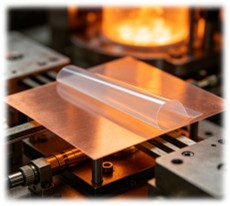
Our CVD-grown monolayer graphene films are synthesized on copper foil at approximately 990 degrees Celsius under controlled methane-hydrogen atmosphere, then transferred to your substrate of choice by wet-chemical or electrochemical delamination. Raman spectroscopy confirms the 2D/G intensity ratio characteristic of monolayer coverage, and optical microscopy verifies uniformity.
- Substrate options: copper foil (as-grown), Si/SiO2 wafer, quartz, PET, glass.
- Sheet resistance: 350 to 500 ohm/sq for monolayer, tunable with doping.
- Coverage: >95 percent monolayer, with customizable bilayer regions on request.
- Transfer methods: wet (PMMA-mediated), electrochemical bubble, or direct dry transfer.
Graphene Oxide and Reduced Graphene Oxide
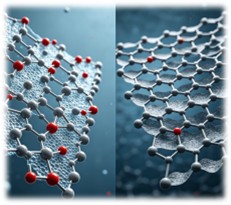
Graphene oxide is produced by modified Hummers oxidation of graphite, followed by ultrasonic exfoliation into single and few-layer sheets. The oxygen-containing functional groups render GO hydrophilic and dispersible in water, making it the entry point for most aqueous graphene processing workflows. Reduced graphene oxide is obtained by chemical, thermal, or hydrothermal reduction of GO, partially restoring the sp2 carbon network and electrical conductivity.
- GO: single-layer fraction >80 percent, lateral size 1 to 20 micrometers, dispersible in water and polar solvents.
- rGO: C/O ratio >10, electrical conductivity 100 to 1000 S/m, available as powder or dispersion.
- Reduction methods: hydrazine hydrate, ascorbic acid, thermal (300-1000C), hydrothermal, or electrochemical.
Graphene Nanoplatelets and Few-Layer Powders
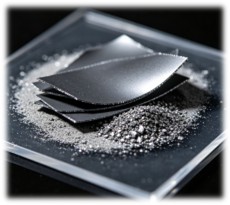
For applications where cost-effectiveness and scalability matter more than monolayer purity, graphene nanoplatelets and few-layer powders deliver a substantial fraction of graphene's property benefits at a fraction of the CVD film price. Produced by liquid-phase exfoliation or mechanical milling of graphite, these materials are ideal for composites, coatings, and bulk energy storage.
- Thickness: 1 to 10 nm, corresponding to 3 to 30 layers.
- Lateral size: 0.5 to 25 micrometers, sieve-classified on request.
- Purity: >99 percent carbon, trace metal content <0.1 percent.
- Surface area: 100 to 500 m2/g depending on exfoliation degree.
Pre-Formulated Graphene Dispersions
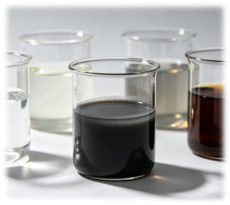
Many research groups and manufacturing facilities lack the sonication equipment or surfactant optimization expertise to disperse graphene powder reliably. Our pre-formulated dispersions eliminate that barrier, delivering stable, de-aggregated graphene in the solvent of your choice at a concentration ready for spin-coating, dip-coating, spray deposition, or composite mixing.
- Solvents: deionized water, NMP, DMF, ethanol, isopropanol, or custom.
- Concentrations: 0.1 to 20 mg/mL, customizable.
- Stabilization: surfactant-free (sonication-only), SDBS, PVP, or custom dispersant.
- Shelf stability: typically 3 to 6 months without significant aggregation.
Functionalized Graphene Derivatives
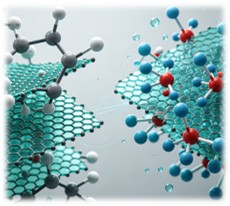
Covalent and non-covalent functionalization extends graphene's compatibility with polymer matrices, biological environments, and specific chemical reaction pathways. We supply carboxylated, aminated, hydroxylated, and fluorinated graphene products, as well as metal-oxide-decorated and polymer-grafted variants for specialized applications.
Application Areas
Our graphene products serve a broad spectrum of research and industrial programs. Representative application domains include:
- Energy storage: graphene and rGO as conductive additives and active materials in lithium-ion, lithium-sulfur, sodium-ion, and zinc-air battery electrodes, as well as supercapacitor and hybrid capacitor systems.
- Conductive composites: GNP-reinforced polymers, epoxies, and elastomers for electromagnetic interference shielding, antistatic packaging, and lightweight structural conductors.
- Thermal management: graphene-based thermal interface materials, heat spreaders, and phase-change composites for electronics cooling, LED thermal management, and battery pack thermal regulation.
- Transparent conductive films: CVD graphene on PET and glass for flexible touchscreens, solar cell front electrodes, smart window defoggers, and organic light-emitting diode substrates.
- Sensors and biosensors: graphene field-effect transistors, electrochemical sensors, and surface-enhanced Raman scattering substrates for gas detection, biomarker analysis, and environmental monitoring.
- Corrosion protection and coatings: graphene-reinforced barrier coatings, anti-corrosion primers, and tribological coatings for marine, automotive, and oil-and-gas infrastructure.
Quality Assurance
Every graphene product that leaves our facility is accompanied by a characterization report generated from in-house analytical instruments. We do not rely on supplier certificates alone. Key characterization data includes:
- Raman spectroscopy: D, G, and 2D peak positions, intensity ratios, and FWHM for layer count, defect density, and crystallinity assessment.
- TEM imaging: layer count verification, lateral size measurement, and morphology documentation.
- AFM: thickness profiling on mica substrates for monolayer and few-layer confirmation.
- XPS: elemental composition, C/O ratio, and functional group identification for GO, rGO, and functionalized products.
- BET surface area measurement for powder and nanoplatelet products.
- Sheet resistance mapping (four-point probe) for CVD film products.
Custom Synthesis and Formulation Services
Standard catalog products do not always match the exact specifications a research program or manufacturing process requires. Our custom synthesis service bridges that gap. We can adjust the lateral size distribution, the degree of oxidation, the reduction method, the functionalization chemistry, the dispersion solvent, and the substrate material to match your specific application.
Typical custom requests include: non-standard lateral size fractions for composite reinforcement, specific C/O ratios for battery anode optimization, proprietary functionalization for bioconjugation workflows, large-area CVD transfer to non-standard substrates, and concentrated dispersions for high-throughput manufacturing. If your project requires a graphene material that does not exist in our standard catalog, contact us with your target specification and we will evaluate the synthesis route, provide a quotation, and deliver a characterized prototype batch for your validation.
Request a Product Data Sheet or Custom Quotation
Browse our product categories, request a detailed data sheet with full characterization data, or describe your custom graphene requirement. Our materials scientists are available to advise on product selection, dispersion protocols, and integration strategies for your specific application.
| Catalog Number | Product Name | Order | Quantity |
|---|---|---|---|
| HQG-0001 | High Quality Nano Fluorinated Graphite |
-
+
|
|
| HQG-0002 | Single Layer Graphene Oxide Flake Classic |
-
+
|
|
| HQG-0003 | Single Layer Graphene Powder (rGO) |
-
+
|
|
| HQG-0004 | Single Layer Graphene Oxide Dispersion (50-200 nm) |
-
+
|
|
| HQG-0005 | Graphite Oxide Powder |
-
+
|
|
| HQG-0006 | Flexible Graphene Heating Element |
-
+
|
|
| HQG-0007 | Flexible Heating Component Single Sheet |
-
+
|
|
| HQG-0008 | Small Size Multilayer Graphene Powder |
-
+
|
|
| HQG-0009 | Aminated Graphene Powder |
-
+
|
|
| HQG-0010 | Thiolated Graphene Oxide Powder |
-
+
|
For Research or Industrial Raw Materials, Not For Personal Medical Use!