

Nanomaterial-Based Drug Delivery Formulation Services
The gap between a promising therapeutic molecule and a viable drug delivery formulation often determines whether a research program succeeds or stalls. A hydrophobic anticancer compound with potent in vitro activity may fail entirely in vivo due to poor solubility and rapid clearance. An mRNA construct encoding a therapeutic protein may never reach its target cells without protection from nucleases and a mechanism for endosomal escape. Nanomaterial-based delivery systems address these challenges by encapsulating, protecting, and directing therapeutic payloads to their intended sites of action.
At Eata Nanomaterials, our formulation laboratory specializes in designing and characterizing nanocarrier systems tailored to the physicochemical properties of each payload and the biological requirements of each application. We work with small molecule drugs, nucleic acids, peptides, and protein payloads, matching them to optimal carrier architectures from lipid nanoparticles to biodegradable polymeric systems. Every formulation undergoes rigorous physicochemical characterization and in vitro release assessment to ensure reproducibility and translational potential.
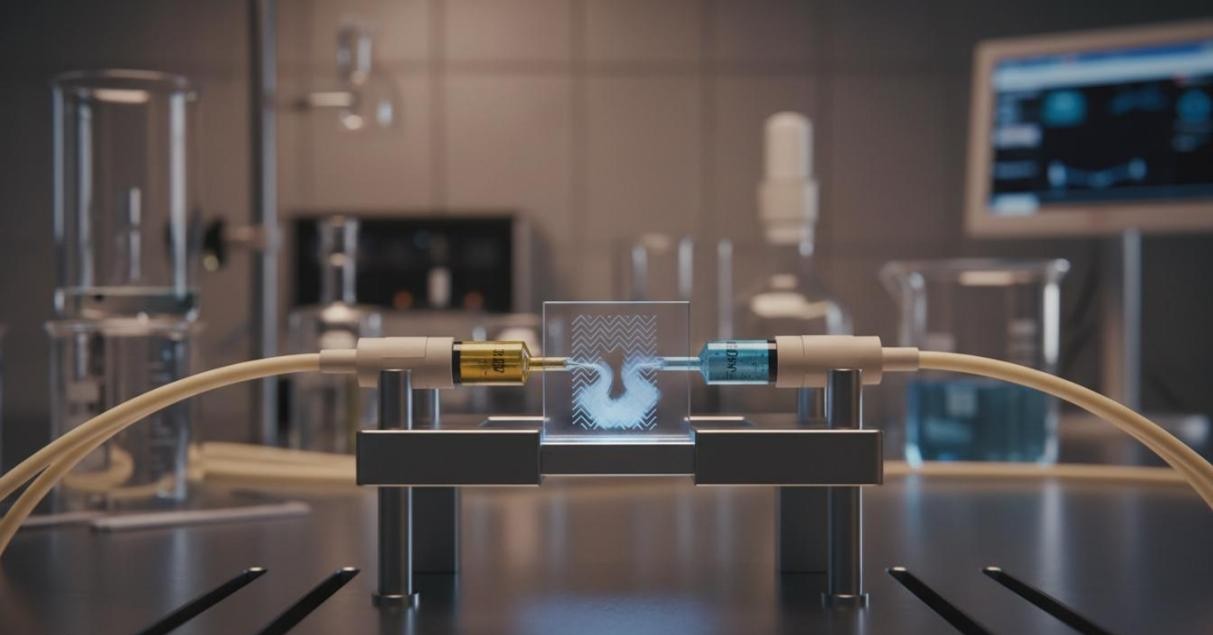 Figure 1: A microfluidic mixing device with herringbone-patterned glass chip and syringe pumps for controlled self-assembly of lipid nanoparticles through rapid mixing of lipid and aqueous phases.
Lipid Nanoparticle Formulation for Nucleic Acid Delivery
Lipid nanoparticles have emerged as the leading non-viral delivery platform for nucleic acid therapeutics, from mRNA vaccines to gene editing constructs. The formulation architecture centers on four lipid components that self-assemble into nanoscale vesicles through microfluidic or ethanol injection methods. Ionizable cationic lipids such as DLin-MC3-DMA, SM-102, or ALC-0315 protonate at acidic pH to electrostatically complex with negatively charged nucleic acids, then deprotonate at physiological pH to minimize toxicity.
Our LNP formulation services encompass:
- Custom LNP formulation using rapid mixing microfluidics, achieving precise control over particle size between 50 and 150 nanometers with polydispersity indices below 0.2. The microfluidic platform enables consistent encapsulation of mRNA, siRNA, and plasmid DNA with encapsulation efficiencies routinely exceeding 90 percent
- Lipid library screening to identify optimal ionizable lipid, phospholipid, cholesterol, and PEG-lipid ratios for specific payloads and target tissues. We systematically vary the N/P ratio of ionizable lipid to nucleic acid and the mole percentage of each structural lipid to maximize transfection efficiency
- Endosomal escape optimization through selection of fusogenic helper lipids such as DOPE and pH-responsive cholesterol derivatives that destabilize endosomal membranes upon acidification, releasing encapsulated nucleic acids into the cytosol
- PEGylation strategy selection to balance circulation time against cellular uptake, exploring PEG-lipid chain length, acyl chain saturation, and surface density to minimize immune recognition while avoiding the accelerated blood clearance effect associated with repeated dosing
Formulated LNPs are characterized by dynamic light scattering for hydrodynamic diameter and polydispersity, zeta potential for surface charge, transmission electron microscopy for morphology, and fluorescence-based assays for encapsulation efficiency using RiboGreen or SYBR Gold nucleic acid stains.
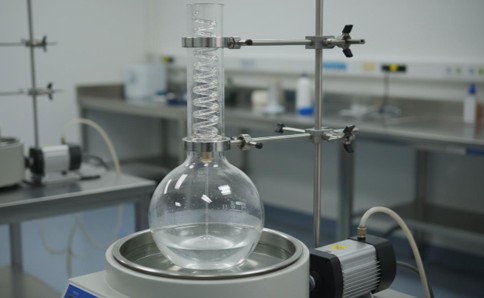 Figure 2: A rotary evaporator with a round-bottom flask rotating in a heated water bath, used for thin-film hydration method in liposome preparation.
Liposome and Vesicular Drug Carriers
Liposomes remain one of the most clinically validated nanocarrier platforms, with multiple FDA-approved formulations including Doxil and Ambisome. These phospholipid bilayer vesicles can encapsulate both hydrophilic drugs in their aqueous core and hydrophobic drugs within the lipid bilayer, making them exceptionally versatile for combination therapies.
Eata Nanomaterials offers liposome formulation through several established methods matched to the desired size, lamellarity, and drug loading requirements:
- Thin-film hydration followed by extrusion through polycarbonate membranes to produce unilamellar vesicles with uniform sizes between 80 and 200 nanometers, ideal for passive tumor targeting through the enhanced permeability and retention effect
- Ethanol injection for rapid preparation of small unilamellar vesicles without mechanical extrusion, suitable for fragile drug payloads sensitive to shear forces
- Reverse-phase evaporation for maximizing encapsulation of large hydrophilic molecules and macromolecular complexes that require high aqueous volume fractions
- Remote loading techniques including ammonium sulfate gradients for active encapsulation of weakly basic drugs such as doxorubicin, achieving drug-to-lipid ratios exceeding 0.2 weight per weight and dramatically improved loading compared to passive methods
Surface functionalization services include PEGylation for stealth properties, antibody conjugation through maleimide-thiol chemistry for active targeting, and peptide ligand attachment for receptor-mediated uptake. We validate targeting ligand density by analytical assays and correlate surface modification with cellular uptake efficiency.
Biodegradable Polymeric Nanoparticles
Polymeric nanoparticles constructed from FDA-approved biodegradable polyesters offer sustained drug release profiles and tunable degradation kinetics that complement the rapid release characteristics of lipid-based systems. PLGA, the most widely investigated polymer in nanomedicine, degrades through hydrolysis into lactic and glycolic acids, producing a tunable release window from days to months depending on the lactide-to-glycolide ratio and molecular weight.
Our polymeric nanoparticle formulation capabilities include:
- Single emulsion solvent evaporation for encapsulating hydrophobic drugs within PLGA, PLA, or PCL matrices. We optimize polymer molecular weight, organic solvent composition, and surfactant concentration to control particle size between 100 and 300 nanometers with drug loading up to 15 percent by weight
- Double emulsion water-in-oil-in-water for hydrophilic drug encapsulation including peptides and proteins, where the aqueous drug solution is first emulsified in polymer organic solution, then dispersed in an external aqueous phase to form core-shell particles with an aqueous core
- Nanoprecipitation for rapid self-assembly of amphiphilic block copolymers such as PEG-PLGA and PEG-PCL into micellar or vesicular structures with high drug loading and narrow size distributions
- Surface modification through carbodiimide chemistry for covalent ligand attachment, or passive adsorption of targeting proteins and polysaccharides to create actively targeted delivery vehicles
For sustained release applications, we offer PCL-based formulations that degrade over months to years with near-zero-order release kinetics, ideal for long-acting injectable depot formulations. For applications requiring faster release, 50:50 PLGA with low molecular weight provides complete drug release within 2 to 4 weeks.
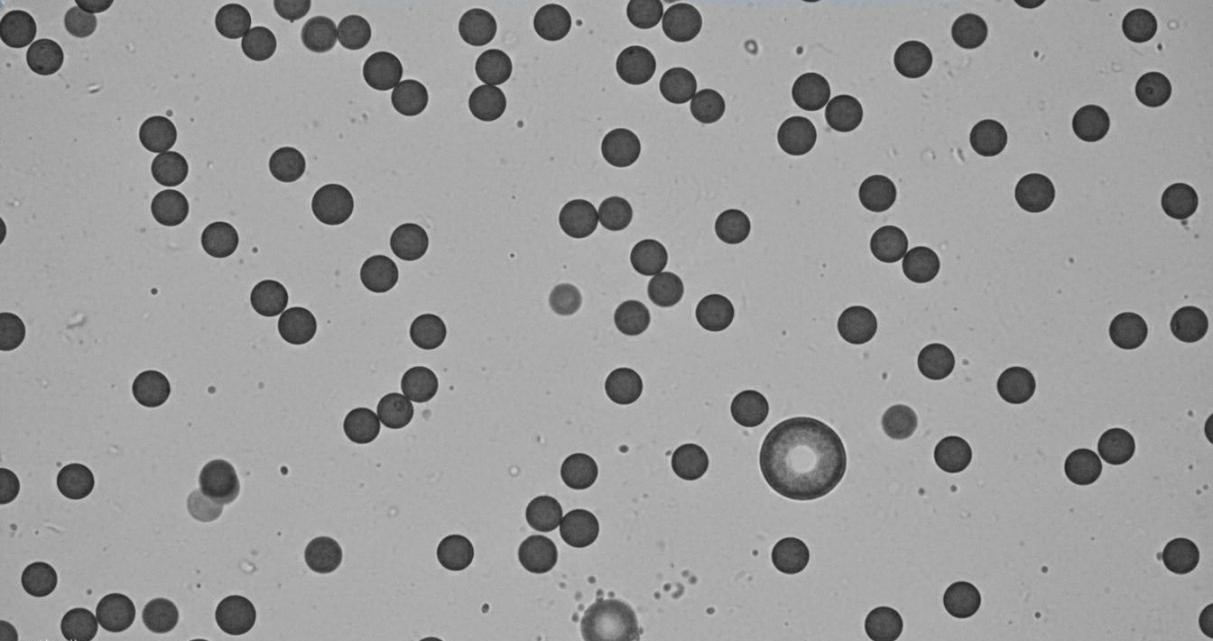 Figure 3: A transmission electron microscope image showing monodisperse spherical polymeric nanoparticles with core-shell morphology dispersed on a carbon support film.
Comprehensive Physicochemical Characterization
Every nanomedicine formulation undergoes a standardized characterization panel that quantifies the critical quality attributes determining in vivo performance. Without this data, comparisons between batches, scales, and formulations become impossible, and translational development stalls.
Our standard characterization package includes:
- Dynamic light scattering measuring hydrodynamic diameter, polydispersity index, and temperature-dependent size stability to verify batch-to-batch consistency and predict shelf-life
- Zeta potential analysis at formulation pH and across physiological pH range to assess surface charge stability, protein adsorption propensity, and colloidal stability in biological media
- Transmission electron microscopy and cryo-TEM for direct visualization of particle morphology, lamellarity, core-shell structure, and aggregation state without drying artifacts
- Drug loading and encapsulation efficiency quantified by HPLC or fluorescence spectroscopy after separation of free drug from encapsulated drug by ultrafiltration, size exclusion chromatography, or centrifugal dialysis
- Stability monitoring under accelerated aging conditions including elevated temperature storage, freeze-thaw cycling, and exposure to simulated physiological media, tracking changes in size, PDI, and drug retention over time
In Vitro Drug Release Kinetic Profiling
Understanding how a drug releases from its nanocarrier under physiological conditions is essential for predicting therapeutic duration and optimizing dosing regimens. Eata Nanomaterials provides in vitro release testing using established methods matched to the release mechanism and drug properties:
- Dialysis bag method for hydrophilic drugs, where the nanoparticle dispersion is placed inside a dialysis membrane with molecular weight cutoff selected to retain the carrier while permitting free drug diffusion into the external sink buffer. Samples are withdrawn at intervals and analyzed by HPLC or UV spectrophotometry
- Franz diffusion cell assembly for transdermal and topical formulations, using synthetic or biological membranes to quantify drug permeation rates and flux under controlled temperature and hydrodynamic conditions
- Continuous flow method for poorly soluble drugs where sink conditions are difficult to maintain, using a peristaltic pump to continuously refresh the release medium and maintain constant concentration gradients
Release data are fitted to established kinetic models including zero-order, first-order, Higuchi, Korsmeyer-Peppas, and Weibull models. The fitted parameters and model selection provide mechanistic insight into whether release is diffusion-controlled, erosion-controlled, or a combination of both processes, guiding formulation optimization and in vivo performance prediction.
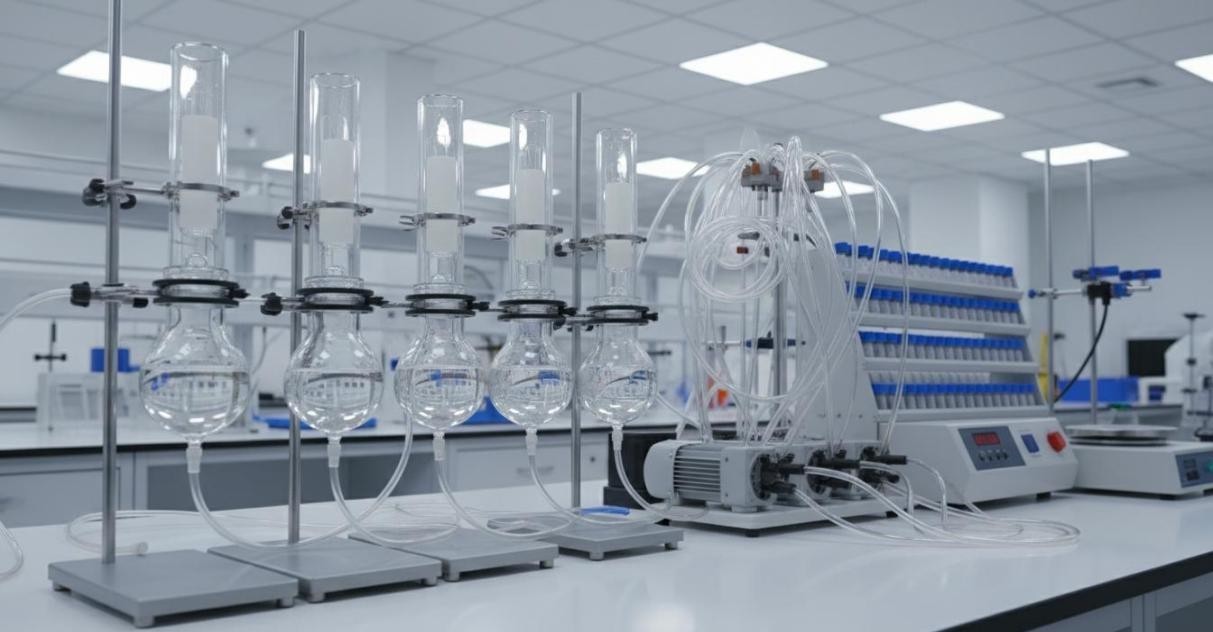 Figure 4: An array of Franz diffusion cells with donor chambers, receptor chambers, and dialysis membranes connected to peristaltic pumps for in vitro drug permeation and release testing.
Active Targeting through Surface Ligand Engineering
Passive targeting through the enhanced permeability and retention effect provides modest accumulation in solid tumors but often insufficient for treating disseminated or poorly vascularized diseases. Active targeting overcomes this limitation by decorating nanocarrier surfaces with ligands that bind to receptors overexpressed on target cells, increasing local concentration and promoting receptor-mediated endocytosis.
Eata Nanomaterials offers ligand conjugation services compatible with lipid and polymeric nanocarrier platforms:
- Small molecule targeting using folic acid, biotin, and sugar moieties for receptor-mediated uptake by cancer cells and hepatocytes
- Peptide ligand conjugation including RGD sequences for integrin targeting on angiogenic endothelial cells, cell-penetrating peptides for membrane translocation, and transferrin for blood-brain barrier traversal
- Antibody and antibody fragment conjugation through maleimide-thiol or carbodiimide chemistry, enabling highly specific targeting of tumor-associated antigens with complete ligand orientation control
- PEG-lipid insertion for stealth coating with tunable PEG chain length and density, balancing circulation extension against the PEG dilemma where excessive PEGylation impedes cellular uptake
Each targeted formulation is characterized for ligand density by accessible reactive group titration, and the conjugation efficiency is quantified by residual reactive group analysis after ligand attachment.
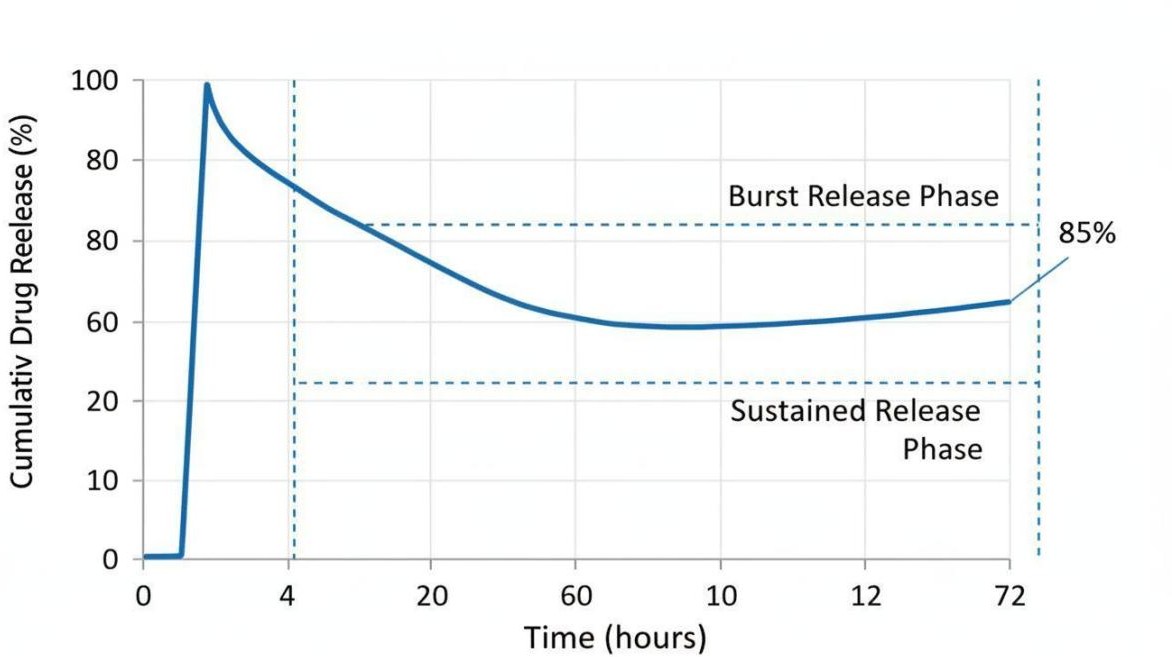 Figure 5: A biphasic in vitro drug release profile showing an initial burst release followed by sustained release over 72 hours, characteristic of matrix diffusion from polymeric nanoparticles.
Formulation Platform Comparison
| Platform | Payload Type | Size Range | Release Profile | Best For |
| Lipid Nanoparticles | mRNA, siRNA, pDNA | 50-150 nm | Fast (hours-days) | Gene therapy, Vaccines |
| Liposomes | Hydrophilic and hydrophobic | 80-200 nm | Moderate (days-weeks) | Cancer therapy, EPR targeting |
| PLGA Nanoparticles | Hydrophobic drugs | 100-300 nm | Sustained (weeks-months) | Long-acting injectables |
| PCL Nanoparticles | Hydrophobic drugs | 100-300 nm | Very slow (months-years) | Implants, Depot formulations |
| Polymer Micelles | Hydrophobic drugs | 20-100 nm | Variable | Solubilization, Tumor targeting |
Engagement Models and Sample Requirements
We accommodate projects at every stage of development, from early feasibility studies through preclinical formulation optimization. For proof-of-concept studies, clients submit 10 to 50 milligrams of drug candidate or 100 micrograms of nucleic acid payload, and we screen 3 to 5 carrier formulations. For optimization projects, we systematically vary formulation parameters across a design-of-experiments matrix, delivering an optimized formulation with full characterization data.
For nucleic acid delivery projects, we require sequence information and accept mRNA, siRNA, or plasmid DNA at concentrations above 0.5 milligrams per milliliter in RNase-free or TE buffer. For small molecule projects, solubility data in organic solvents and the intended route of administration guide carrier selection. We provide non-disclosure agreements for all proprietary compounds and sequences, with clear intellectual property boundaries ensuring client ownership of all formulation data and outcomes.
If you are interested in our products or services, please don't hesitate to contact us.