

Products
- High-Quality Graphene
- CVD Graphene, Graphene-Like Materials
- Graphene-Like Series
- Defect-Free Single-Crystal Graphene and Graphene-Like Materials (Mechanical Exfoliation)
- Quantum Dot Series
- Aggregation-Induced Emission (AIE)
- Near-Infrared II (NIR-II) Fluorescent Dyes
- Graphdiyne
- Two-Dimensional Transition Metal Carbides/Nitrides/Borides (MXene)
- Metal Nanomaterials and Other Functional Bio-Nanomaterials
- Metal-Organic Frameworks (MOF)
- Covalent Organic Frameworks (COF)
- Two-Dimensional Layered Metal Oxides (LDH)
- Carbon Nanotube Powders, Pastes
- Carbon Nanotube Arrays and Special Carbon Nanotube Materials
- High-Quality Metallic and Semiconducting High-Purity Single-Walled Carbon Nanotubes
- Carbon Nanotube Sponges
- Mesoporous Carbon and Carbon Nanomaterials
- High-Quality Fullerenes
- One-Dimensional Nanomaterials
- Molecular Sieves
- Inorganic Nanomaterials
- Perovskite Materials
- Highly Oriented Pyrolytic Graphite (HOPG)
- Organic Materials
- Single-Atom Catalysts
- Thermoelectric Materials
- Sodium Storage Materials
- Industrial-Grade Nanomaterials
- Solid-State Lithium Batteries
- Hydrogel Series and Consumables
Online Inquiry
Highly Oriented Pyrolytic Graphite (HOPG)
Graphite is nature's most anisotropic material: within each basal plane, carbon atoms lock together in a hexagonal honeycomb of sp2-hybridized bonds that conduct heat and electricity more efficiently than almost any known substance, while between the layers, feeble van der Waals forces hold the sheets together so loosely that they slide apart under the gentlest persuasion. Highly oriented pyrolytic graphite (HOPG) takes this natural anisotropy to its engineered extreme. Produced by stress-annealing pyrolytic graphite at temperatures approaching 3000 C under carefully controlled pressure, HOPG achieves a degree of crystallographic alignment where virtually every graphene layer is oriented parallel to the surface — a feat that yields a material with properties so directionally dependent it seems almost to belong to two different substances in one body.
At Eata Nanomaterials, we supply HOPG products across a full spectrum of grades, sizes, and geometries to meet the diverse demands of scientific research and industrial applications. Our ZYA grade, with a mosaic spread of merely 0.3–0.5 degrees, delivers surfaces so perfectly aligned that individual atomic steps are scarcely detectable — the gold standard for scanning probe microscopy calibration and the most exacting research substrates. ZYB grade offers an excellent balance of quality and economy for routine SPM work and graphene exfoliation. ZYD and ZYH grades, with progressively broader mosaic spreads, serve X-ray and neutron monochromator applications where a slightly wider angular acceptance increases integrated reflectivity. We supply HOPG as flat plates, singly-bent and doubly-bent monochromators, and custom-machined shapes, with thicknesses from sub-millimeter foils to centimeter-thick blocks.
Synthesis: From Pyrolysis to Stress-Annealing
HOPG begins its journey as pyrolytic graphite, formed by the thermal decomposition of hydrocarbon precursors — methane, ethane, or acetylene — at temperatures between 300 and 1400 C in a controlled atmosphere. The resulting material is polycrystalline and turbostratic: its constituent crystallites are small, tenths of a micron in extent, and the graphene layers within each crystallite are rotationally disordered relative to one another. The critical transformation occurs during subsequent graphitization: heating to 2500 C aligns the crystallographic axes and heals lattice defects, producing a material approaching the structural perfection of natural graphite.
The final step — stress-annealing at temperatures up to 2700 C under applied pressure of several atmospheres — imparts the characteristic high degree of orientation that defines HOPG. Under these extreme conditions, basal planes recrystallize and align perpendicular to the compression axis, producing a material where the c-axis of the hexagonal graphite lattice is oriented within a fraction of a degree of the surface normal. The quality of this alignment is quantified by the mosaic spread: the full width at half maximum of the (002) rocking curve measured by Cu-Kalpha X-ray diffraction. Lower mosaic spread values indicate superior alignment, fewer atomic steps on cleaved surfaces, and enhanced anisotropic properties.
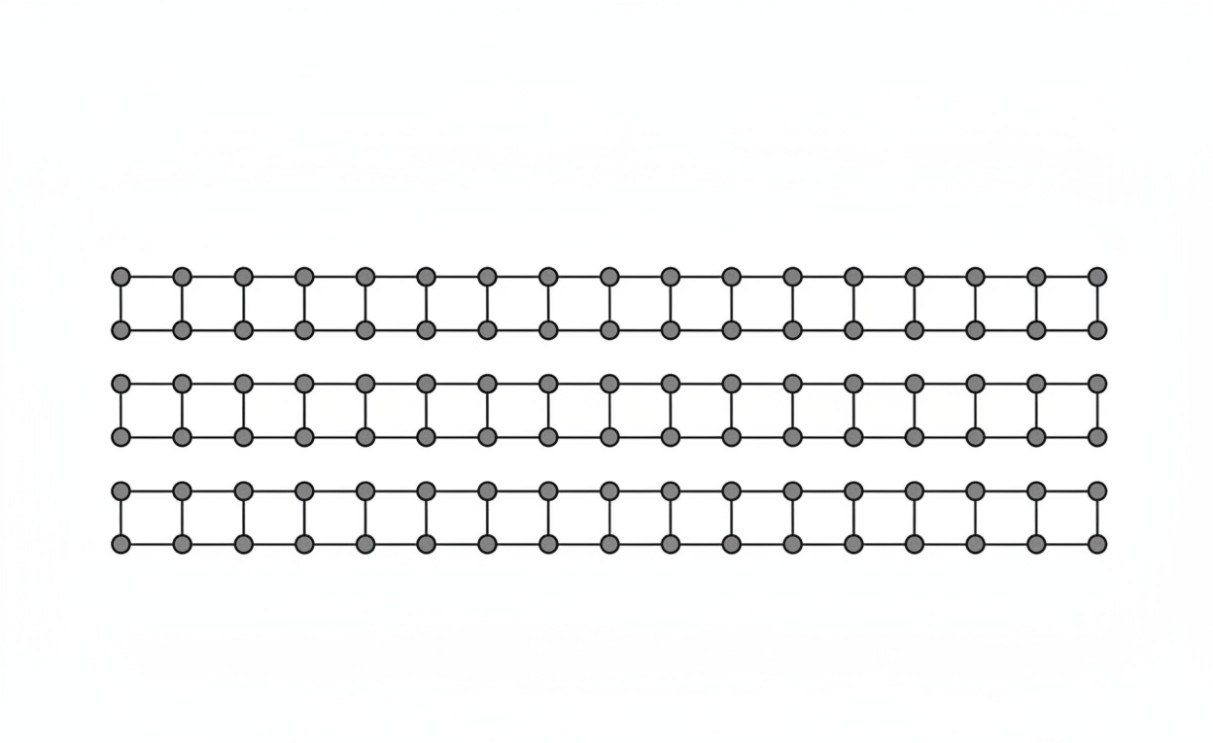 Side-view illustration of the layered graphene structure in HOPG showing ABAB stacking sequence and van der Waals gap between layers
Extraordinary Anisotropic Physical Properties
The hallmark of HOPG is the dramatic contrast between its in-plane (ab-direction) and out-of-plane (c-direction) properties. Thermal conductivity parallel to the basal planes reaches 1600–2000 W/mK at room temperature — comparable to diamond and among the highest of any material — while perpendicular to the planes it falls to merely 8 W/mK, a ratio of over 200:1. This anisotropy arises from the fundamentally different bonding: strong in-plane sp2 covalent bonds efficiently transmit phonons, while weak out-of-plane van der Waals interactions impede thermal transport across the layered structure. Even more remarkably, the in-plane thermal expansion coefficient is slightly negative — -(1 ± 0.1) × 10^-6 /K — meaning HOPG contracts upon heating in the basal plane, a consequence of the anharmonicity of the in-plane phonon modes.
Electrical conductivity mirrors this anisotropy. The in-plane electrical conductivity of 2.3 × 10^6 (ohm m)^-1 places HOPG among the best metallic conductors, while the out-of-plane value of approximately 0.5 × 10^3 (ohm m)^-1 is lower by three orders of magnitude. The electrical resistivity of (3.5–4.5) × 10^-5 ohm cm in the ab-direction, combined with the semimetallic band structure arising from the slight overlap of valence and conduction pi-bands, makes HOPG an intriguing material for fundamental studies of low-dimensional electron transport. The density of 2.255–2.265 g/cm^3 and the interlayer spacing of 3.355–3.359 Angstroms complete the structural signature of this unique carbon allotrope.
SPM Substrates and Calibration Standards
Perhaps the most celebrated application of HOPG is as a substrate and calibration standard for scanning probe microscopy. The freshly cleaved surface of HOPG, exposed by peeling away the top layers with adhesive tape, presents an atomically flat terrace extending for hundreds of nanometers between step edges only 0.335 nm high — the height of a single graphene layer. This extraordinary smoothness makes HOPG the ideal support for imaging molecules, nanoparticles, and biological specimens with scanning tunneling microscopy (STM) and atomic force microscopy (AFM). The carbon-only background simplifies elemental analysis, and unlike mica, HOPG is non-polar, eliminating electrostatic artifacts that can complicate force spectroscopy measurements.
For calibration purposes, the hexagonal atomic lattice of HOPG — with a well-known lattice constant of 0.246 nm — provides an absolute length standard against which to calibrate piezoelectric scanners in STM and AFM instruments. ZYA grade, with its minimal mosaic spread and virtually step-free cleaved surfaces, is the material of choice for the most demanding calibration work. ZYB grade serves equally well for routine research where the slight increase in surface step density is of no practical consequence. Both grades are double-sided, meaning both top and bottom surfaces can be cleaved and used, effectively doubling the number of fresh surfaces available from each piece.
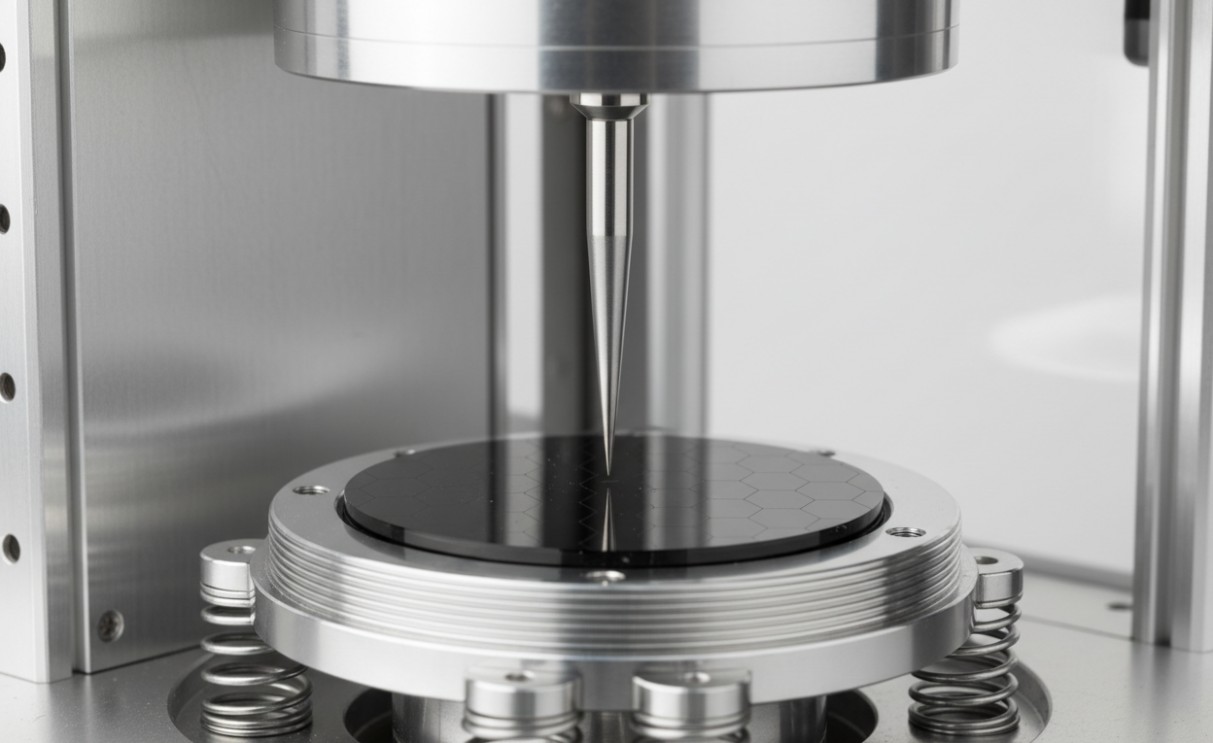 Scanning tunneling microscope tip approaching the atomically flat surface of an HOPG substrate mounted on a vibration-isolation stage
Graphene Exfoliation: The Scotch Tape Method
HOPG is the source material for the mechanical exfoliation method that produced the first isolated graphene sheets — a technique so elegantly simple that it earned its discoverers the Nobel Prize in Physics. The method exploits the enormous difference in binding energy between layers within HOPG and between graphene and an adhesive substrate. When adhesive tape is pressed against the HOPG surface and peeled away, the van der Waals bonds between the top few graphene layers break preferentially, transferring thin graphite flakes onto the tape. Repeated peeling progressively thins these flakes until, by chance, some regions contain just a single atomic layer — graphene.
This exfoliation process can be understood through the Lennard-Jones potential describing the interaction between materials. The binding energy between graphene and a suitable substrate — typically SiO2/Si with a 300 nm oxide layer that provides optical contrast for identifying single-layer flakes — exceeds the interlayer binding energy within HOPG itself. Consequently, when the tape bearing thin graphite flakes is pressed against the substrate and peeled away, the bottommost graphene layer adheres to the substrate while the remaining layers are lifted off with the tape. We supply HOPG blocks specifically selected for ease of exfoliation, with ZYB grade offering the optimal balance of structural integrity and layer separability for graphene preparation.
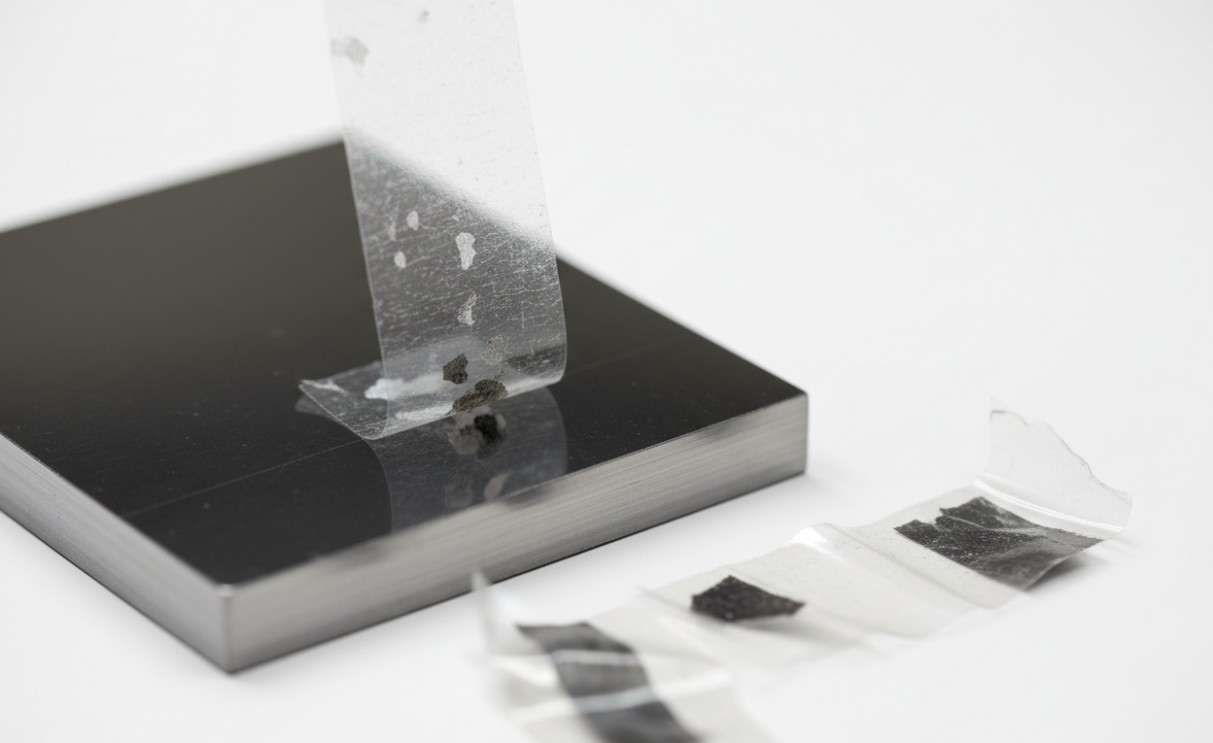 Adhesive tape method for mechanical exfoliation of graphene from an HOPG substrate
X-Ray and Neutron Monochromators
The highly ordered layered structure of HOPG makes it an exceptionally efficient diffracting crystal for X-ray and neutron beam conditioning. The (002) reflection, with a d-spacing of 3.355 Angstroms, falls in a range that is useful for monochromatizing both hard X-rays and thermal neutrons. HOPG monochromators offer several advantages over conventional crystals such as lithium fluoride: higher integrated reflectivity — up to five times greater for X-rays at comparable resolution — broader wavelength acceptance due to the mosaic spread, and the ability to focus beams through bent geometries. Singly-bent focusing monochromators have demonstrated yields three times that of LiF at equivalent resolution.
The mosaic spread of an HOPG crystal determines its performance as a monochromator. ZYA grade, with mosaic spread of 0.3–0.5 degrees, provides the narrowest wavelength selection and highest resolution, suitable for precision diffractometry and high-resolution neutron scattering. ZYB grade (0.5–1.0 degrees) offers a broader angular acceptance that increases integrated intensity for applications where resolution can be traded for flux. ZYD (1.0–2.0 degrees) and ZYH (3.5±1.5 degrees) grades serve applications requiring maximum intensity with moderate resolution, such as neutron reflectometry and small-angle scattering. We produce flat plates, singly-bent monochromators with standard radii of 115, 225, 250, 510, 790, and 1300 mm, and doubly-bent focusing elements for custom beamline configurations.
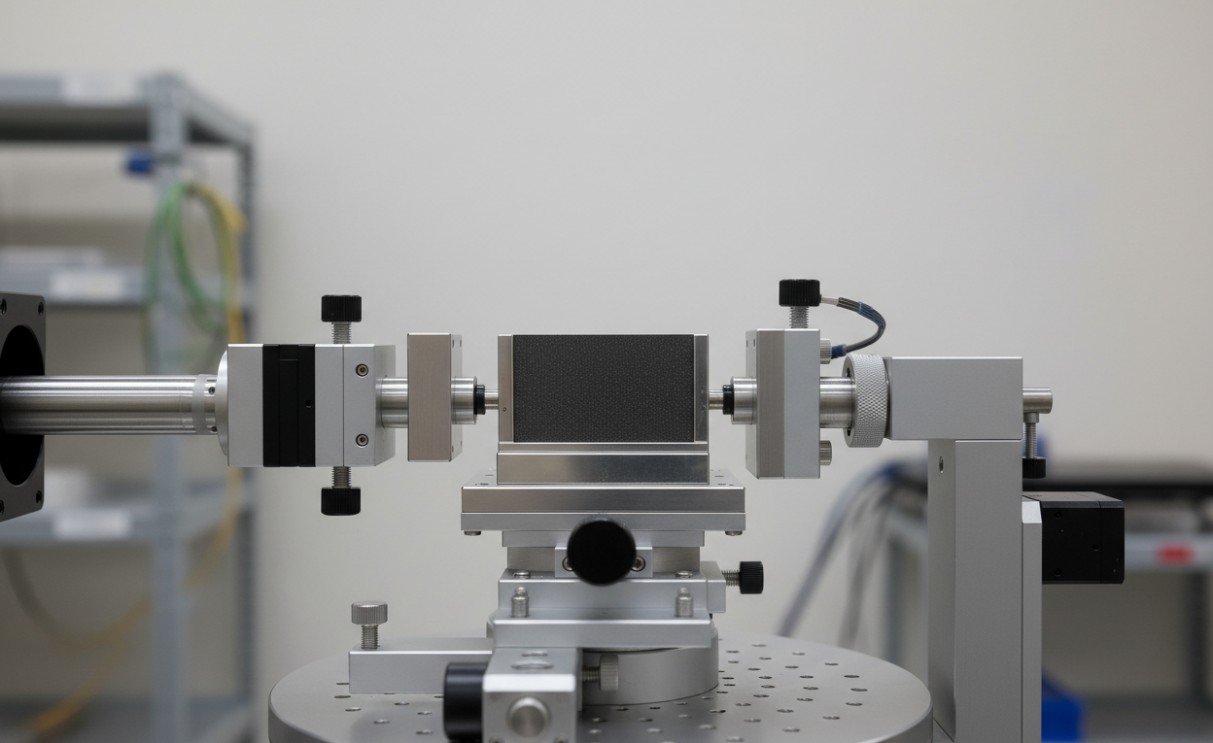 HOPG crystal mounted as an X-ray monochromator on a precision goniometer for beam conditioning
Product Grades and Specifications
Our HOPG products are classified by mosaic spread, with each grade optimized for specific applications. ZYA grade represents the highest quality, with mosaic spread of 0.3–0.5 degrees and grain sizes up to 10 mm. Freshly cleaved surfaces exhibit virtually no atomic steps, making this grade ideal for instrument calibration and the most critical research samples. ZYB grade, with mosaic spread of 0.5–1.0 degrees, offers an excellent compromise between quality and cost for routine SPM substrates and graphene exfoliation. The slightly higher step density on cleaved surfaces is inconsequential for most research purposes, and the material cleaves more readily than ZYA, yielding more usable surfaces per block.
ZYD grade (mosaic spread 1.0–2.0 degrees) and ZYH grade (3.5±1.5 degrees) target monochromator and filter applications where the broader mosaic angle increases integrated reflectivity. All grades are available in standard sizes from 10×10 mm to 50×75 mm, with thicknesses ranging from 1 mm to 8 mm. Custom sizes, specific mosaic spread values, and machined shapes are available upon request. Every piece is characterized by X-ray rocking curve measurement and ships with a certificate of analysis specifying mosaic spread, dimensions, and grade.
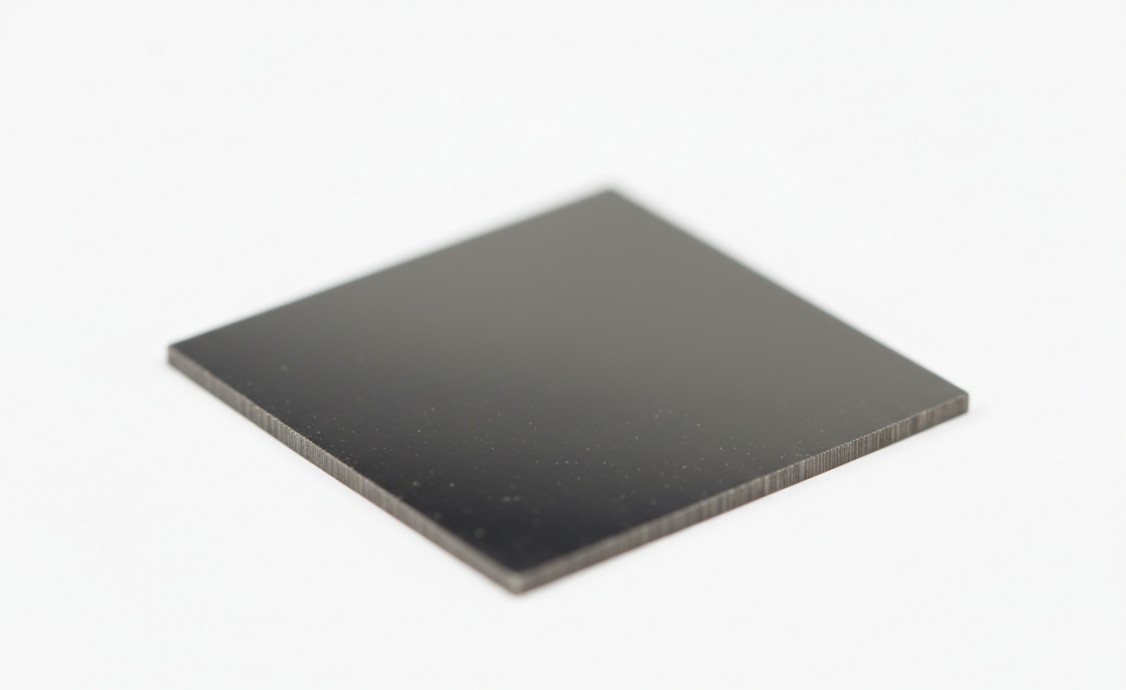 Square HOPG plate piece showing the mirror-like surface finish characteristic of highly oriented pyrolytic graphite
Featured Products
| Products | Specifications | Applications |
| HOPG ZYA grade | Mosaic spread: 0.3-0.5 deg; Grain: up to 10 mm | STM calibration, critical research |
| HOPG ZYB grade | Mosaic spread: 0.5-1.0 deg; Double-sided | SPM substrates, graphene exfoliation |
| HOPG ZYD grade | Mosaic spread: 1.0-2.0 deg; Thickness: 2-4 mm | X-ray monochromators |
| HOPG ZYH grade | Mosaic spread: 3.5±1.5 deg; Max size: 75×75 mm | Neutron filters, training |
| Bent HOPG monochromator | Radii: 115-1300 mm; Single/double bent | Focusing X-ray/neutron optics |
| HOPG for graphene | ZYB grade; Easy cleavage; 10×10 mm | Mechanical exfoliation source |
| HOPG substrate | Purity: >99.99%; d(002): 3.355 A | 2D material growth support |
| HOPG flat plate | Sizes: 10×10 to 50×75 mm; 1-8 mm thick | General research, prototyping |
Applications Across Research and Industry
STM/AFM Calibration: The well-known hexagonal atomic lattice (0.246 nm spacing) provides an absolute length standard for calibrating piezoelectric scanners in scanning probe microscopes.
SPM Substrates: Atomically flat cleaved surfaces extending hundreds of nanometers between 0.335 nm steps provide ideal supports for imaging molecules, nanoparticles, and 2D materials.
Graphene Preparation: Mechanical exfoliation of HOPG by the Scotch tape method produces high-quality single-layer and few-layer graphene flakes for fundamental research and device prototyping.
X-Ray Monochromators: The (002) reflection with 3.355 Angstrom d-spacing provides efficient monochromatization of X-ray beams with up to 5x higher reflectivity than lithium fluoride crystals.
Neutron Scattering: HOPG monochromators and analyzers condition thermal neutron beams for diffraction, reflectometry, and small-angle scattering experiments at leading neutron facilities worldwide.
Fundamental Physics: The semimetallic band structure, giant magnetoresistance, and anisotropic transport properties of HOPG make it a model system for condensed matter physics research.
Quality Control and Characterization
Every HOPG piece undergoes rigorous quality control before shipment. X-ray diffraction rocking curve analysis with Cu-Kalpha radiation measures the mosaic spread — the full width at half maximum of the (002) reflection — which defines the grade classification. Optical microscopy assesses surface quality and identifies any macroscopic defects. For monochromator applications, we additionally measure the integrated reflectivity and rocking curve shape to verify performance in the intended beamline configuration. Raman spectroscopy confirms the crystalline quality through the intensity ratio of the D-band (disorder-induced) to the G-band (graphitic) peaks, with high-quality HOPG showing an I_D/I_G ratio below 0.1. Thermogravimetric analysis verifies purity by confirming absence of residual hydrocarbon contaminants. All characterization data are compiled into a certificate of analysis accompanying each order.
Custom Shapes, Sizes, and Monochromator Geometries
Beyond our standard catalog, we offer comprehensive customization services for HOPG products. We machine HOPG blocks to custom dimensions and shapes using diamond tooling, including drilled holes, grooves, and mounting features for integration into existing instruments. Bent monochromators can be produced with custom radii of curvature for specific focusing requirements, and mosaic assemblies combining multiple HOPG crystals can be fabricated for large-area neutron instrumentation. We can also supply HOPG with specified surface treatments, including ion-milled surfaces for enhanced cleanliness and gold-coated edges for electrical contacting in transport experiments. For researchers requiring the highest possible crystalline perfection, we offer a premium selection service where individual pieces are screened by micro-Raman mapping to identify those with the lowest defect density. Whatever your HOPG requirements, we are prepared to deliver a solution tailored to your specific application.
Request a Quote— Contact Eata Nanomaterials to discuss your HOPG requirements, request product samples, or explore custom machining, monochromator fabrication, and selection services for your research or instrumentation needs.
| Catalog Number | Product Name | Order | Quantity |
|---|---|---|---|
| HOPG-0001 | HOPG Grade B - 12x12x1mm |
-
+
|
|
| HOPG-0002 | HOPG Grade B - 12x12x1.5mm |
-
+
|
|
| HOPG-0003 | HOPG Grade B - 12x12x2mm |
-
+
|
|
| HOPG-0004 | HOPG Grade B - 10x10x1mm |
-
+
|
|
| HOPG-0005 | HOPG Grade B - 10x10x1.5mm |
-
+
|
|
| HOPG-0006 | HOPG Grade B - 10x10x2mm |
-
+
|
|
| HOPG-0007 | HOPG Grade A - 20x20x(1.6-2.0)mm |
-
+
|
|
| HOPG-0008 | HOPG Grade A - 20x20x1.0mm |
-
+
|
|
| HOPG-0009 | HOPG Grade D - 12x12x1mm |
-
+
|
|
| HOPG-0010 | HOPG Grade D - 12x12x1.5mm |
-
+
|
For Research or Industrial Raw Materials, Not For Personal Medical Use!