

MOF/COF Synthesis and Porosity Optimization Services
Metal-organic frameworks and covalent organic frameworks represent the pinnacle of designed porosity in materials science. MOFs are crystalline porous solids assembled from metal ions or clusters connected by organic linkers, achieving surface areas that can exceed 7,000 m2/g and pore volumes rivaling those of conventional zeolites. COFs extend this design philosophy to purely organic architectures held together by strong covalent bonds, offering exceptional thermal stability and chemically tunable frameworks. Together, these materials have transformed what is possible in gas storage, molecular separation, heterogeneous catalysis, and targeted drug delivery.
At Eata Nanomaterials, we specialize in the custom synthesis and porosity optimization of both MOFs and COFs. Our approach treats each project as a unique materials engineering challenge — from metal node and linker selection through reaction condition optimization to post-synthetic modification and exhaustive pore structure characterization. Whether you need a benchmark material like UiO-66 or ZIF-8 with precisely controlled particle size, or an exploratory framework designed for a specific guest molecule, we build porous materials that meet your exact specifications.
Metal-Organic Framework Custom Synthesis
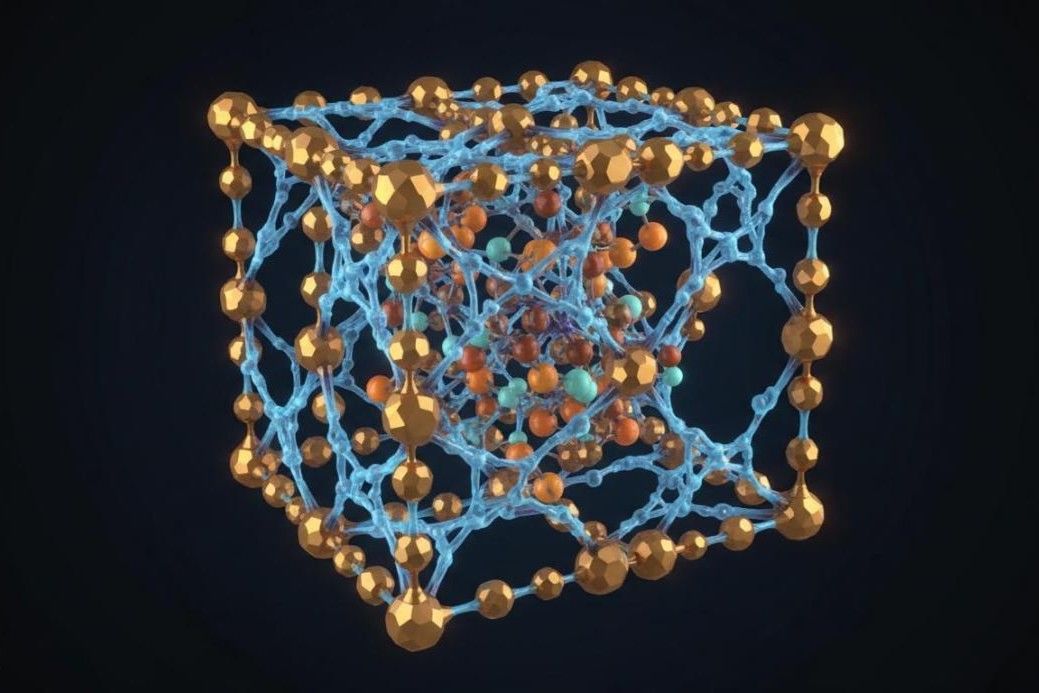 Figure 1: Metal-organic framework crystal structure showing metal nodes connected by organic linkers forming a highly porous three-dimensional network
The architecture of a metal-organic framework is defined by the choice of metal node, organic linker, and synthetic conditions. This extraordinary degree of design freedom enables the creation of materials with predetermined pore sizes, specific chemical functionalities lining the pore walls, and tailored mechanical and thermal stability profiles. Our MOF synthesis platform leverages this versatility to produce frameworks optimized for your target application.
We employ a comprehensive range of synthetic methods including solvothermal, hydrothermal, mechanochemical, microwave-assisted, and room-temperature solution synthesis. Each method offers distinct advantages in terms of crystallinity, particle size, scalability, and environmental impact. Our chemists optimize temperature, solvent system, modulator concentration, and reaction time to achieve the desired phase purity, morphology, and pore characteristics.
MOF compositions we routinely synthesize:
- ZIF-8 (Zn(mIm)2): Sodalite topology; hydrophobic pore channels; exceptional chemical and thermal stability; ideal for gas separation, catalysis, and drug encapsulation.
- UiO-66 (Zr6O4(OH)4(BDC)6): High thermal stability to 500 C; facile linker functionalization; robust defect engineering; widely used in catalysis and adsorption.
- MIL-101(Cr) / MOF-808: Large mesoporous cages; high surface area >3000 m2/g; excellent for bulky molecule encapsulation and chromatographic separations.
- HKUST-1 (Cu3(BTC)2): Open metal sites after activation; high density of Lewis acid sites; strong binding to polar molecules and gases.
- MOF-5 / IRMOF series: Isoreticular structures with tunable pore sizes from 3.8 to 28.8 angstroms; benchmark materials for gas storage research.
- MIL-53(Al/Fe/Cr): Breathing framework behavior; flexible pore structure that responds to guest molecules and external stimuli.
- Custom MOFs: Collaborative development of novel frameworks using bespoke linkers and metal nodes for proprietary applications.
Covalent Organic Framework Design & Synthesis
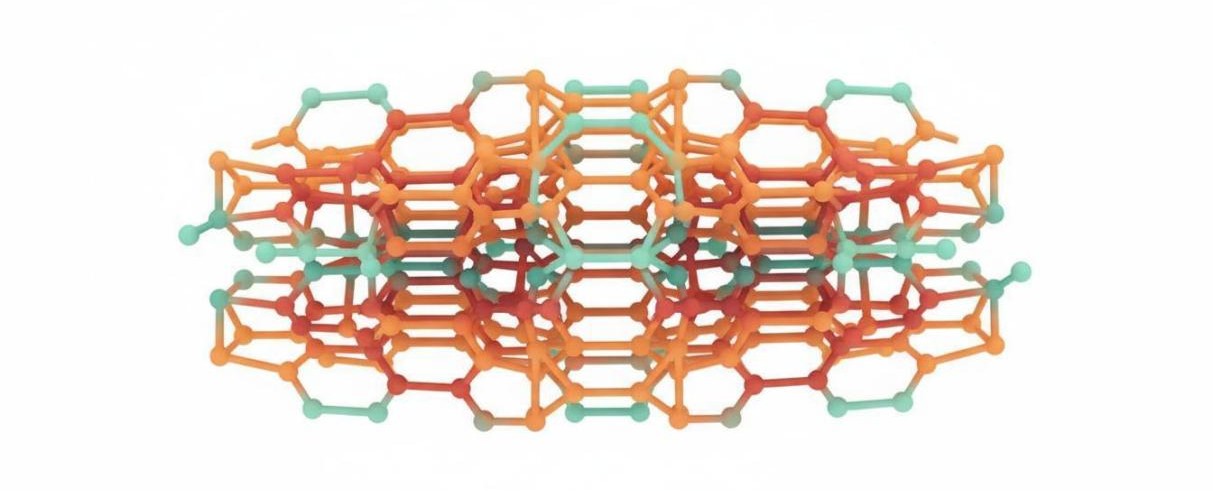 Figure 2: Covalent organic framework showing honeycomb-like hexagonal porous network formed by covalently linked organic building blocks in stacked layers
Covalent organic frameworks are crystalline porous polymers built entirely from light elements — carbon, nitrogen, oxygen, and boron — connected by covalent bonds into two-dimensional or three-dimensional architectures. Unlike MOFs, which rely on coordination bonds, COFs owe their stability to irreversible covalent linkages such as boronate esters, imines, hydrazones, and triazine rings. This results in materials with excellent thermal and chemical stability, low framework density, and precisely engineered pore environments free from metal contamination.
We synthesize both 2D and 3D COFs through carefully controlled condensation reactions between molecular building blocks. The choice of linker length, connectivity, and symmetry determines the resulting topology, pore size, and surface area. Our protocols emphasize achieving high crystallinity through precise control of reaction conditions, reversible bond formation during crystal growth, and carefully designed error-correction mechanisms.
COF platforms we develop:
- Imine-linked COFs: Condensation of aldehydes and amines; Schiff base chemistry; high crystallinity; stable to 400 C; modular functionalization through linker design.
- Boronate ester COFs: Early benchmark systems; self-condensation of boronic acids; 2D layered structures with eclipsed stacking; high surface areas exceeding 4,000 m2/g.
- Triazine-based CTFs: Trimerization of aromatic nitriles at elevated temperatures; exceptionally robust frameworks; strong Bronsted acid sites for catalysis.
- Hydrazone-linked COFs: Condensation of aldehydes and hydrazides; enhanced hydrolytic stability; diverse pore architectures through building block variation.
- 3D COFs: Tetrahedral or tetratopic building units creating diamond, pts, or beu topologies; fully interconnected 3D pore networks; challenging mesopore engineering.
- COF membranes & thin films: Interfacial polymerization, solvothermal growth on substrates, and layer-by-layer assembly for membrane separation and sensing.
Porosity Engineering & Pore Size Optimization
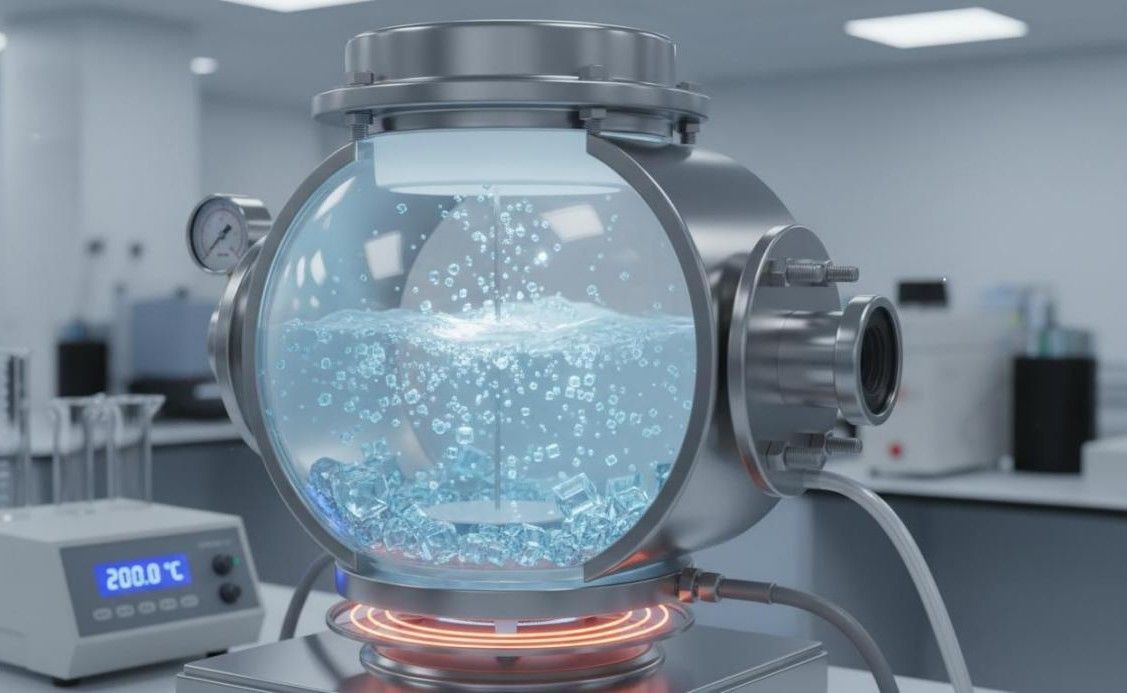 Figure 3: Solvothermal autoclave reactor setup for controlled MOF/COF crystal growth under elevated temperature and pressure
Porosity is the defining characteristic that makes MOFs and COFs valuable. Our porosity optimization service systematically tunes surface area, pore volume, pore size distribution, and pore surface chemistry to maximize performance in the target application. We employ multiple complementary strategies — from linker elongation and mixed-linker approaches to defect engineering and post-synthetic modification — to achieve porosity specifications that off-the-shelf materials cannot meet.
For applications requiring high storage capacity, we maximize BET surface area and total pore volume while maintaining framework stability. For size-selective separations, we engineer precise micropore apertures using isoreticular expansion or steric modulation. For catalysis involving large substrates, we create hierarchical pore structures combining micropores for active site confinement with mesopores for molecular transport. Each strategy is validated through rigorous gas sorption analysis and structural characterization.
| Strategy | Method | Outcome |
| Isoreticular expansion | Systematic linker elongation while maintaining topology | Pore size tuned from micropore to mesopore regime; predictable aperture control |
| Mixed-linker synthesis | Two or more linkers incorporated into one framework | Graded pore sizes; synergistic functionalization; fine-tuned adsorption selectivity |
| Defect engineering | Modulator-assisted or postsynthetic linker removal | Enhanced pore accessibility; increased mesoporosity; improved mass transport |
| Interpenetration control | Bulky substituents or competitive coordination | Prevents pore blocking; maintains large accessible pore volume |
| Hierarchical structuring | Templating, etching, or composite formation | Micropore plus mesopore/macropore coexistence for rapid diffusion |
| Surface area maximization | Activation optimization; solvent exchange; supercritical drying | Complete pore opening; elimination of trapped solvent; highest possible BET area |
Post-Synthetic Modification & Functionalization
The ability to modify MOFs and COFs after synthesis opens virtually unlimited possibilities for tailoring pore surface chemistry without disrupting the underlying framework topology. Our post-synthetic modification service transforms pristine frameworks into functionally complex materials by introducing catalytic sites, recognition elements, responsive groups, and bioconjugation handles directly within the pore environment.
For MOFs, the rich coordination chemistry of metal nodes and the versatility of organic linker chemistry provide multiple modification pathways. Open metal sites created by linker removal or activation serve as Lewis acid catalysts and strong binding sites. Functional groups on the linkers — amino, carboxyl, hydroxyl, azide — enable covalent attachment of catalysts, enzymes, targeting ligands, and responsive moieties.
- Linker exchange (PSE): Post-synthetic exchange of original linkers with functionalized analogues; introduces new chemical groups while preserving framework topology and crystallinity.
- Node modification: Coordination of catalytic metal complexes to open metal sites; grafting of organometallic catalysts for asymmetric synthesis and C-C coupling.
- Covalent linker modification: Click chemistry, amide coupling, and condensation reactions on pre-installed functional groups; attachment of dyes, peptides, antibodies, and catalysts.
- Encapsulation: Ship-in-a-bottle loading of enzymes, metal nanoparticles, and polyoxometalates within mesoporous cages; prevents leaching while enabling catalysis.
- COF pore wall functionalization: Grafting of functional groups onto the covalent backbone; introduces hydrogen bonding sites, charged groups, or catalytic centers for selective molecular recognition.
Gas Storage & Separation Applications
 Figure 4: Gas molecules adsorbed within the pore channels of a metal-organic framework showing high-capacity storage of methane and carbon dioxide
The ultrahigh surface areas and precisely tunable pore apertures of MOFs and COFs make them exceptional materials for gas storage and molecular separation. Our application-focused development program designs porous frameworks with optimized adsorption enthalpies, selectivity factors, and working capacities for specific gas pairs and operating conditions.
Gas applications we address:
- Carbon capture: Amine-functionalized MOFs with high CO2 affinity and selectivity over N2; frameworks stable under humid flue gas conditions; rapid adsorption-desorption kinetics.
- Hydrogen storage: High surface area MOFs with optimized pore sizes of 0.7-1.0 nm for maximum H2 packing density; lightweight frameworks to maximize gravimetric capacity.
- Methane storage: Pore-engineered MOFs targeting 263 cm3/cm3 ANG targets; materials with optimal methane adsorption enthalpy for room-temperature operation.
- Olefin-paraffin separation: Frameworks with open metal sites or pi-complexing ligands for selective ethylene-ethane and propylene-propane separation.
- Membrane-based separations: Thin-film composite membranes with sub-micron selective layers; mixed-matrix membranes incorporating MOF fillers for enhanced permeability and selectivity.
Catalysis & Drug Delivery Development
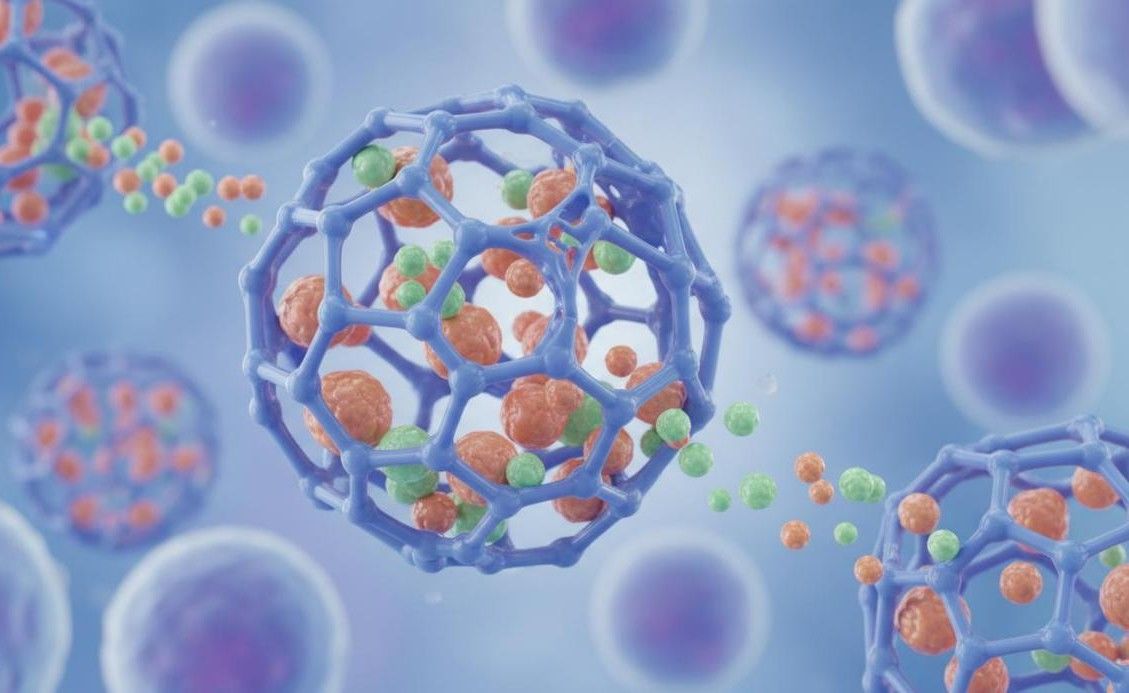 Figure 5: Drug molecules encapsulated within mesoporous MOF nanoparticles for controlled therapeutic release in drug delivery applications
MOFs and COFs have emerged as transformative platforms for heterogeneous catalysis and drug delivery, leveraging their tunable pore environments, high loading capacities, and stimuli-responsive behaviors. In catalysis, the uniform distribution of active sites within well-defined pores creates enzyme-like microenvironments that enhance reaction rates and selectivity. In drug delivery, the high porosity enables exceptional drug loading, while the framework itself can serve as a protective carrier that releases cargo in response to pH, temperature, or competitive binding triggers.
Catalysis-focused development:
- Enzyme immobilization: Physical encapsulation or covalent tethering of enzymes within MOF pores; enhanced stability against denaturation and proteolysis; recyclable biocatalysts.
- Organometallic catalysis: Grafting of molecular catalysts onto MOF linkers or nodes; asymmetric catalysis; cascade reactions enabled by spatially separated active sites.
- Photocatalysis: MOF- and COF-based light-harvesting antennae; charge separation and transfer within the framework; CO2 reduction and water splitting.
Drug delivery-focused development:
- High-capacity drug loading: Encapsulation of chemotherapy agents, antibiotics, and anti-inflammatory drugs within biocompatible Zr- and Fe-based MOFs.
- Targeted delivery systems: Surface conjugation of folate, antibodies, and peptides for active targeting; PEGylation for extended circulation.
- Stimuli-responsive release: pH-sensitive linkers for tumor-targeted release; competitive binding triggers; photo- and thermo-responsive gatekeeping.
Comprehensive Porosity & Structural Characterization
Thorough characterization is indispensable for verifying synthesis success, confirming porosity metrics, and establishing structure-performance relationships. Every MOF and COF batch we produce undergoes comprehensive analytical assessment using industry-standard techniques, and we provide complete data packages to support your research publications and process development.
| Parameter | Method | Information Obtained |
| Phase purity & crystallinity | Powder XRD; single-crystal XRD | Framework identity; phase purity; unit cell parameters |
| Surface area & porosity | N2 adsorption at 77 K; BET & Langmuir | BET surface area; total pore volume; micropore volume |
| Pore size distribution | DFT/NLDFT; QSDFT; HK method | Pore width distribution; micro- vs. mesopore fraction |
| Morphology & particle size | SEM; TEM; DLS | Crystal habit; particle dimensions; aggregation state |
| Thermal stability | TGA; DSC | Decomposition temperature; solvent content; framework robustness |
| Chemical composition | XPS; ICP-MS; EA; FTIR | Elemental ratios; metal content; functional group identity |
| Gas adsorption performance | Volumetric gas sorption; IAST | Uptake capacity; isosteric heat; mixture selectivity |
Design Your Ideal Porous Material with Expert Guidance
Partner with Eata Nanomaterials to access custom MOF and COF synthesis with precisely engineered porosity. Our materials chemists will work with you to select the optimal framework, pore architecture, and surface chemistry for your application — from concept to fully characterized material.