

Nanomaterial Application Development Services
At Eata Nanomaterials, we transform the extraordinary potential of nanotechnology into practical, high-performance solutions tailored to your specific research and product development goals. Our multidisciplinary team of material scientists, chemists, and application engineers brings deep expertise across diverse industries — from pharmaceutical formulation to energy systems, from functional coatings to analytical sensing platforms. Whether you need a proof-of-concept formulation, a scalable prototype, or a full characterization report, we provide end-to-end support that accelerates your innovation timeline and de-risks your development pathway.
What sets our services apart is the seamless integration of nanomaterial synthesis, surface engineering, dispersion stabilization, and application-specific testing under one roof. We do not simply supply nanoparticles — we engineer complete material systems designed to perform in real-world conditions. Explore our nine core service areas below and discover how we can advance your next project.
Nanomaterial-Based Drug Delivery Formulation Services
 Figure 1: Lipid and polymer nanocarriers engineered for targeted drug delivery applications
Poor solubility, rapid clearance, and off-target toxicity remain the most common barriers to therapeutic efficacy. Our nanomaterial-based drug delivery formulation services directly address these challenges by designing carrier systems that improve bioavailability, enable controlled release, and support active targeting strategies.
We develop a broad spectrum of nanocarrier platforms including liposomes, solid lipid nanoparticles, polymer nanoparticles (PLGA, PLA, PCL, chitosan), lipid nanoparticles (LNPs), nanocrystals, nanoemulsions, dendrimers, and mesoporous silica nanoparticles. Each system is selected and optimized based on the physicochemical profile of your active pharmaceutical ingredient (API) and the intended route of administration.
Our formulation development workflow covers every critical stage:
- Feasibility assessment: Pre-formulation evaluation of API solubility, stability, and compatibility with candidate carrier materials.
- Carrier design & optimization: Systematic tuning of particle size, surface charge, drug loading, and encapsulation efficiency through advanced techniques such as nanoprecipitation, emulsification-solvent evaporation, and microfluidics.
- Surface functionalization: Conjugation of targeting ligands, PEGylation for stealth properties, or stimuli-responsive triggers (pH, redox, enzyme) for site-specific release.
- In vitro characterization: Complete analytical testing including DLS, zeta potential, TEM/SEM, drug loading quantification, release kinetics, and stability under accelerated and long-term storage conditions.
From oncology therapeutics to ocular delivery and nucleic acid encapsulation, our formulations are designed with translational viability in mind — ready for preclinical evaluation and scalable to clinical production.
Nanoparticle Dispersion and Ink Formulation Services
 Figure 2: Stable nanoparticle dispersions formulated for printed electronics applications
The performance of any nanoparticle-enabled product begins with a stable, well-dispersed formulation. Aggregation, sedimentation, and phase separation are the silent killers of nanomaterial performance. Our dispersion and ink formulation services ensure that your nanoparticles remain uniformly distributed, properly stabilized, and optimized for their intended deposition or processing method.
We formulate conductive, dielectric, and functional inks based on silver nanoparticles, gold nanoparticles, copper nanoparticles, carbon nanotubes, graphene, and metal oxide nanomaterials. Our expertise spans inkjet printing, screen printing, gravure, flexography, and roll-to-roll coating processes.
Capabilities at a glance:
| Parameter | Our Approach |
| Particle size control | Sub-200 nm d50 via DLS; tight size distribution for reliable jetting |
| Dispersant selection | Polymeric, ionic, and surfactant stabilizers matched to solvent system and substrate |
| Rheological tuning | Viscosity and surface tension optimized for specific printing technology |
| Substrate compatibility | Formulation validated on PET, PI, glass, paper, and custom substrates |
| Post-print sintering | Low-temperature thermal, photonic, and plasma sintering protocols |
Whether you are developing flexible printed circuit boards, transparent conductive films, or biosensor electrodes, our ink formulation team delivers print-ready dispersions with batch-to-batch consistency.
Nanocomposite Polymer Matrix Development Services
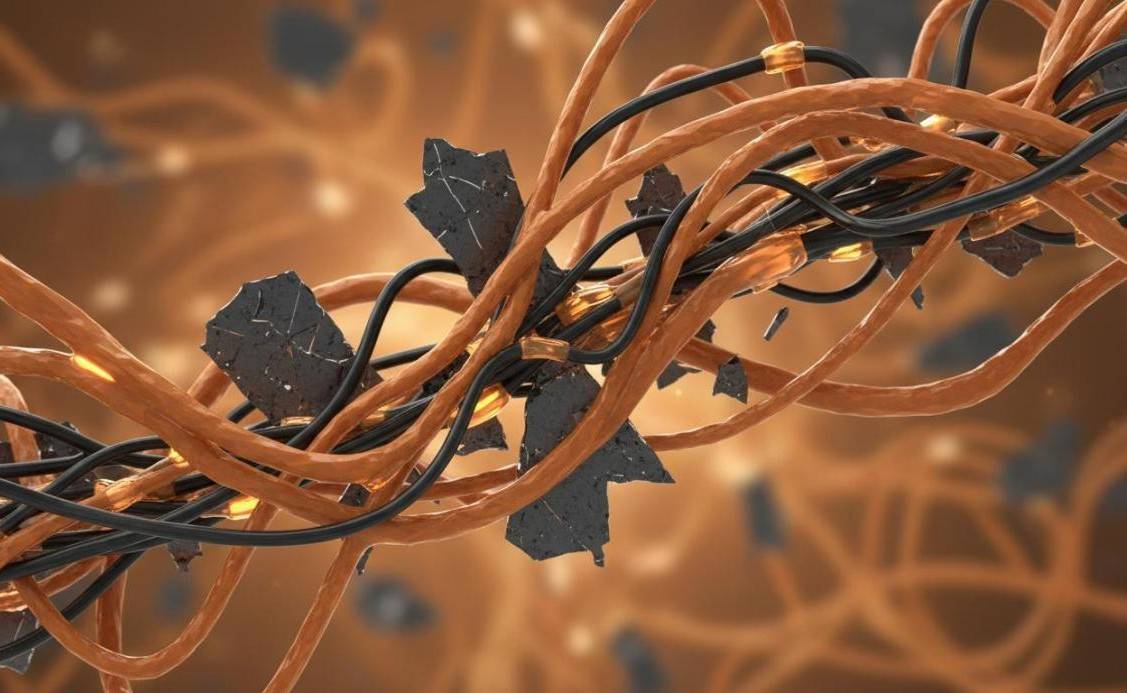 Figure 3: Carbon nanotubes and graphene platelets integrated within a polymer matrix for enhanced mechanical and electrical properties
Adding nanoscale fillers to polymer matrices unlocks property combinations that conventional composites cannot achieve — ultralight strength, electrical conductivity, thermal stability, barrier resistance, and antimicrobial activity, all without sacrificing processability. Our nanocomposite development services guide you from filler selection and surface modification to compounding, characterization, and prototype validation.
We work with thermoplastics, thermosets, elastomers, and bio-based polymers, incorporating carbon nanotubes, graphene, nanoclay, cellulose nanocrystals, metal oxide nanoparticles, and other functional nanofillers. Key to our approach is interfacial engineering — tailoring the filler-polymer interface to ensure uniform dispersion and strong adhesion, which directly determines mechanical reinforcement, percolation thresholds, and long-term durability.
Application areas we routinely serve:
- Structural composites: Lightweight, high-strength materials for aerospace, automotive, and sporting goods.
- Conductive polymers: ESD-safe housings, EMI shielding, and flexible electronic substrates.
- Barrier films & packaging: Oxygen and moisture barrier enhancement for food, pharmaceutical, and electronics packaging.
- Biomedical scaffolds: Biocompatible, biodegradable nanocomposites for tissue engineering and implantable devices.
- Fire-retardant systems: Nano-additive flame retardancy with reduced total loading and preserved mechanical properties.
Nanomaterial-Enhanced Coating and Film Development Services
Surface properties often determine the success or failure of a product in its operating environment. Our nanomaterial-enhanced coating and film development services apply nanotechnology at the surface level to deliver superior hardness, corrosion resistance, antimicrobial protection, self-cleaning behavior, optical functionality, and barrier performance.
We develop both thin-film coatings (nanometer to micrometer scale) and standalone functional films. Our expertise covers sol-gel coatings, chemical vapor deposition (CVD) precursors, physical vapor deposition (PVD) targets, layer-by-layer assemblies, and nanocomposite lacquers. Common nanomaterials incorporated include titanium dioxide, zinc oxide, silicon dioxide, silver nanoparticles, graphene oxide, and diamond-like carbon nanocomposites.
Functional coating categories:
- Antimicrobial & antifouling: Silver, copper, ZnO, and TiO2-based coatings for medical devices, food contact surfaces, and public infrastructure.
- Hydrophobic & oleophobic: Superhydrophobic nano-coatings with water contact angles exceeding 150 degrees for easy-clean and anti-icing applications.
- Wear & corrosion resistant: Nanocrystalline ceramic and nanocomposite hard coatings extending component lifetime in harsh environments.
- Transparent conductive: ITO-alternative coatings using silver nanowires, carbon nanotubes, or graphene for touchscreens and optoelectronics.
- UV protective: Nanoparticle-enhanced UV absorption without the yellowing associated with organic UV stabilizers.
Catalytic Nanomaterial Design and Optimization Services
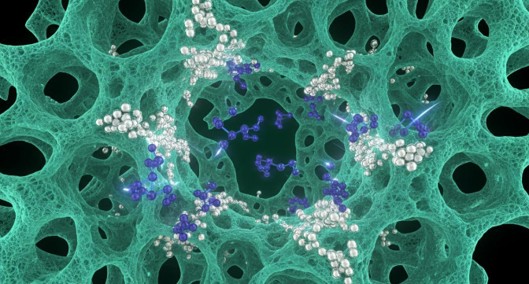 Figure 4: Metal nanoparticles supported on mesoporous oxide frameworks for high-efficiency catalytic processes
Catalysis lies at the heart of chemical manufacturing, environmental remediation, and energy conversion. Nanostructured catalysts offer dramatically enhanced activity, selectivity, and stability compared to their bulk counterparts due to high surface-area-to-volume ratios, abundant active edge and corner sites, and tunable electronic properties. Our catalytic nanomaterial design services leverage these advantages to develop next-generation catalysts tailored to your reaction system.
We design and synthesize supported metal nanoparticles (Pt, Pd, Au, Ag, Cu, Ni, Co, Fe), bimetallic and core-shell nanostructures, metal oxide catalysts (TiO2, CeO2, ZnO, Fe3O4), and metal-organic framework (MOF) derived nanocatalysts. Our optimization process considers not just intrinsic activity but also mass transfer limitations, thermal stability, poisoning resistance, and recyclability.
How we add value to your catalytic process:
1. Structure-activity mapping: We correlate catalyst morphology, composition, and surface chemistry with catalytic performance to identify optimal design parameters.
2. Support engineering: Selection and functionalization of supports (alumina, silica, carbon, zeolites, MOFs) to maximize dispersion and prevent sintering.
3. Scalability assessment: Evaluation of synthesis methods for cost-effective scale-up without performance degradation.
4. Characterization suite: XRD, BET, TEM, XPS, ICP-MS, and in situ reaction monitoring to fully characterize catalyst structure and behavior.
Energy Storage Nanomaterial Integration Services
 Figure 5: Nanostructured electrode materials enabling high-capacity energy storage through enhanced ion intercalation
The global transition to renewable energy and electrified transportation demands batteries and supercapacitors with higher energy density, faster charging, longer cycle life, and improved safety. Nanomaterials are indispensable enablers of these next-generation energy storage systems. Our integration services focus on designing nanostructured electrode materials, electrolyte additives, and separator enhancements that push performance boundaries.
For lithium-ion batteries, we develop nanostructured anode materials (silicon nanoparticles, tin-based composites, nanocarbon hybrids) and high-voltage cathode coatings that suppress side reactions and extend calendar life. For supercapacitors, we engineer activated carbon, graphene, and transition metal oxide nanomaterials that maximize electrochemical surface area and ion accessibility. Emerging technologies including solid-state batteries, sodium-ion systems, and redox flow batteries are also within our scope.
Service highlights:
- Electrode formulation: Slurry optimization, binder selection, and conductive network design for maximum capacity utilization.
- Nano-coating of active materials: Protective coatings (carbon, metal oxides, phosphates) that stabilize the electrode-electrolyte interface.
- Separator modification: Nanoparticle-coated separators with improved thermal stability, wettability, and dendrite suppression.
- Full cell assembly & testing: Coin cell and pouch cell fabrication with comprehensive electrochemical characterization (CV, EIS, rate capability, cycling stability).
Nanomaterial-Based Sensor and Biosensor Development Services
Detection sensitivity, selectivity, and response time are the defining metrics of any sensor platform. Nanomaterials amplify all three by providing enormous surface area for molecular interaction, unique optical and electronic transduction properties, and versatile surface chemistry for bioreceptor immobilization. Our sensor development services harness these attributes to create high-performance devices for healthcare diagnostics, environmental monitoring, food safety, and industrial process control.
We work with electrochemical, optical (SPR, LSPR, fluorescence, SERS), and piezoelectric transduction platforms. Commonly employed nanomaterials include gold nanoparticles, silver nanoclusters, quantum dots, upconversion nanoparticles, carbon nanotubes, graphene, metal oxide nanostructures (ZnO, TiO2, SnO2), and magnetic nanoparticles.
What our sensor development service encompasses:
- Transducer design: Selection and nanomaterial functionalization of the sensing platform best suited to your target analyte and detection limit requirements.
- Bioreceptor integration: Covalent or affinity-based immobilization of antibodies, aptamers, enzymes, or molecularly imprinted polymers onto nanostructured surfaces.
- Interfacial engineering: Blocking strategies, antifouling layers, and reference electrode optimization to ensure reliable operation in complex matrices.
- Analytical validation: Calibration curves, limit of detection (LOD), limit of quantification (LOQ), selectivity testing, and reproducibility assessment.
- Prototype integration: Miniaturization support, microfluidic coupling, and wireless readout system recommendations.
Nanomaterial Thermal Management Solution Services
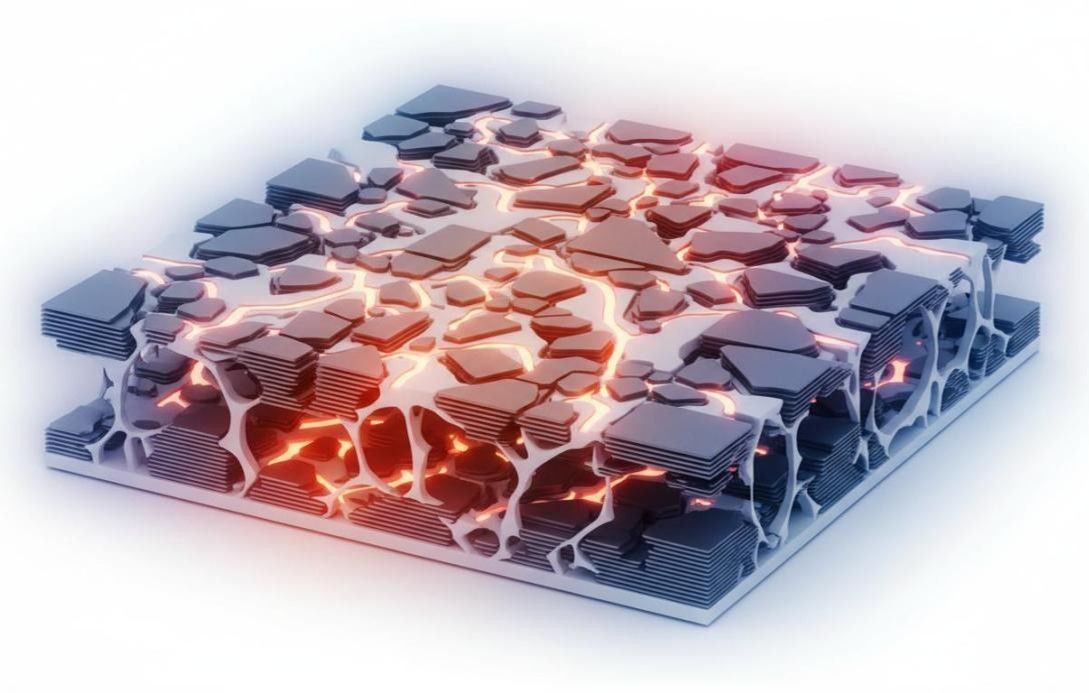 Figure 6: Graphene-enhanced thermal interface material with efficient heat dissipation pathways
As electronic devices become smaller, more powerful, and more densely packaged, thermal management has emerged as a critical design constraint. Nanomaterials offer exceptional thermal conductivity — often orders of magnitude higher than conventional materials at a fraction of the weight. Our thermal management solutions leverage graphene, carbon nanotubes, boron nitride nanosheets, and metal nanoparticles to create thermal interface materials (TIMs), heat spreaders, phase change composites, and thermally conductive encapsulants.
Beyond raw thermal conductivity, we engineer the filler-matrix interface and percolation network to minimize thermal boundary resistance — the hidden bottleneck in most composite systems. Our formulations are designed for easy application, long-term stability under thermal cycling, and electrical insulation where required.
Thermal solution portfolio:
- Thermal interface materials (TIMs): Graphene or BN-filled greases, gels, and pads with thermal conductivities reaching 10+ W/mK.
- Heat spreaders & sinks: Lightweight, high-conductivity composites replacing aluminum and copper in weight-sensitive applications.
- Phase change materials (PCMs): Nano-enhanced solid-liquid PCMs with improved thermal conductivity and shape retention for thermal buffering.
- Encapsulants & potting compounds: Electrically insulating, thermally conductive compounds for LED modules, power electronics, and battery packs.
Nanomaterial-Enhanced Lubricant and Grease Formulation Services
Friction and wear cost the global economy hundreds of billions of dollars annually in energy loss, maintenance, and premature equipment failure. Nanomaterial-enhanced lubricants and greases offer a step-change improvement over conventional formulations by forming protective tribofilms, filling surface asperities, and exhibiting unique rolling-sliding behaviors at the contact interface.
We formulate nano-enhanced lubricants and greases incorporating boron nitride nanoparticles, molybdenum disulfide nanosheets, graphene, carbon nanotubes, nano-diamond, metal oxide nanoparticles, and rare-earth compound nanoparticles. Our formulations are compatible with mineral oils, synthetic esters, polyalphaolefins (PAO), and bio-based base stocks.
Performance benefits we target:
| Benefit | Description |
| Friction reduction | Coefficient of friction reduced by 20-50% compared to base lubricant under identical test conditions. |
| Anti-wear protection | Nano-additives form self-repairing tribofilms that reduce wear scar diameter and extend component life. |
| Extreme pressure performance | Significant enhancement of weld load and load-carrying capacity for heavily loaded machinery. |
| Thermal stability | Nanoparticles improve the high-temperature performance envelope of both oils and greases. |
| Energy efficiency | Lower friction translates directly to reduced power consumption and operating costs. |
Our tribology testing capabilities include four-ball testers, pin-on-disk tribometers, and high-frequency reciprocating rigs, ensuring that every formulation is validated under realistic contact conditions before it reaches your application.
Ready to Accelerate Your Nanomaterial Project?
Contact Eata Nanomaterials today to discuss your specific requirements. Our technical team is standing by to provide a customized project proposal and feasibility assessment at no obligation.