

Thermal Stability and DSC/TGA Analysis Services
Thermal properties govern how nanomaterials behave during synthesis, processing, storage, and application. Whether you are evaluating the decomposition temperature of surface ligands, measuring the glass transition of a polymer nanocomposite, or tracking crystallization kinetics of nanoparticle-filled materials, precise thermal analysis provides the foundational data needed for reliable research outcomes.
At Eata Nanomaterials, our thermal analysis laboratory operates simultaneous thermal analysis platforms that combine thermogravimetric analysis and differential scanning calorimetry in a single measurement. This integrated approach captures both mass loss and heat flow signals from the same sample under identical conditions, eliminating sample-to-sample variability and providing a complete picture of thermal events.
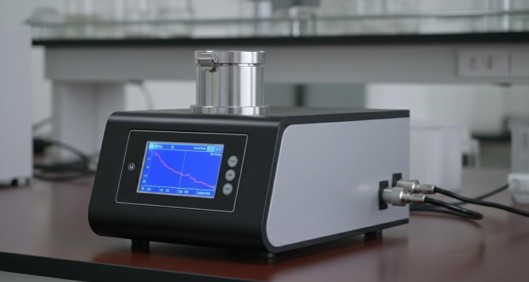 Figure 1: A simultaneous thermal analyzer combining TGA and DSC measurement capabilities in one integrated system.
Thermogravimetric Analysis for Decomposition and Stability
Thermogravimetric analysis measures the change in mass of a sample as it is heated or held at constant temperature. As temperature rises, volatile components evaporate, organic moieties decompose, and inorganic structures may undergo phase transitions or oxidation. Each mass loss event appears as a step in the TGA curve, with the temperature at which it occurs and the magnitude of mass lost providing quantitative insights into material composition and stability.
Our TGA services deliver the following analytical outputs:
- Onset decomposition temperature (Tonset) marking the beginning of significant mass loss, serving as the primary metric for thermal stability ranking
- Characteristic degradation temperatures including T5% (5% mass loss), T10%, T50%, and Tmax (maximum rate of mass loss) for comprehensive stability profiling
- Residual mass at high temperature quantifying inorganic content, ash, or thermally stable residue in polymer nanocomposites
- Multi-stage decomposition analysis resolving distinct mass loss steps attributable to water desorption, ligand removal, polymer degradation, and inorganic transformations
- Atmosphere-dependent measurements in nitrogen, air, oxygen, or custom gas mixtures revealing oxidative versus pyrolytic degradation pathways
- Kinetic analysis using multi-heating-rate isoconversional methods (Ozawa-Flynn-Wall, Kissinger-Akahira-Sunose) to calculate activation energies and pre-exponential factors
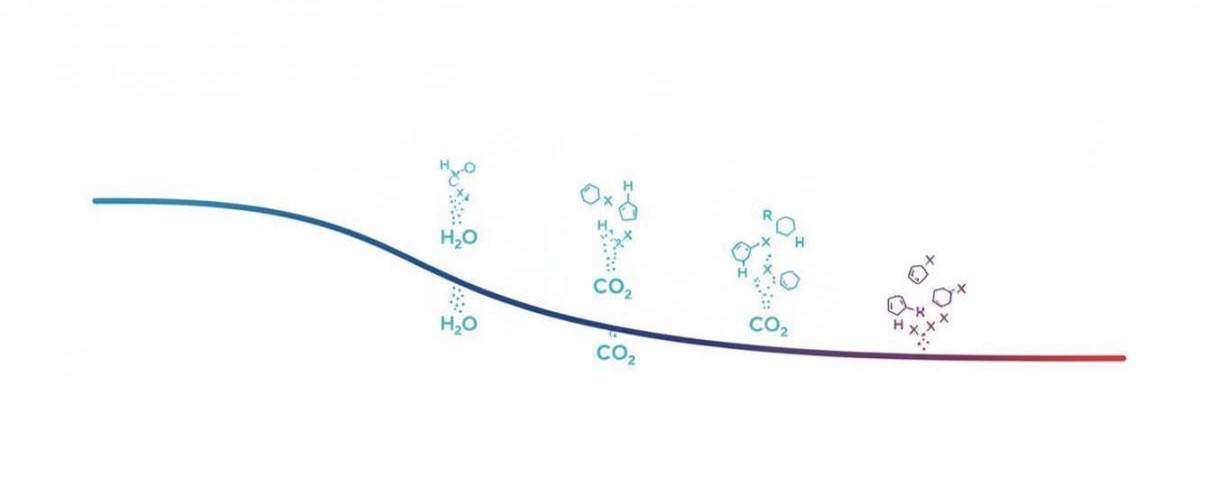 Figure 2: A TGA curve showing multi-stage mass loss with volatile molecules released at each decomposition step.
Differential Scanning Calorimetry for Phase Transitions
While TGA monitors mass changes, DSC measures the difference in heat flow between a sample and an inert reference under identical temperature conditions. This enables detection of thermal transitions that involve no mass change whatsoever: glass transitions, melting, crystallization, and exothermic crosslinking reactions. These transitions are invisible to TGA but carry profound implications for material processing and performance.
Our DSC analysis services encompass:
- Glass transition temperature (Tg) determination as a step change in heat capacity, reported as onset, midpoint, or inflection values depending on application requirements
- Melting point (Tm) and enthalpy of fusion measurements for crystalline nanomaterials and semi-crystalline polymer nanocomposites
- Crystallization temperature and enthalpy during cooling scans, revealing nucleation efficiency of nanoparticle fillers in polymer matrices
- Degree of crystallinity calculation from fusion enthalpy relative to 100% crystalline reference values
- Oxidative induction time (OIT) at elevated temperatures in oxygen atmosphere, quantifying antioxidant efficacy and oxidative stability
- Cold crystallization detection in quenched amorphous materials, revealing recrystallization behavior upon reheating
 Figure 3: A DSC thermogram showing a glass transition step, a melting endotherm, and a crystallization exotherm.
Simultaneous Thermal Analysis: TGA-DSC Integration
Simultaneous thermal analysis measures TGA and DSC signals from the same sample in the same crucible under identical temperature and atmosphere conditions. This integration eliminates run-to-run variability and enables direct correlation between mass loss events and their thermal signatures. A mass loss step coinciding with an endothermic DSC peak indicates evaporative or depolymerization processes; the same mass loss coinciding with an exothermic signal suggests oxidative decomposition or crosslinking.
STA can be coupled to evolved gas analysis through Fourier-transform infrared spectroscopy (TGA-DSC-FTIR) or mass spectrometry (TGA-DSC-MS), identifying the chemical nature of volatile degradation products as they evolve. This hyphenated approach provides the most comprehensive single-experiment characterization of thermal decomposition currently available.
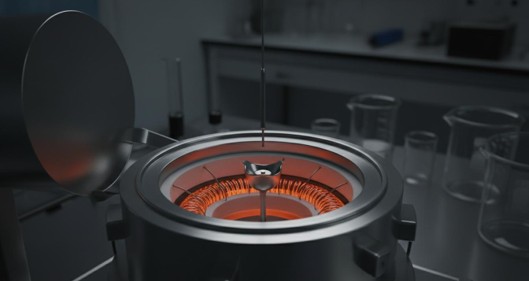 Figure 4: An open high-temperature furnace showing the sample pan holder and heating coils of a thermal analyzer.
Applications for Nanomaterial Research
Our thermal analysis services address diverse research needs across nanomaterial development and characterization:
- Quantifying organic ligand loading on nanoparticle surfaces through controlled pyrolysis of surface-bound molecules
- Evaluating how nanoparticle fillers affect the glass transition, melting, and crystallization behavior of polymer nanocomposites
- Measuring decomposition activation energies to predict service life and storage stability of nanomaterial formulations
- Comparing thermal stability of different synthesis batches or surface modification protocols for quality control
- Characterizing MOF thermal stability and framework collapse temperatures under inert and oxidative atmospheres
- Determining the effect of nanofillers on polymer degradation mechanisms and char formation for flame retardancy studies
- Studying crystallization kinetics in nanoparticle-nucleated polymer systems through isothermal and non-isothermal DSC
 Figure 5: Color-coded TGA curves comparing thermal stability of pure polymer and nanocomposites with increasing nanoparticle loading.
Selecting the Appropriate Thermal Analysis Technique
| When You Need To | Recommended Technique |
| Determine onset degradation temperature or rank thermal stability | TGA in N2 or air |
| Measure glass transition or melting temperature | DSC |
| Quantify inorganic/organic ratio or filler content | TGA residual mass analysis |
| Correlate mass loss with heat flow signature | STA (TGA + DSC) |
| Calculate decomposition activation energy | Multi-rate TGA with isoconversional methods |
| Assess oxidative stability or antioxidant efficacy | DSC OIT measurement |
| Identify volatile decomposition products | TGA-FTIR or TGA-MS |
| Measure degree of crystallinity | DSC enthalpy analysis |
Measurement Deliverables
Every thermal analysis project includes a comprehensive report containing:
- TGA and/or DSC curves with labeled thermal events and characteristic temperatures
- Quantitative parameters including Tonset, T5%, T10%, T50%, Tg, Tm, enthalpy values, and residual mass
- Kinetic analysis results with activation energy and pre-exponential factor when applicable
- Derivative thermogravimetric (DTG) curves showing rate of mass loss for enhanced event resolution
- Experimental conditions including heating rate, atmosphere, sample mass, and crucible type
- Expert interpretation discussing thermal behavior in context of your research objectives
Submit Your Samples for Thermal Analysis
Whether you require rapid thermal stability screening, detailed kinetic analysis, or comprehensive phase transition characterization, Eata Nanomaterials delivers precise thermal data with expert interpretation. Our simultaneous thermal analysis platform ensures consistent, comparable results across diverse nanomaterial systems.
Contact our analytical team to discuss your sample type, thermal characterization needs, and recommended analysis conditions. We will provide guidance on sample quantity, preparation, and optimal experimental parameters.