

Nanomaterial Surface Modification & Functionalization Services
The surface of a nanomaterial is where it meets the world. Regardless of how elegantly a nanoparticle is synthesized in the core, its behavior in biological environments, composite matrices, catalytic reactors, or sensing platforms is governed almost entirely by the chemistry and architecture of its outermost layers. At Eata Nanomaterials, surface modification is not an afterthought — it is a deliberate, protocol-driven discipline that transforms raw nanoparticles into functional tools ready for demanding research applications.
Our surface engineering capabilities span covalent and non-covalent strategies, small-molecule and macromolecular approaches, wet chemistry and vacuum-based techniques. We modify the surfaces of metallic, oxide, semiconductor, polymeric, carbon-based, and magnetic nanomaterials — introducing functional groups, bioconjugating targeting ligands, depositing protective coatings, and architecting polymer brushes with sub-nanometer precision. Every modification campaign is validated by a comprehensive analytical package confirming surface coverage, ligand density, and retention of core particle properties.
Gold/Silver/Magnetic Particle Conjugation and Modification Services
Noble metal and magnetic nanoparticles present unique surface chemistries that demand tailored conjugation strategies. Gold nanoparticles offer the quintessential thiol-gold chemistry — sulfhydryl-terminated ligands bind spontaneously and quasi-covalently to Au(0) surfaces, forming dense self-assembled monolayers with remarkable stability. Our conjugation services exploit this chemistry to attach PEG chains, antibodies, peptides, nucleic acids, fluorescent dyes, and small-molecule drugs with defined surface densities and controlled orientations.
Silver nanoparticles share similar thiol reactivity but require more careful handling due to oxidative sensitivity. We employ anaerobic conjugation protocols and protective coatings to preserve Ag(0) integrity during modification. For magnetic iron oxide nanoparticles (Fe3O4 and gamma-Fe2O3), surface modification typically proceeds through silane chemistry or dopamine anchoring, introducing amino, carboxyl, or thiol groups that serve as reactive handles for downstream bioconjugation. DMSA ligand exchange provides an alternative route for producing compact, water-dispersible magnetic nanocrystals with carboxyl-rich surfaces.
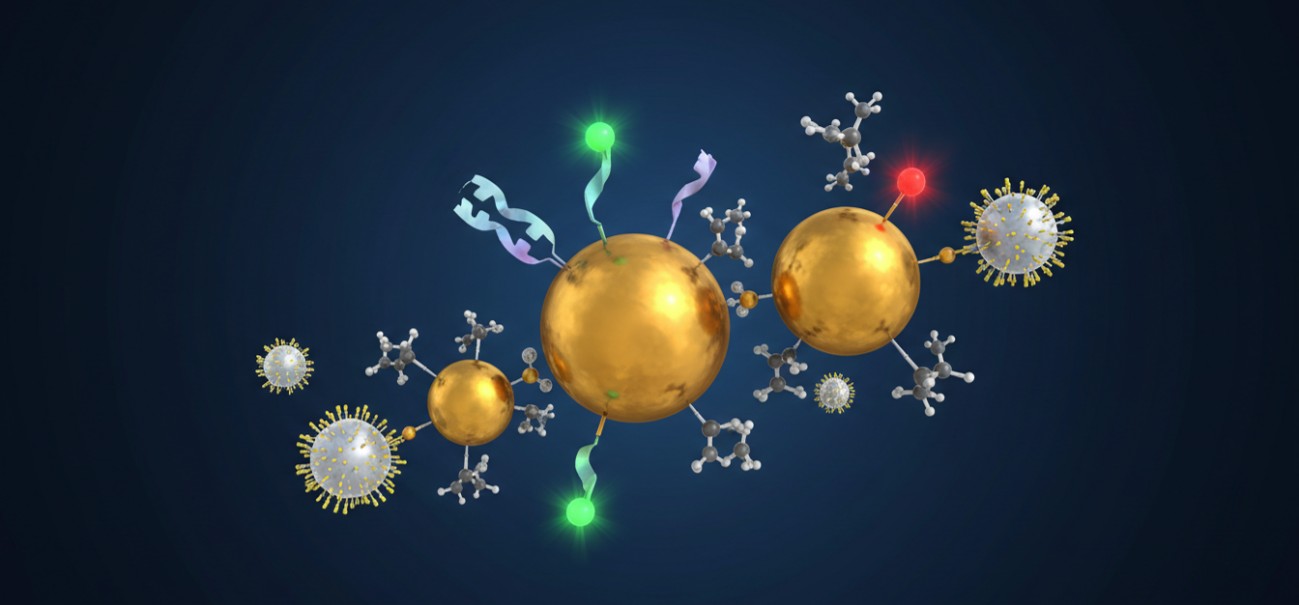 Figure 1: Gold and silver nanoparticles conjugated with antibodies, fluorescent dyes, and thiol-based ligands
Conjugation Capabilities:
- Thiol-PEG modification: Chain lengths from 350 Da to 20 kDa, linear and branched architectures, terminal functional groups (COOH, NH2, N3, biotin).
- Antibody conjugation: Site-specific via Fab' thiols or carbohydrate oxidation, random amine coupling, or affinity-directed orientation.
- Peptide functionalization: RGD, TAT, NLS, cell-penetrating and tumor-homing sequences via thiol-maleimide or amide coupling.
- Nucleic acid attachment: Thiol-modified DNA/RNA, aptamers via disulfide exchange or click chemistry.
- Fluorescent labeling: Cy3, Cy5, FITC, Alexa Fluor series, and near-infrared dyes for bioimaging applications.
Surface Functionalization and Ligand Exchange Services
Many nanoparticles emerge from synthesis capped with native ligands — oleic acid/oleylamine for quantum dots, citrate for gold colloids, TOPO for semiconductor nanocrystals — that must be replaced or supplemented for downstream applications. Our ligand exchange services remove these original stabilizers and substitute them with functional alternatives that confer desired solubility, reactivity, and biocompatibility. The exchange process is monitored by NMR, FTIR, and zeta potential shifts to confirm complete replacement.
Beyond simple exchange, we engineer multi-ligand surfaces where different molecules occupy distinct roles. A typical architecture might combine a zwitterionic phosphobetaine ligand for antifouling, a short PEG spacer for hydration, and a terminal biotin or antibody for targeting. The ratio of these ligands is tuned to balance colloidal stability with functional availability. For quantum dots, we specialize in exchanging hydrophobic TOPO for compact thiol-based or amphiphilic polymer ligands that preserve high quantum yield while enabling aqueous processing.
Ligand Exchange Expertise:
| Original Ligand | Exchange Target | Application |
| Citrate | Thiol-PEG, MBA, DTNB | Bioimaging, drug delivery, sensing |
| TOPO / Oleic acid | Thiols, phosphines, amphiphilic polymers | Aqueous QDs for bioapplications |
| CTAB | PEG-thiol, mPEG-SH, PVP | Biomedical gold nanorods |
| Oleylamine | Pyridine, NOBF3, PEG-amine | Water-soluble metal nanocrystals |
PEGylation and Bioconjugation Services
PEGylation — the grafting of polyethylene glycol chains onto nanoparticle surfaces — remains the most widely adopted strategy for enhancing biocompatibility, prolonging circulation half-life, and reducing immunogenicity. Our PEGylation services cover the full spectrum of PEG architectures: linear methoxy-PEGs, heterobifunctional PEGs with different end groups on each terminus, multi-arm branched PEGs, and comb-shaped structures for maximum steric shielding. Molecular weights range from 350 Da to 40 kDa, selected based on the balance between stealth effectiveness and renal clearance thresholds.
Bioconjugation extends PEGylation by attaching bioactive molecules to the distal end of PEG spacers or directly to the nanoparticle core. We employ carbodiimide chemistry (EDC/NHS) for amide bond formation, maleimide-thiol coupling for site-specific protein attachment, click chemistry (copper-catalyzed and strain-promoted azide-alkyne cycloaddition) for bio-orthogonal labeling, and hydrazone/oxime ligation for reversible conjugation under mild conditions. Each bioconjugation protocol is optimized to preserve the biological activity of the attached molecule while maximizing coupling efficiency.
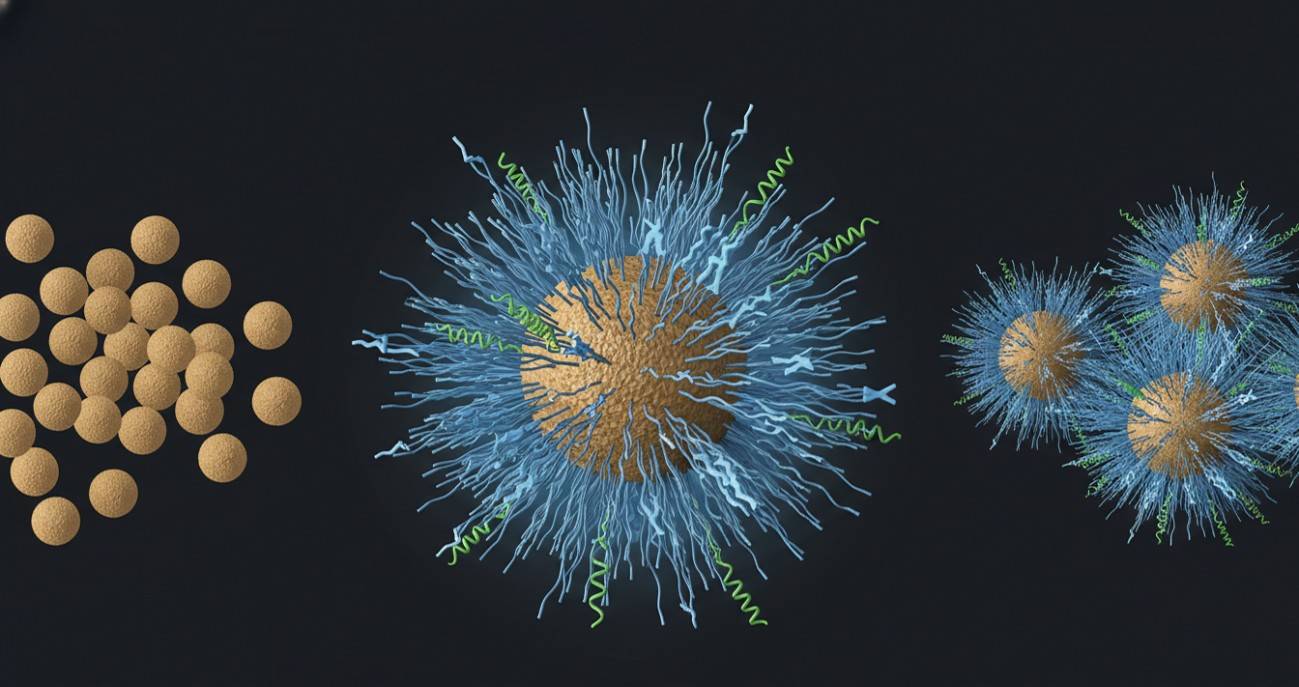 Figure 2: Nanoparticle PEGylation showing polymer brush corona formation and targeting ligand attachment
Bioconjugation Portfolio:
- Antibodies and fragments: Full IgG, Fab', scFv, nanobodies — oriented or random attachment.
- Peptides and proteins: Enzymes, growth factors, serum proteins — activity-preserving protocols.
- Nucleic acids: siRNA, miRNA, antisense oligonucleotides, CRISPR components — nuclease-protected formulations.
- Small molecules: Folic acid, biotin, galactose, drugs with linker chemistry for controlled release.
- Fluorescent and radioactive tags: Multimodal imaging probes combining optical, MRI, and nuclear signals.
Silane Coupling and Surface Coating Services
Silane chemistry provides the most versatile and reliable method for functionalizing oxide-rich surfaces — including silica nanoparticles, mesoporous silica, iron oxide, titania, and alumina. Organosilane molecules with the general structure R-Si(OR')3 contain a hydrolyzable trialkoxy group that condenses with surface hydroxyls to form stable siloxane (Si-O-Si) bonds, and an organic functional group R that introduces desired surface chemistry. Our silane coupling protocols are optimized for each substrate to maximize surface coverage while preventing intermolecular crosslinking and aggregation.
Beyond simple monolayer functionalization, we deposit conformal silica coatings through Stober sol-gel chemistry or reverse microemulsion methods. These coatings encapsulate the core particle in a protective oxide shell, isolating it from the external environment while providing a fresh silanol-rich surface for further modification. Mesoporous silica shells introduce additional functionality — acting as molecular reservoirs for drug loading, as protective barriers against corrosion or oxidation, and as scaffolds for hierarchical multi-layer architectures.
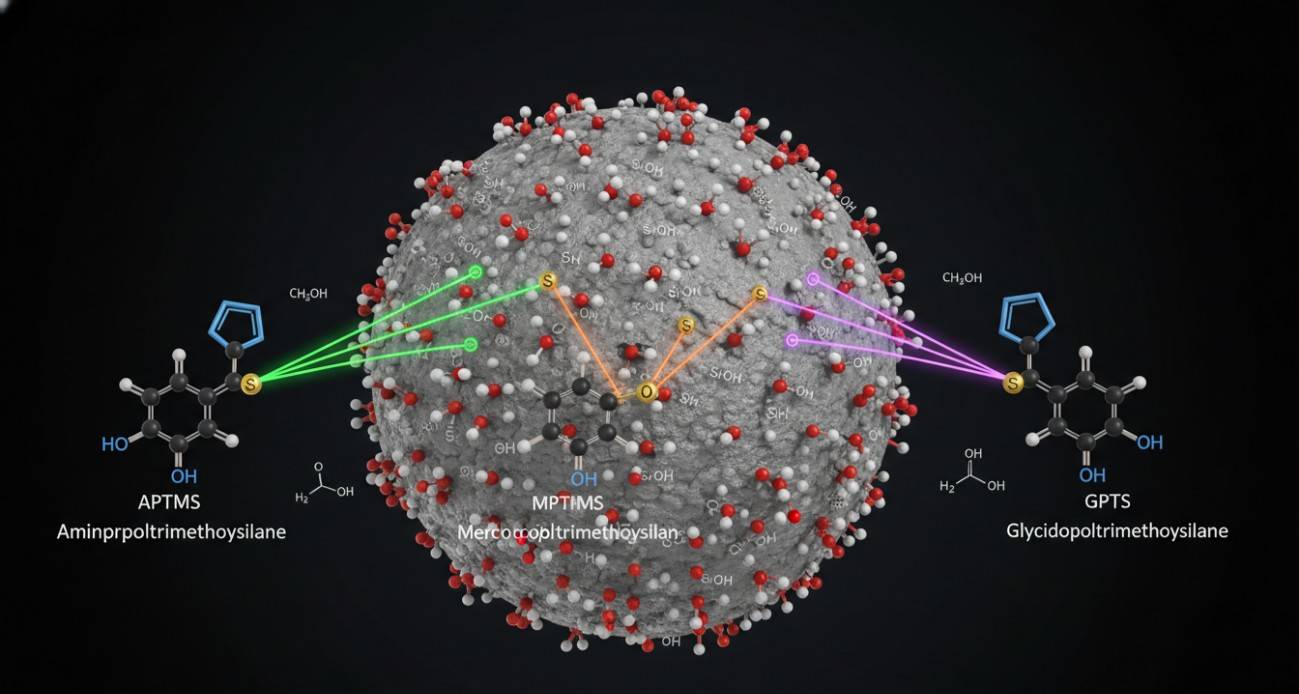 Figure 3: Silane coupling chemistry on silica nanoparticle surfaces showing APTMS, MPTMS, and GPTS functionalization
Silane Reagent Library:
- APTES / APTMS: Aminopropyl silanes introducing primary amines for carbodiimide coupling and electrostatic interactions.
- MPTMS: Mercaptopropyl silanes providing thiol groups for gold-thiol chemistry and disulfide formation.
- GPTMS: Glycidoxypropyl silanes with epoxide rings for nucleophilic ring-opening by amines and thiols.
- CPTES: Carboxyethyl silanes introducing carboxylic acids for EDC/NHS bioconjugation.
- Fluorinated silanes: Perfluoroalkyl silanes for superhydrophobic and oleophobic surface coatings.
Polymer Grafting and Brush Modification Services
Polymer brushes — dense layers of polymer chains end-tethered to a nanoparticle surface — offer unparalleled control over interfacial properties including colloidal stability, solvent compatibility, mechanical response, and biological interactions. Our brush fabrication capabilities employ both 'grafting-from' and 'grafting-to' methodologies. Grafting-from, via surface-initiated controlled radical polymerization (SI-ATRP, SI-RAFT, SI-NMP), produces dense brushes with controlled molecular weight and low polydispersity. Grafting-to attaches pre-synthesized end-functionalized polymers, offering greater chemical diversity at the cost of lower grafting density.
The architectural possibilities extend far beyond simple homopolymer brushes. Block copolymer brushes combine incompatible segments — such as hydrophilic PEG and hydrophobic polystyrene — to create Janus-like interfacial behavior. Bimodal brushes with two distinct molecular weight populations can simultaneously provide steric stabilization (short chains) and matrix entanglement (long chains). Stimuli-responsive brushes of PNIPAM, PAA, or PDMAEMA confer temperature, pH, or ionic strength sensitivity, enabling smart nanomaterials that change conformation under defined environmental triggers.
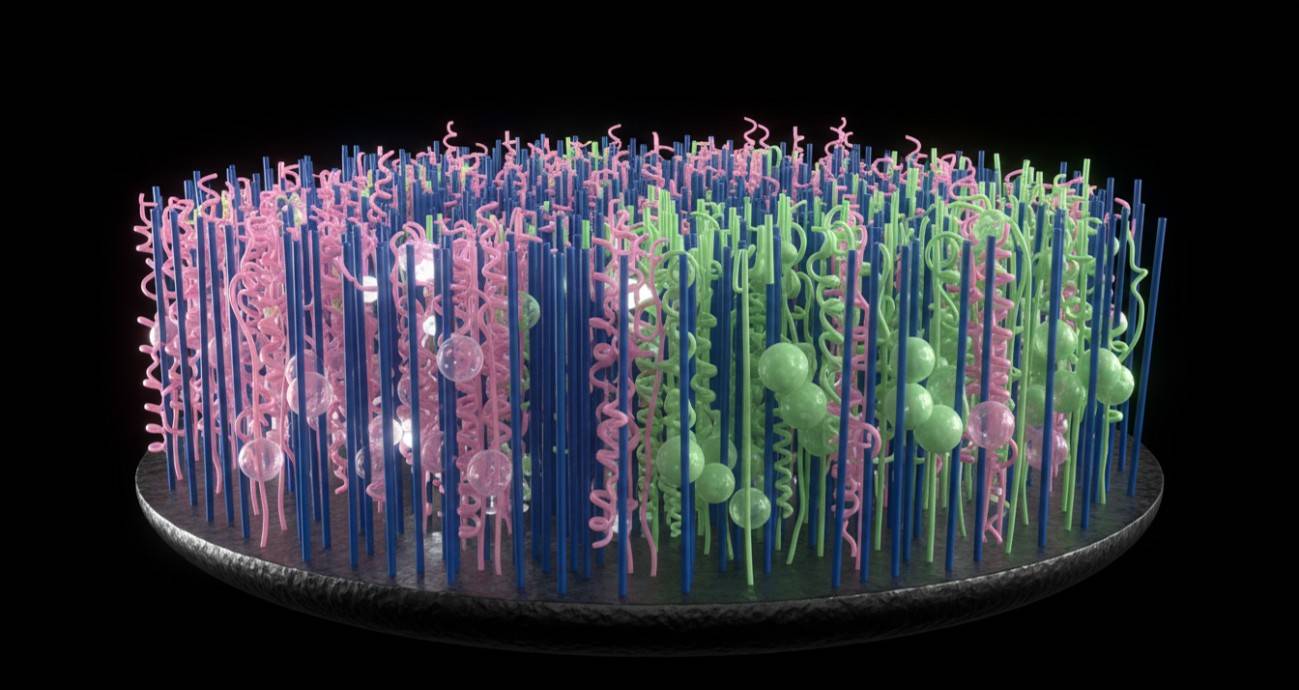 Figure 4: Mixed polymer brush architecture on a nanoparticle surface showing PEG, polystyrene, and PNIPAM chains
Brush Systems Available:
| Brush Type | Polymer Chemistry | Responsive Trigger / Property |
| PEG brushes | PEO, PEG-methacrylate | Stealth, anti-fouling, biocompatible |
| Zwitterionic brushes | PMPC, PSBMA, PCBMA | Ultra-low protein adsorption |
| Thermoresponsive | PNIPAM, PDEAAm | Temperature-dependent LCST swelling |
| pH-responsive | PAA, PDMAEMA, P4VP | Protonation state, charge reversal |
| Bimodal brushes | Mixed MW populations | Simultaneous stabilization & entanglement |
Magnetic Particle Surface Activation Services
Magnetic nanoparticles present unique surface activation challenges due to their reactive iron oxide cores, which are prone to oxidation and leaching under acidic or oxidative conditions. Our activation protocols are designed to introduce reactive functional groups while preserving the crystalline magnetite or maghemite phase and superparamagnetic behavior. The most common activation routes include silanization with amino or carboxyl silanes, phosphonate anchoring for enhanced hydrolytic stability, and dopamine catechol coordination that mimics the adhesive chemistry of mussel proteins.
For applications requiring exceptionally stable dispersions in physiological media, we offer encapsulation strategies that create a robust shell around the magnetic core. Silica encapsulation via Stober or microemulsion methods produces hydrophilic, easily functionalized particles. Polymer coating with dextran, PEG, or PLGA provides biocompatible stealth properties. Gold coating enables thiol-based chemistry on magnetic particles. And phospholipid-PEG wrapping creates a biomimetic surface that minimizes protein adsorption and macrophage uptake — critical for in vivo magnetic targeting and MRI contrast applications.
Activation and Coating Options:
- Silanization: Amino, carboxyl, thiol, and epoxide functionalization via siloxane bond formation.
- Phosphonate coupling: Hydrolytically stable Fe-O-P bonds for long-term aqueous stability.
- Dopamine catechol anchoring: Bio-inspired surface priming for secondary modification.
- Silica encapsulation: Conformal SiO2 shells for protection and facile functionalization.
- Polymer wrapping: Dextran, PEG, PLGA, and phospholipid coatings for biomedical use.
- Gold shell coating: Magnetic-plasmonic core-shell particles for dual-modal applications.
Carbon Nanomaterial Oxidation and Derivatization Services
Carbon nanotubes, graphene, and carbon quantum dots arrive from synthesis with hydrophobic, chemically inert surfaces that must be activated before most functionalization reactions. Our oxidation and derivatization services introduce oxygen-containing groups — carboxyl, hydroxyl, epoxy, and carbonyl — through controlled acid oxidation (H2SO4/HNO3 mixtures), oxidative acid treatment with KMnO4, ozone exposure, or plasma oxidation. The degree of oxidation is carefully tuned to balance chemical reactivity against structural damage to the carbon framework.
Once oxidized, these materials become platforms for diverse derivatization chemistry. Carboxyl groups activate through EDC/NHS or thionyl chloride for amide bond formation with proteins, peptides, and amine-terminated polymers. Epoxide rings undergo nucleophilic ring-opening by thiols and amines. And the pi-conjugated carbon surface supports non-covalent functionalization through pi-pi stacking with pyrene, porphyrin, and aromatic polymer derivatives — preserving the pristine electronic structure while introducing solubility and processability. For carbon quantum dots, the abundant surface carboxyl and amine groups enable direct conjugation without pre-oxidation.
Oxidation and Derivatization Methods:
- Acid oxidation: H2SO4/HNO3 reflux introducing carboxyl and hydroxyl groups on CNT and graphene surfaces.
- KMnO4 oxidation: Stronger oxidation for higher carboxyl density, followed by H2O2 reduction of residual MnO2.
- Ozonolysis: Cold ozone treatment for selective epoxide and carbonyl introduction.
- Non-covalent functionalization: Pyrene-PEG, porphyrin, and aromatic polymer wrapping via pi-pi stacking.
- Cycloaddition reactions: 1,3-dipolar cycloaddition and Diels-Alder chemistry for controlled derivatization.
- Fluorination & halogenation: Introducing C-F and C-Cl bonds for nucleophilic substitution routes.
Plasma Surface Treatment Services
Plasma surface treatment offers a solvent-free, dry-process alternative to wet chemical functionalization, particularly valuable for materials that are incompatible with liquid-phase reagents or applications requiring ultra-clean surfaces. In our plasma reactors, nanoparticles or substrates are exposed to partially ionized gases — oxygen, nitrogen, argon, ammonia, or fluorocarbon precursors — under reduced pressure. The energetic species generated in the plasma (ions, electrons, radicals, UV photons) interact with exposed surfaces to introduce functional groups, remove contaminants, etch surface layers, or deposit thin polymer films.
The versatility of plasma treatment lies in its ability to target only exposed surfaces without altering the bulk material properties. For nanomaterials, plasma functionalization can introduce carboxyl groups for subsequent bioconjugation, amine groups for electrostatic assembly, hydroxyl groups for silane coupling, or fluorinated groups for hydrophobic modification. The treatment depth is confined to a few nanometers, preserving the structural integrity and crystallinity of the core material. We have successfully plasma-treated over 250 different material types, developing process fingerprints that enable rapid optimization for new substrates.
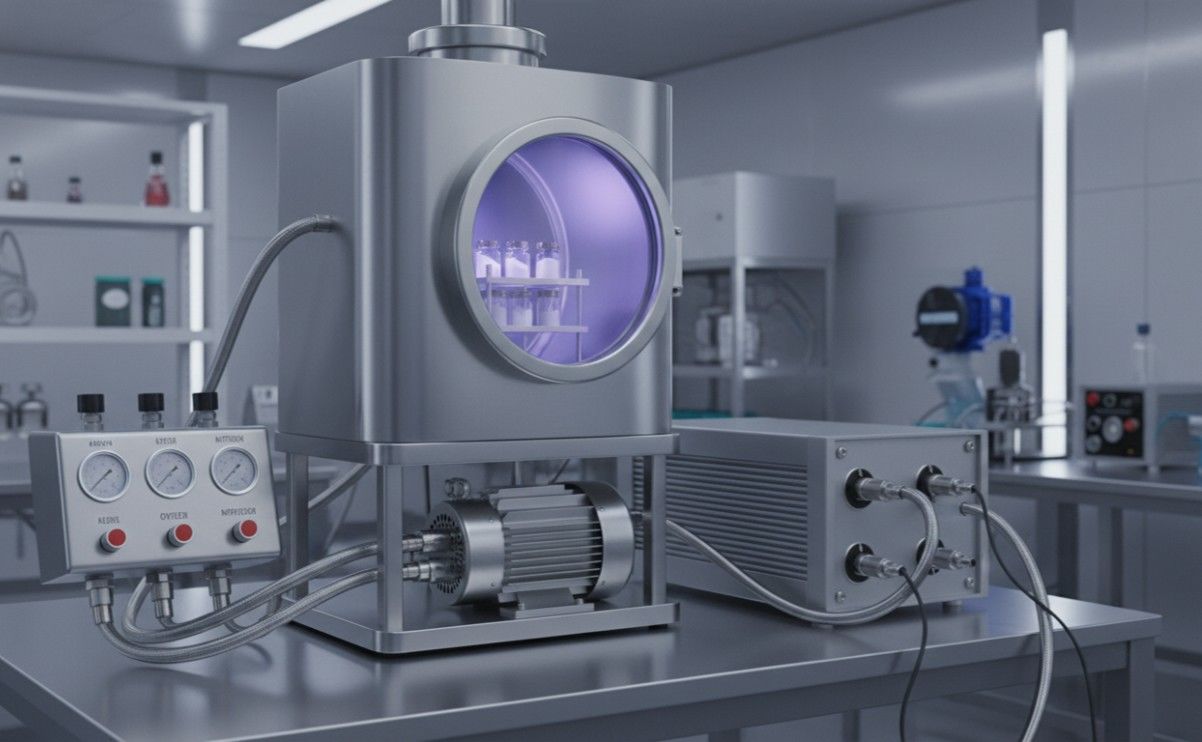 Figure 5: Vacuum plasma surface treatment system with purple plasma glow inside the processing chamber
Plasma Process Capabilities:
- Oxygen plasma: Carboxyl and hydroxyl group introduction, organic contaminant removal, surface etching.
- Nitrogen/ammonia plasma: Primary and secondary amine functionalization for bio-attachment.
- Argon plasma: Surface activation through radical generation, gentle cleaning without chemical deposition.
- Fluorocarbon plasma: CF4 and C2F6 treatment for superhydrophobic and oleophobic surfaces.
- Plasma polymerization: Deposition of thin functional polymer films (allylamine, acrylic acid) from vapor-phase monomers.
- 3D conformal treatment: Uniform functionalization of powders, porous materials, and complex geometries.
Ready to Transform Your Nanomaterial Surfaces?
Share your particle specifications and application goals with our team. We will design a tailored surface modification strategy and deliver functionalized nanomaterials with full analytical characterization.