

Products
- High-Quality Graphene
- CVD Graphene, Graphene-Like Materials
- Graphene-Like Series
- Defect-Free Single-Crystal Graphene and Graphene-Like Materials (Mechanical Exfoliation)
- Quantum Dot Series
- Aggregation-Induced Emission (AIE)
- Near-Infrared II (NIR-II) Fluorescent Dyes
- Graphdiyne
- Two-Dimensional Transition Metal Carbides/Nitrides/Borides (MXene)
- Metal Nanomaterials and Other Functional Bio-Nanomaterials
- Metal-Organic Frameworks (MOF)
- Covalent Organic Frameworks (COF)
- Two-Dimensional Layered Metal Oxides (LDH)
- Carbon Nanotube Powders, Pastes
- Carbon Nanotube Arrays and Special Carbon Nanotube Materials
- High-Quality Metallic and Semiconducting High-Purity Single-Walled Carbon Nanotubes
- Carbon Nanotube Sponges
- Mesoporous Carbon and Carbon Nanomaterials
- High-Quality Fullerenes
- One-Dimensional Nanomaterials
- Molecular Sieves
- Inorganic Nanomaterials
- Perovskite Materials
- Highly Oriented Pyrolytic Graphite (HOPG)
- Organic Materials
- Single-Atom Catalysts
- Thermoelectric Materials
- Sodium Storage Materials
- Industrial-Grade Nanomaterials
- Solid-State Lithium Batteries
- Hydrogel Series and Consumables
Online Inquiry
Mesoporous Carbon and Carbon Nanomaterials
The interior of a porous carbon particle is a hidden universe. Channels branch and interconnect across length scales from nanometers to micrometers, creating an immense internal surface area — often exceeding 1000 square meters per gram — that invites molecules to enter, react, adsorb, or store charge. Mesoporous carbon, distinguished by its pore diameters in the 2–50 nm range, occupies a particularly important niche. These pores are large enough to admit bulky molecules and electrolyte ions that would choke microporous carbons, yet small enough to maintain high surface area and structural integrity under demanding conditions.
Eata Nanomaterials produces a comprehensive range of mesoporous carbon products through both hard-template and soft-template synthesis routes. Our catalog encompasses ordered mesoporous carbons with hexagonally aligned channel systems (CMK-3 type), bicontinuous cubic frameworks (CMK-8), hollow mesoporous carbon spheres and capsules, nitrogen-doped variants with enhanced surface polarity, and graphitized grades combining high conductivity with preserved porosity. Each product is characterized by nitrogen adsorption-desorption isotherms, XRD, TEM, and elemental analysis — data that accompany every shipment to accelerate your research.
Ordered Mesoporous Carbon: CMK-3 and Related Structures
The hallmark of ordered mesoporous carbon is its crystalline pore architecture — channels arranged in geometric patterns that replicate the structure of a sacrificial silica template. In our CMK-3 product, sucrose or furfuryl alcohol infiltrates the hexagonally ordered pore system of SBA-15 silica, carbonizes at high temperature under inert atmosphere, and leaves behind parallel carbon nanorods connected by thin carbon bridges after HF or NaOH etching of the template. The resulting material exhibits a BET surface area of 1000–1500 m^2/g, a total pore volume of 1.0–1.5 cm^3/g, and a narrow pore size distribution centered at 3–6 nm depending on synthesis conditions.
CMK-5 represents an intriguing variant: instead of completely filling the SBA-15 channels, the carbon precursor coats the pore walls as a thin film, producing hollow carbon tubes standing in a hexagonal array. This structure delivers even higher surface areas — up to 1800 m^2/g — with bimodal porosity arising from the mesoporous tube walls and the macroporous inter-tube voids. For applications requiring both high conductivity and preserved mesostructure, we offer graphitized CMK-3 treated at 2000–2800 C, which partially orders the carbon framework into graphitic domains while retaining the overall pore architecture.
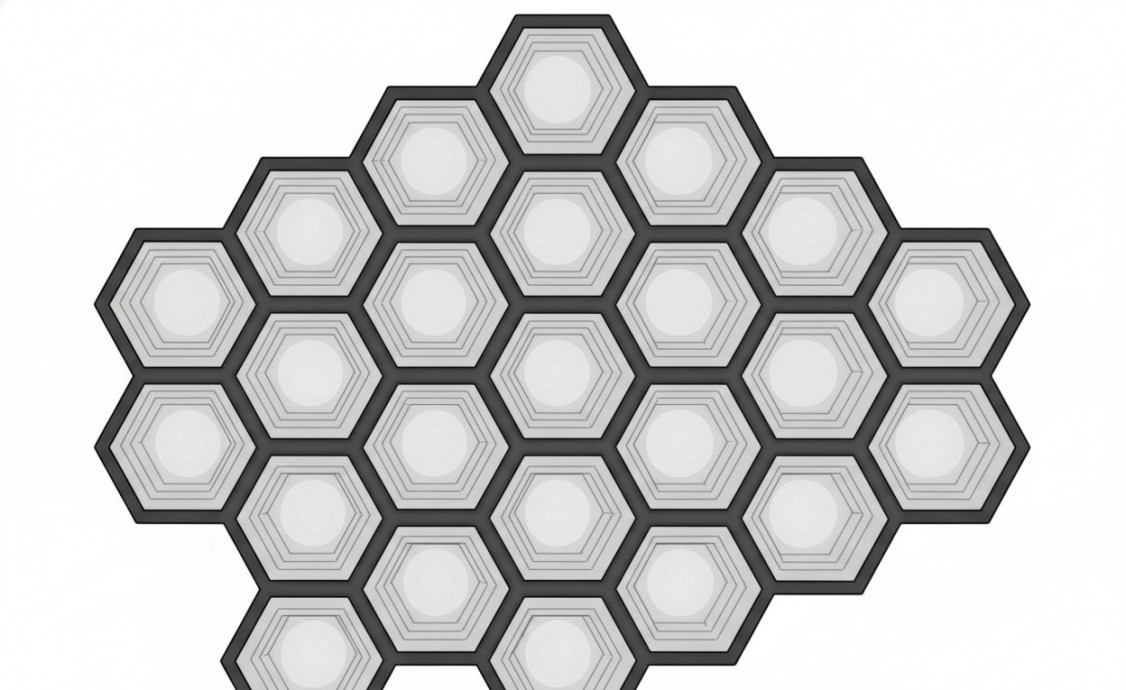 Hexagonally ordered pore structure of CMK-3 type mesoporous carbon showing parallel carbon rods arranged in a honeycomb pattern
Hollow Mesoporous Carbon Spheres and Capsules
Hollow mesoporous carbon spheres combine three advantageous architectural features in a single particle: a hollow core that acts as a reservoir for guest molecules, a mesoporous shell that controls transport between the interior and exterior, and a chemically tunable carbon surface that supports functionalization. We synthesize these capsules through hard-templating routes using solid-core mesoporous-shell silica spheres as molds, or through soft-templating approaches such as emulsion-induced interface assembly. Typical diameters range from 200 nm to several micrometers, with shell thicknesses of 20–100 nm and mesopore sizes of 2–5 nm.
The hollow interior accommodates large payloads — up to several times the shell mass — of active materials, enzymes, or phase-change materials. The mesoporous shell then acts as a permeable barrier: it allows small molecules and ions to diffuse through while preventing the escape of larger encapsulated species or controlling their release kinetics. We have loaded hollow carbon capsules with Pt-Ru catalyst nanoparticles for methanol fuel cell anodes, with sulfur for lithium-sulfur battery cathodes, and with magnetic iron oxide for separable adsorbent platforms. The versatility of this architecture makes it one of our most sought-after product families.
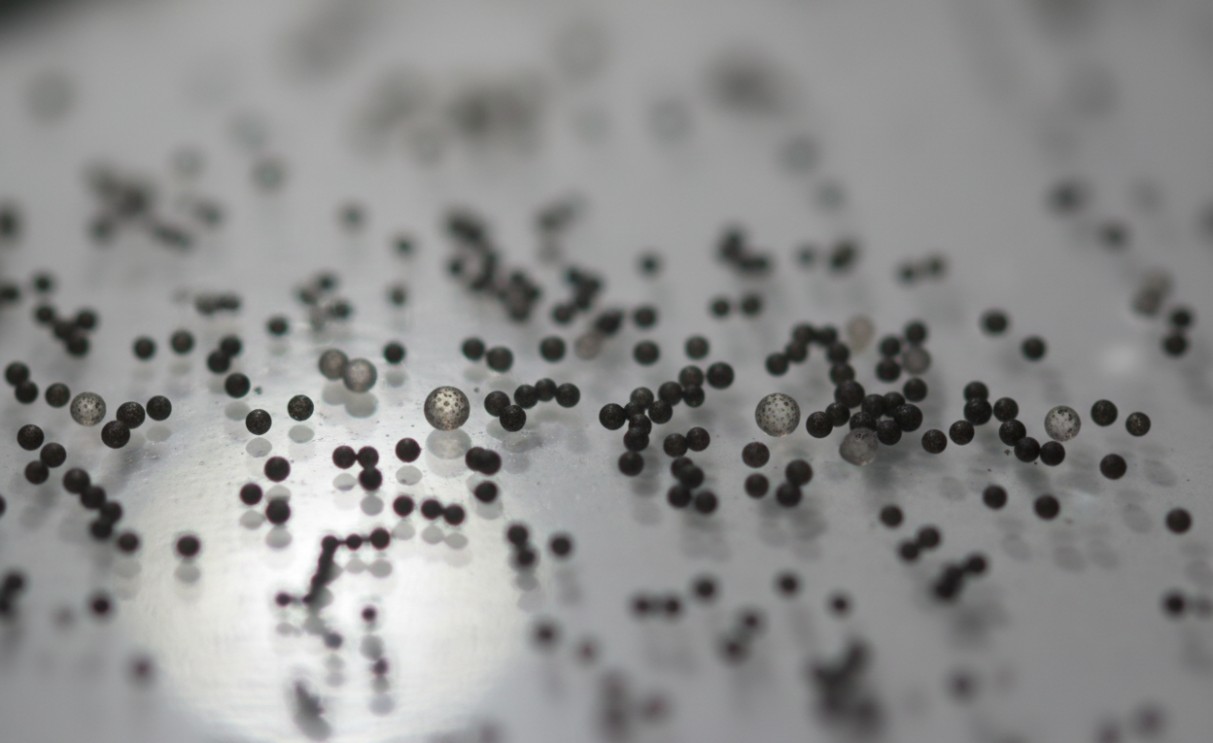 Monodisperse hollow mesoporous carbon spheres scattered on a reflective glass surface, showing uniform particle size distribution
Hard-Template and Soft-Template Synthesis Routes
Our hard-template methodology begins with the preparation of a sacrificial inorganic mold — typically mesoporous silica such as SBA-15, MCM-41, or KIT-6, which determines the final carbon pore geometry. A carbon precursor (sucrose, furfuryl alcohol, phenolic resin, or an ionic liquid) infiltrates the template pores, polymerizes, and carbonizes at 600–900 C under nitrogen or argon. Chemical etching with hydrofluoric acid or sodium hydroxide dissolves the silica, liberating the carbon replica. This route offers the most precise control over pore size, geometry, and wall thickness, and is our preferred method for ordered mesoporous carbons and hollow capsules.
Soft-template synthesis bypasses the sacrificial mold by using amphiphilic surfactants — block copolymers such as Pluronic F127 or P123 — that self-assemble with carbon precursors into ordered mesophases. Upon thermal treatment, the surfactant decomposes and the carbon precursor cross-links and carbonizes, retaining the mesoscale order. This one-pot approach eliminates the etching step, reduces processing time, and enables the direct synthesis of functionalized carbons by co-incorporating heteroatom precursors (urea for nitrogen, triphneylphosphine for phosphorus) during the initial self-assembly stage.
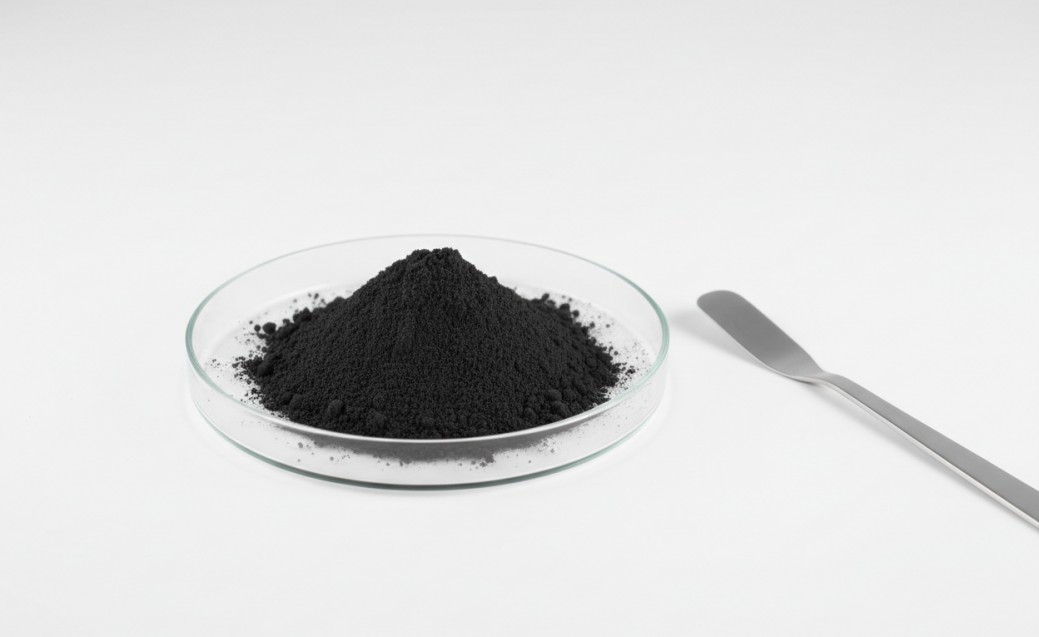 High-purity mesoporous carbon powder product displayed in a glass dish alongside a metal spatula
Energy Storage: Supercapacitors and Batteries
Mesoporous carbon has emerged as a leading electrode material for electrochemical energy storage. In electric double-layer capacitors (supercapacitors), the high surface area and interconnected pore network enable rapid ion adsorption and desorption, delivering specific capacitances of 100–300 F/g in aqueous electrolytes and excellent rate capability. The ordered channel structure of CMK-3 provides straight ion diffusion pathways absent in disordered activated carbons, reducing equivalent series resistance and improving power density.
In lithium-sulfur batteries, hollow mesoporous carbon spheres serve as ideal sulfur hosts. The hollow core accommodates the volume expansion of sulfur during lithiation, while the mesoporous shell traps soluble lithium polysulfides that would otherwise shuttle between anode and cathode, destroying cycle life. Our OMC/S nanocomposites have demonstrated stable cycling over 400 charge-discharge cycles at high sulfur loading. For lithium-ion battery anodes, graphitized mesoporous carbons provide a conductive, high-surface-area scaffold that accommodates the volume changes of silicon or tin nanoparticles, extending cycle stability.
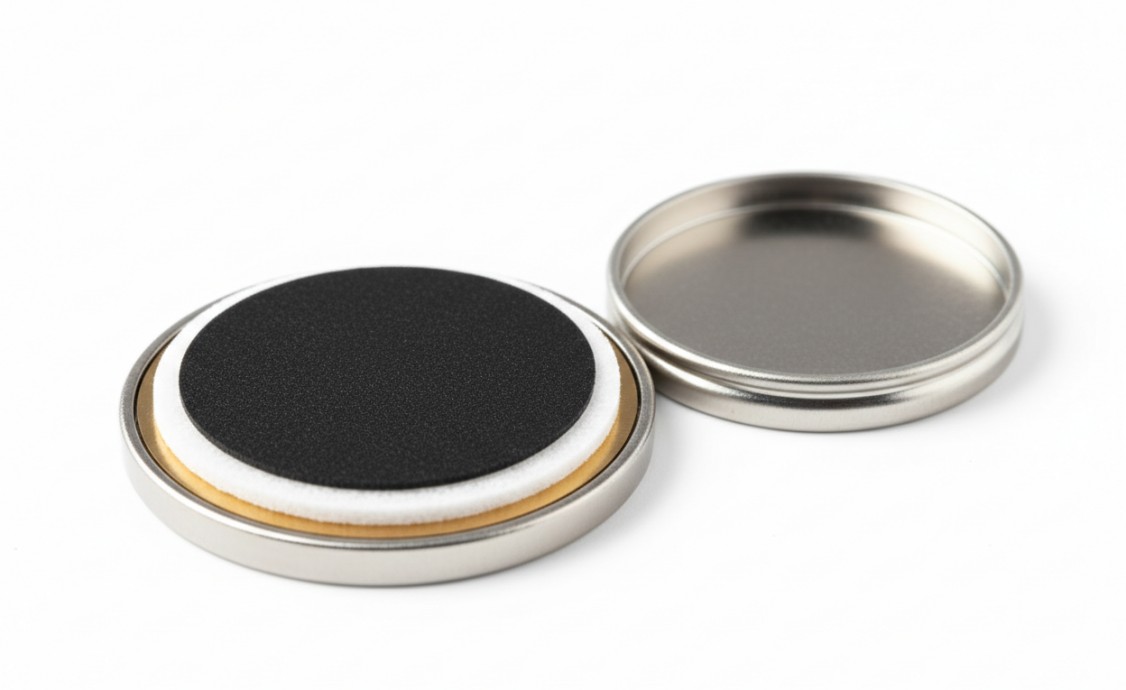 Coin cell battery assembly with mesoporous carbon electrode material as the active layer on metal foil current collector
Catalysis, Adsorption, and Environmental Remediation
The regular pore structure of ordered mesoporous carbon makes it an exceptional catalyst support. Platinum, palladium, and transition metal nanoparticles deposit uniformly across the mesopore surface, achieving high dispersion that maximizes catalytic activity. In direct methanol fuel cells, Pt-Ru loaded on hollow mesoporous carbon spheres delivered 80% higher catalytic activity than commercial E-TEK catalysts, attributed to the well-connected bimodal porosity that accelerates mass transport to active sites. The mesopore channels also serve as nanoreactors where confined catalysts exhibit altered selectivity compared to bulk-supported analogs.
For adsorption applications, mesoporous carbons selectively capture bulky organic pollutants — phenols, dyes, endocrine disruptors such as bisphenol A — that would be excluded from the micropores of activated carbon. Surface areas exceeding 1500 m^2/g translate into adsorption capacities of 200–400 mg/g for aromatic contaminants. N-doped variants with enhanced surface wettability show further improved uptake of polar species. Post-adsorption, the carbon can be thermally regenerated without structural degradation, enabling multiple reuse cycles that lower operational costs compared to single-use adsorbents.
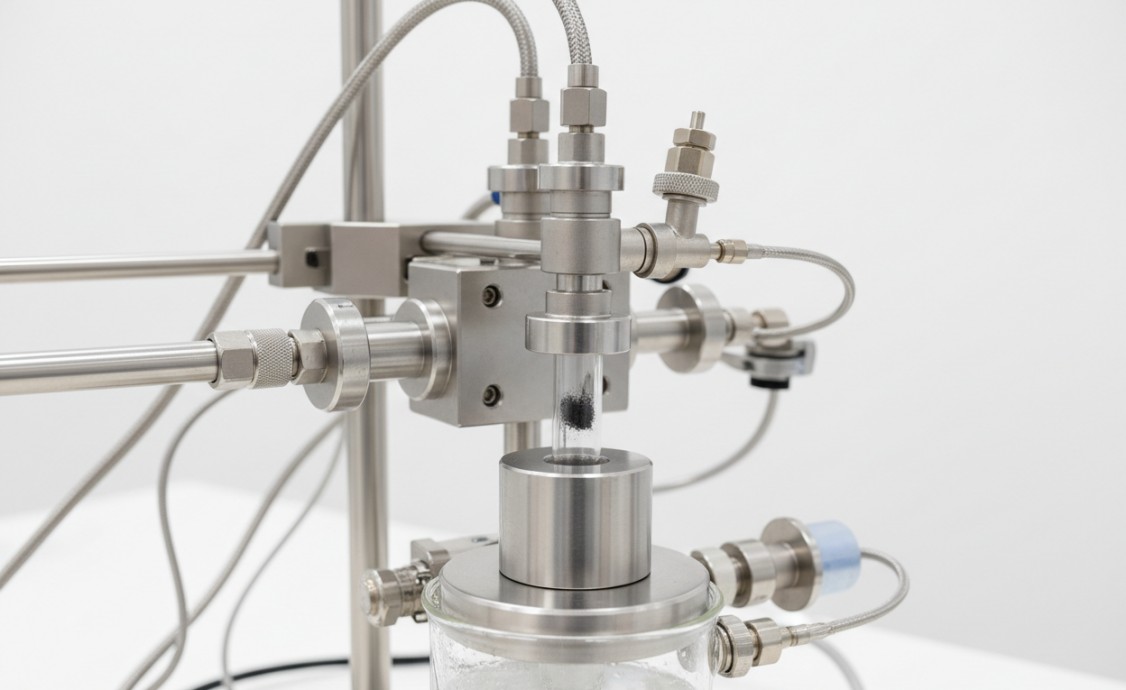 Gas adsorption characterization setup for measuring BET surface area and pore size distribution of mesoporous carbon materials
Featured Products
| Products | Specifications | Applications |
| CMK-3 mesoporous carbon | SSA: 1000–1500 m^2/g; Pore: 3–6 nm | Supercapacitors, catalysis |
| CMK-5 carbon nanorods | SSA: up to 1800 m^2/g; Bimodal pores | Gas storage, batteries |
| Hollow carbon spheres | Diameter: 200 nm–5 um; Shell: 20–100 nm | Drug delivery, Li-S batteries |
| N-doped mesoporous carbon | N content: 2–10 wt%; Enhanced wettability | ORR catalysis, adsorption |
| Graphitized mesoporous carbon | I_D/I_G < 0.5; T_treat: 2000–2800 C | Conductive scaffolds |
| Mesoporous carbon powder | Pore vol: 1.0–1.5 cm^3/g; Batch: g–kg | General research |
| Ordered mesoporous carbon | Hexagonal 2D or cubic 3D symmetry | Fundamental studies |
| Activated mesoporous carbon | KOH activation; SSA: >2000 m^2/g | CO2 capture, VOC removal |
Across Research and Industry
Supercapacitor Electrodes: High surface area and ordered ion channels deliver rapid charge-discharge cycling with capacitances of 100–300 F/g and excellent rate performance.
Lithium-Sulfur Batteries: Hollow mesoporous carbon hosts confine sulfur and suppress polysulfide shuttling, enabling stable cycling over hundreds of charge-discharge cycles.
Catalyst Supports: Uniform metal nanoparticle dispersion on mesopore surfaces maximizes catalytic activity in fuel cells, hydrogenation, and exhaust treatment.
Water Purification: Selective adsorption of bulky organic pollutants — phenols, dyes, bisphenol A — with capacities of 200–400 mg/g and thermal regenerability.
Gas Separation: Tunable pore sizes and surface chemistry enable selective capture of CO2, volatile organic compounds, and trace contaminants from gas streams.
Drug Delivery Platforms: Hollow capsules with mesoporous shells enable controlled release and targeted delivery of therapeutic compounds in biomedical research.
Characterization and Quality Assurance
Every mesoporous carbon product ships with a comprehensive certificate of analysis. Nitrogen adsorption-desorption isotherms at 77 K provide BET surface area, total pore volume, and pore size distribution by the BJH or DFT method. Small-angle X-ray diffraction confirms mesoscale ordering where applicable. Transmission electron microscopy documents pore morphology and wall thickness. Raman spectroscopy evaluates the degree of graphitization through the I_D/I_G intensity ratio. Thermogravimetric analysis determines carbon purity and quantifies residual template or heteroatom content. For catalytic grades, we additionally report the metal loading and dispersion by ICP-MS and chemisorption. These data accelerate your research by eliminating the need for time-consuming baseline characterization.
Custom Synthesis and Collaborative Development
Beyond our standard catalog, we engage in custom synthesis projects that tailor mesoporous carbon properties to specific application requirements. We can adjust pore sizes from 2 nm to 50 nm by selecting appropriate templates or surfactants, incorporate heteroatoms (nitrogen, sulfur, phosphorus, boron) during synthesis to modify surface chemistry and electronic properties, deposit specific metal catalysts onto the carbon support for turnkey catalytic systems, and fabricate monolithic blocks, thin films, or shaped pellets for reactor integration. For hollow carbon capsules, we control shell thickness, pore diameter, and surface functionalization to match target payload and release profiles. Whether you require a few grams of a novel mesoporous carbon for proof-of-concept studies or kilogram-scale batches for pilot testing, our team is equipped to deliver materials with the precise structural and chemical specifications your project demands.
Contact Us— Reach out to Eata Nanomaterials to discuss your mesoporous carbon requirements, request product samples, or explore a custom synthesis collaboration for your research or industrial application.
| Catalog Number | Product Name | Order | Quantity |
|---|---|---|---|
| MCCN-0001 | Supercapacitor Electrode Sheet |
-
+
|
|
| MCCN-0002 | Ordered Mesoporous Carbon FDU-15 |
-
+
|
|
| MCCN-0003 | Hollow Carbon Spheres (Soft Template Method) |
-
+
|
|
| MCCN-0004 | Open Hollow Resin Spheres |
-
+
|
|
| MCCN-0005 | Nitrogen-Doped Solid Carbon Spheres |
-
+
|
|
| MCCN-0006 | Nitrogen-Doped Porous Carbon / Mesoporous Carbon |
-
+
|
|
| MCCN-0007 | High Surface Area Nitrogen-Doped Hard Carbon |
-
+
|
|
| MCCN-0008 | High Nitrogen Content Doped Hard Carbon |
-
+
|
|
| MCCN-0009 | Resin Spherical Porous Carbon |
-
+
|
|
| MCCN-0010 | Nitrogen-Doped Porous Carbon |
-
+
|
For Research or Industrial Raw Materials, Not For Personal Medical Use!