

Quantum Dot Synthesis and Bandgap Engineering Services
Quantum dots represent a transformative class of nanomaterials whose optical and electronic properties can be precisely engineered by controlling nothing more than their size. These semiconductor nanocrystals, typically 2-10 nm in diameter, exhibit size-tunable absorption and emission spanning the ultraviolet to near-infrared — a direct consequence of the quantum confinement effect that emerges when particle dimensions approach the exciton Bohr radius. The implications are profound: a single material composition can emit blue, green, or red light simply by growing crystals of different sizes.
At Eata Nanomaterials, we specialize in the precision synthesis and bandgap engineering of colloidal quantum dots across multiple material systems. Our expertise covers the full development pipeline — from hot-injection synthesis and core-shell architecture design to surface ligand engineering, phase transfer, and comprehensive photophysical characterization. Whether your project requires cadmium-based quantum dots with record quantum yields, cadmium-free alternatives for regulatory-sensitive applications, or perovskite quantum dots for next-generation displays, our chemists deliver nanocrystals with precisely tuned emission wavelengths and exceptional optical performance.
Colloidal Quantum Dot Synthesis Platform
 Figure 1: Hot-injection synthesis setup showing precursor injection into heated reaction flask for controlled quantum dot nucleation and growth
The hot-injection method remains the gold standard for synthesizing high-quality colloidal quantum dots. By rapidly injecting precursors into a hot coordinating solvent, we achieve temporally separated nucleation and growth phases — the key to producing nanocrystals with narrow size distributions and exceptional crystallinity. Our synthesis platform is built around rigorous Schlenk-line and glovebox techniques that exclude oxygen and moisture, ensuring reproducible results batch after batch.
We work with a comprehensive range of quantum dot material systems, each offering distinct advantages in terms of emission range, quantum yield, stability, and regulatory profile. Our chemists optimize precursor chemistry, reaction temperature profiles, ligand selection, and growth times to achieve target emission wavelengths with full width at half maximum (FWHM) values as narrow as 25-35 nm.
| Material System | Emission Range | Key Characteristics |
| CdSe/ZnS | 450-650 nm | Highest quantum yields (>80%); mature synthesis protocols; benchmark for display and bioimaging |
| CdTe/CdS | 550-800 nm | NIR-emitting variants; excellent for telecom and deep-tissue imaging applications |
| InP/ZnS | 480-650 nm | Cadmium-free; RoHS-compliant; rapidly maturing for display and consumer electronics |
| InP/ZnSe/ZnS | 480-700 nm | Double-shell passivation; improved stability and higher QY than InP/ZnS |
| Perovskite (CsPbX3) | 420-700 nm | Narrow FWHM (12-40 nm); high color purity; solution-processable for displays |
| Carbon dots | 400-550 nm | Heavy metal-free; excellent biocompatibility; simple synthesis from organic precursors |
| ZnSe/ZnS | 390-450 nm | Blue-emitting; cadmium-free; challenging synthesis requiring advanced protocols |
Core-Shell Architecture & Surface Passivation
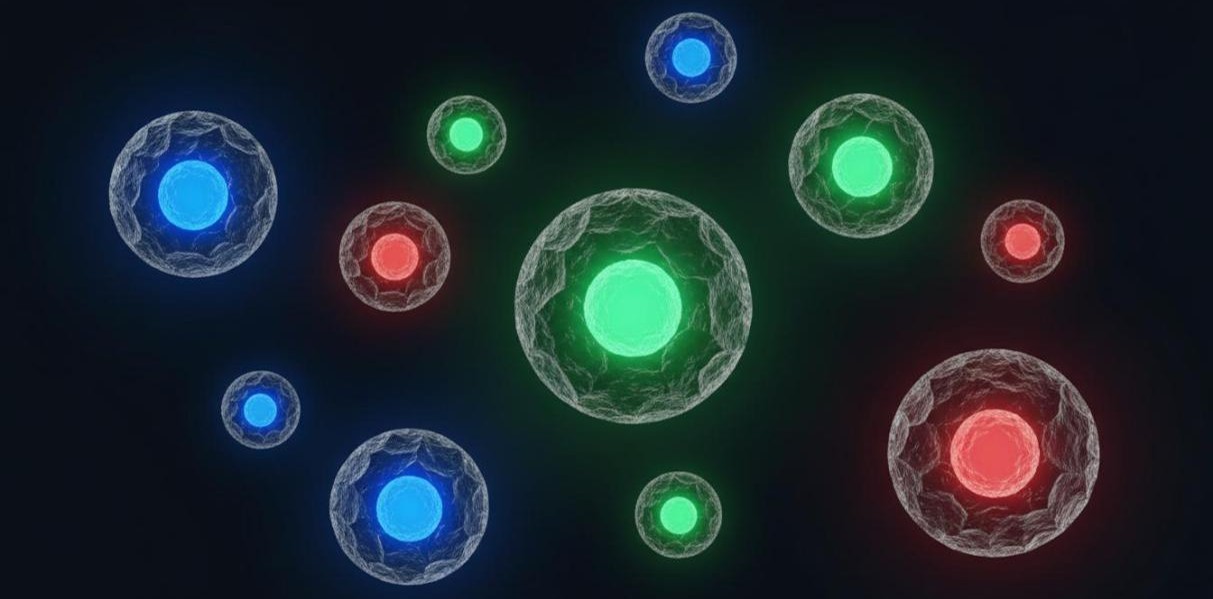 Figure 2: CdSe/ZnS core-shell quantum dots of various sizes exhibiting blue, green, and red photoluminescent emission
Bare quantum dots suffer from surface trap states — unsatisfied chemical bonds at the nanocrystal surface that capture charge carriers and quench fluorescence through non-radiative recombination. Our core-shell engineering service addresses this fundamental challenge by epitaxially growing a wider-bandgap inorganic shell around the emissive core. This passivation strategy dramatically improves photoluminescence quantum yield, enhances photostability under prolonged excitation, and protects the core from environmental degradation.
We design core-shell heterostructures with type-I band alignment, where both electrons and holes are confined within the core region. This maximizes radiative recombination efficiency while the shell provides a protective barrier against oxidation, chemical attack, and surface-related quenching. Shell thickness is carefully optimized — too thin and passivation is incomplete; too thick and lattice strain degrades crystal quality.
Core-shell configurations we engineer:
- CdSe/ZnS: The classic architecture; ZnS shell passivates surface trap states on CdSe core; QY typically 70-85%; emission tunable across visible spectrum by core size.
- CdSe/CdS/ZnS: Graded shell with intermediate CdS layer reduces lattice strain; enables thicker shells and higher stability without defect formation.
- InP/ZnSe/ZnS: Double-shell cadmium-free system; ZnSe intermediate layer provides better lattice matching to InP than direct ZnS; QY exceeding 70%.
- Perovskite/oxide shells: Al2O3 or SiO2 coating for perovskite QDs; dramatically improved moisture and thermal stability for display applications.
- Giant shell architectures: Ultra-thick shells (5-20 monolayers) that produce exceptionally stable QDs resistant to photobleaching and environmental stress.
Bandgap Engineering & Emission Tuning
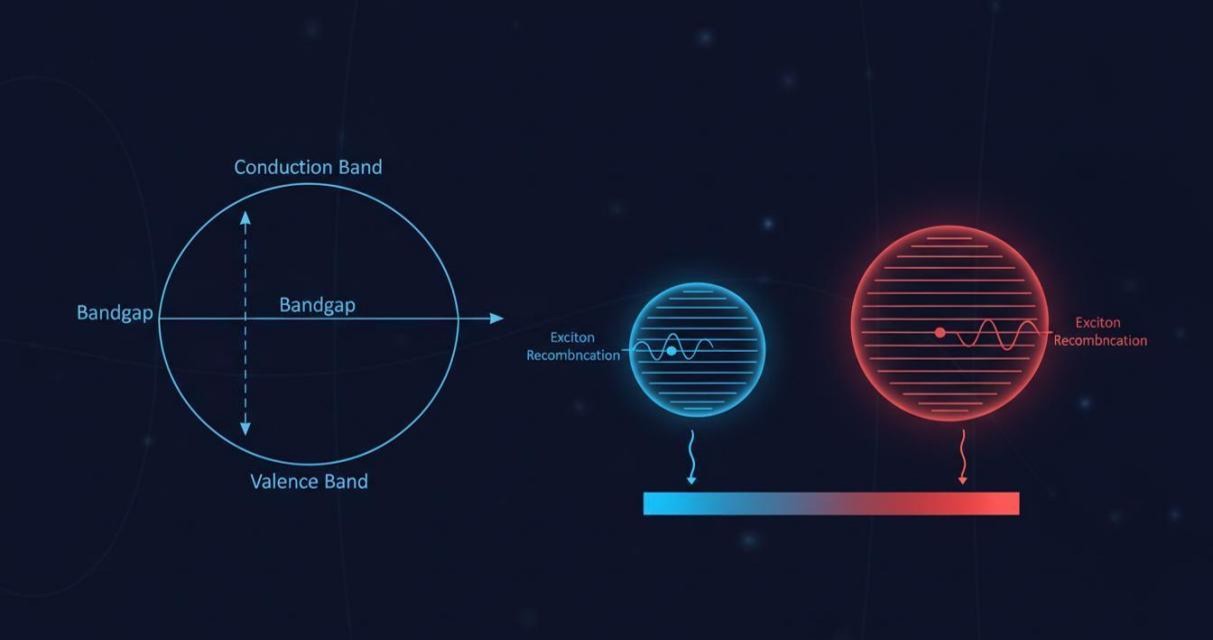 Figure 3: Quantum confinement effect showing size-dependent bandgap and exciton recombination emitting photons from blue to red
The defining characteristic of quantum dots is the ability to tune their bandgap — and consequently their emission color — simply by adjusting nanocrystal dimensions. In the quantum confinement regime, the energy level spacing increases as particle size decreases: smaller dots emit at shorter wavelengths (blue), while larger dots emit at longer wavelengths (red). This size-tunability, combined with the exceptionally narrow emission linewidth, enables quantum dots to generate pure, saturated colors that exceed the performance of conventional phosphors and organic dyes.
Our bandgap engineering service provides precise control over emission wavelength through systematic size tuning. We achieve this through carefully calibrated reaction conditions — temperature, precursor concentration, ligand ratios, and growth duration — that determine nucleation kinetics and growth rates. Beyond simple size control, we also engineer bandgap through alloy composition, strain effects, and quantum dot shape anisotropy.
- Size-tuned emission: Systematic variation of quantum dot diameter from 2 nm to 8 nm to achieve target emission wavelength with +/-5 nm precision across the visible and NIR spectrum.
- Alloy composition tuning: Graded alloy shells (CdSeS, CdZnSe, InZnP) that provide continuous bandgap tuning while maintaining spherical morphology and high crystallinity.
- Anisotropic shape engineering: Rod-shaped and tetrapod quantum dots with polarized emission and red-shifted wavelengths due to aspect ratio-dependent confinement.
- Heavy metal-free red emitters: Advanced InP-based red-emitting QD formulations that avoid cadmium while maintaining competitive quantum yield and stability.
- NIR extension: PbS, PbSe, and alloyed quantum dots engineered for emission beyond 1000 nm for biomedical imaging, photovoltaics, and sensing.
Cadmium-Free Quantum Dot Development
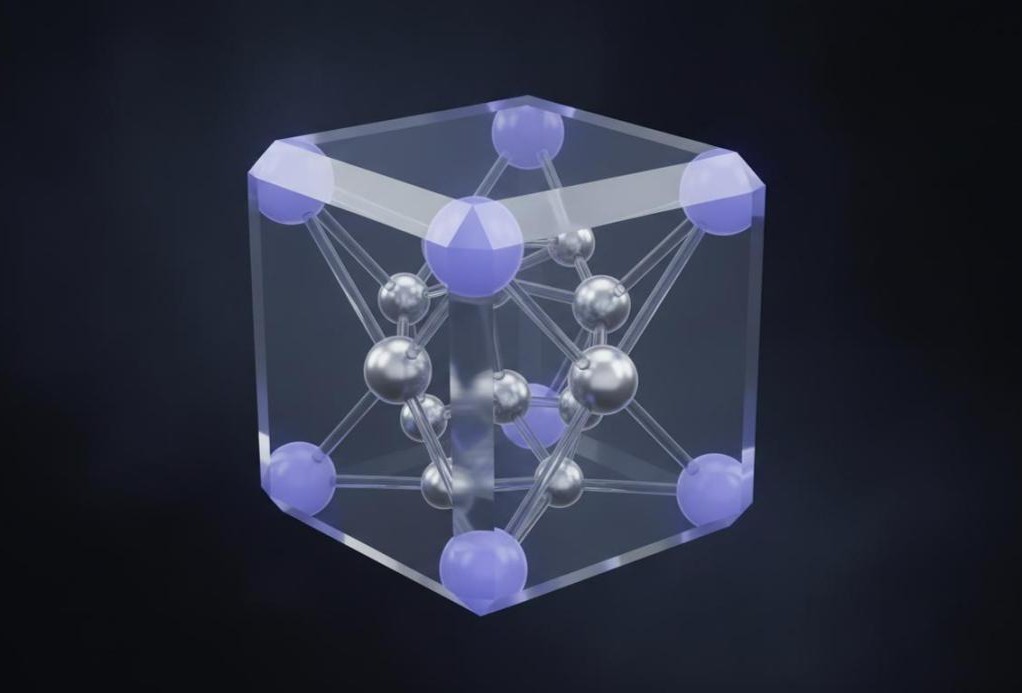 Figure 4: Indium phosphide quantum dot crystal structure showing zinc blende lattice with indium and phosphorus atoms
Regulatory pressures and environmental concerns surrounding cadmium have accelerated demand for heavy metal-free quantum dot alternatives. Our cadmium-free quantum dot development program focuses on InP-based systems as the most promising candidate, alongside emerging perovskite and carbon dot platforms. These materials deliver comparable optical performance to CdSe while satisfying RoHS and REACH regulatory requirements.
InP quantum dot synthesis presents distinct challenges compared to cadmium-based systems. The inherent reactivity of indium precursors, the covalent nature of In-P bonds, and susceptibility to oxidation all demand carefully controlled synthesis conditions. Our protocols have been optimized to reproducibly achieve high quantum yields, narrow size distributions, and emission tunability across the full visible spectrum.
Cadmium-free platforms and capabilities:
- InP/ZnS and InP/ZnSe/ZnS: Hot-injection synthesis with aminophosphine indium precursors; emission 480-650 nm; QY 60-80%; optimized for display and lighting applications.
- InP-based red emitters: Advanced red-emitting InP formulations (>620 nm) with improved stability and competitive color purity for wide-gamut displays.
- Perovskite QDs (CsPbX3): Room-temperature and hot-injection routes; halide composition (Cl/Br/I) enables emission tuning from 420-700 nm; FWHM 12-40 nm.
- Carbon quantum dots: Hydrothermal synthesis from citric acid, glucose, and other organic precursors; excitation-dependent emission; excellent biocompatibility.
- ZnSe/ZnS blue emitters: Challenging UV-blue emitting system; advanced precursor chemistry and surface passivation protocols for stable emission <450 nm.
Surface Ligand Engineering & Phase Transfer
The organic ligands that cap colloidal quantum dots serve multiple essential functions: they control nucleation and growth during synthesis, maintain dispersion stability, protect against environmental degradation, and determine compatibility with solvents, polymers, and biological systems. Our surface ligand engineering service transforms as-synthesized quantum dots — typically capped with hydrophobic ligands like oleic acid and oleylamine — into application-ready materials through precise ligand exchange and phase transfer protocols.
Ligand exchange replaces the native organic shell with alternative molecules that confer desired surface properties without degrading optical performance. We have developed protocols for exchanging hydrophobic ligands for hydrophilic, polymerizable, bio-orthogonal, and charge-functionalized alternatives. Phase transfer enables the movement of quantum dots between organic and aqueous phases while maintaining dispersion stability and quantum yield.
| Ligand Type | Application & Benefits |
| Thiol-terminated ligands | MUA, MPA, thiol-PEG for aqueous phase transfer; stable binding to QD surface; carboxyl or amine terminal groups for bioconjugation |
| Polymeric ligands | PEG, PVA, PMMA brushes for steric stabilization; stealth properties for in vivo applications; polymer composite compatibility |
| Crosslinkable ligands | Acrylate, methacrylate, norbornene-terminated ligands for photopolymerization; LED and display pixel fabrication |
| Bio-functional ligands | Antibody, streptavidin, folate, RGD peptide conjugation for targeted bioimaging and diagnostic assays |
| Short-chain ligands | Pyridine, halide, acetate ligands for enhanced charge transport in QD-LED and photovoltaic devices |
| Dendritic multidentate ligands | Polydentate phosphines and thiols for exceptional binding stability; improved QD retention under harsh conditions |
Perovskite Quantum Dot Synthesis & Stabilization
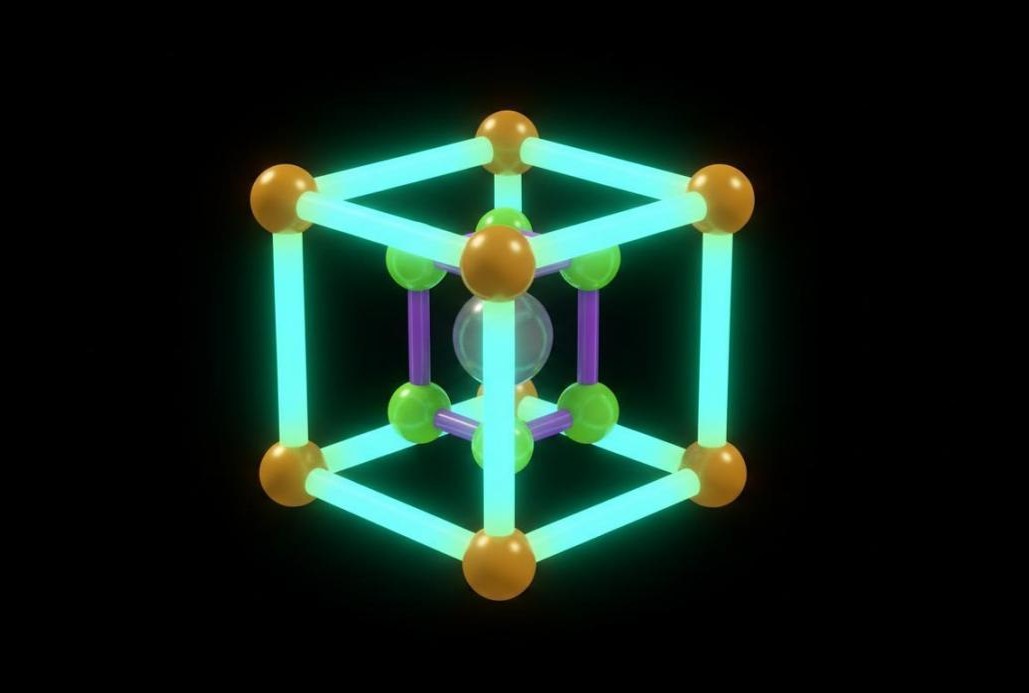 Figure 5: CsPbX3 perovskite quantum dot crystal structure with halide-dependent luminescent emission in the cyan-green spectral range
Halide perovskite quantum dots have emerged as a transformative material for display technology, offering narrow emission linewidths, high photoluminescence quantum yields, and facile solution-processability. Their composition-tunable bandgap — controlled by halide ratio (Cl:Br:I) rather than size — enables precise emission tuning while maintaining uniform particle dimensions. However, intrinsic instability against moisture, polar solvents, and heat remains the primary barrier to commercial deployment.
Our perovskite quantum dot service addresses these challenges through advanced synthesis and encapsulation strategies. We employ both room-temperature ligand-assisted reprecipitation and hot-injection methods, followed by surface treatment and matrix encapsulation to enhance operational stability.
Perovskite QD capabilities:
- Composition tuning: Precise halide ratio control (CsPbCl3, CsPbBr3, CsPbI3, and mixed halides) for emission spanning 420-700 nm with FWHM 12-40 nm.
- Surface passivation: Lead halide-rich surface treatment; organic ligand optimization; post-synthetic annealing for defect healing.
- Matrix encapsulation: Incorporation into PMMA, polystyrene, or silica matrices; dramatically improved moisture resistance and thermal stability.
- Anion exchange: Post-synthetic halide exchange for fine-tuning emission wavelength without changing quantum dot size.
Comprehensive Quantum Dot Characterization
Every quantum dot batch we produce undergoes rigorous photophysical and structural characterization to confirm that emission wavelength, quantum yield, size distribution, and surface chemistry meet specifications. Our characterization data packages support research publication, process development, and quality control requirements.
- Optical spectroscopy: UV-Vis absorption and photoluminescence spectroscopy for emission peak, FWHM, and quantum yield determination; absolute QY measurement using integrating sphere.
- Structural analysis: Transmission electron microscopy for size, shape, and crystallinity; X-ray diffraction for crystal phase and lattice parameter; dynamic light scattering for hydrodynamic size.
- Surface chemistry: X-ray photoelectron spectroscopy for elemental composition and oxidation states; Fourier-transform infrared spectroscopy for ligand identification; thermogravimetric analysis for ligand coverage quantification.
- Stability assessment: Accelerated photobleaching tests under continuous excitation; thermal cycling studies; storage stability monitoring under ambient, refrigerated, and elevated temperature conditions.
- Photoluminescence lifetime: Time-correlated single photon counting for exciton lifetime measurement; multi-exponential decay fitting to quantify radiative and non-radiative recombination pathways.
Illuminate Your Research with Precision-Engineered Quantum Dots
Contact Eata Nanomaterials to discuss your quantum dot synthesis and bandgap engineering requirements. Our team of synthetic chemists and materials scientists will develop a tailored formulation that meets your exact emission, stability, and surface chemistry specifications.