

Products
Nanomaterials encompass a vast and rapidly expanding domain of materials science, defined by the manipulation of matter at length scales where quantum confinement, surface dominance, and size-dependent phenomena unlock properties unattainable in bulk counterparts. With at least one dimension in the 1-100 nanometer range, nanomaterials exhibit extraordinary optical, electronic, mechanical, catalytic, and biological behaviors that have propelled them from laboratory curiosities into critical enablers of modern technology. The global nanomaterials market surpassed $52 billion in 2024 and is projected to exceed $146 billion by 2034, growing at a compound annual rate of approximately 10.8%, driven by accelerating demand from electronics, energy, healthcare, environmental remediation, and advanced manufacturing sectors worldwide.
The classification of nanomaterials by dimensionality provides a useful conceptual framework: zero-dimensional materials such as quantum dots and fullerenes confine charge carriers in all three spatial directions; one-dimensional nanomaterials including carbon nanotubes and nanowires enable directional transport and exceptional aspect ratios; two-dimensional materials like graphene, MXenes, and transition metal dichalcogenides offer atomically thin platforms for electronic and photonic innovation; and three-dimensional hierarchical structures such as metal-organic frameworks and aerogels combine nanoscale features with macroscopic processability. At Eata Nanomaterials, our portfolio spans this entire dimensional spectrum, supplying researchers and industrial developers with the precisely characterized materials required to push the boundaries of nanotechnology across diverse application domains.
 Figure 1: Artistic visualization of nanomaterial architectures spanning zero-dimensional to two-dimensional structures
Carbon-Based Nanomaterials
Carbon-based nanomaterials commanded approximately 32% of global nanomaterials revenue in 2024, representing roughly $16.9 billion in market value. Their dominance reflects the remarkable versatility of sp²-hybridized carbon allotropes: graphene delivers unprecedented electrical conductivity and mechanical strength in atomically thin layers; carbon nanotubes provide high-aspect-ratio conductive pathways and reinforcing fibers; fullerenes offer unique cage-like architectures for drug delivery and organic electronics; and carbon quantum dots bring biocompatible fluorescence to sensing and bioimaging applications. Our carbon nanomaterials portfolio encompasses all major allotropes with options for surface functionalization, dispersion, and composite integration.
Our high-quality graphene product line encompasses chemical vapor deposition (CVD) grown monolayer and few-layer graphene transferred to diverse substrates, as well as liquid-phase exfoliated graphene dispersions for scalable composite and coating applications. CVD graphene on copper foil achieves optical transmittance exceeding 97% with sheet resistance below 300 Ω/sq, suitable for transparent conductor research and flexible electronics prototyping. Liquid-phase exfoliated products provide gram-scale quantities of few-layer graphene flakes with lateral dimensions tunable from submicron to over 10 μm.
CVD Graphene, Graphene-Like Materials
Beyond single-crystal monolayer graphene, we supply CVD-grown bilayer and trilayer graphene with controlled stacking configurations (AB and twisted), hexagonal boron nitride (hBN) as an atomically flat dielectric substrate for van der Waals heterostructure assembly, and fluorographene for bandgap engineering studies. Large-area graphene films on PET, SiO₂/Si, and custom substrates are available for device fabrication research.
The graphene-like series expands the two-dimensional materials portfolio beyond carbon to include silicene, germanene, and phosphorene analogues—materials predicted to exhibit tunable bandgaps, high carrier mobilities, and unique topological properties. These emerging materials are supplied as epitaxial films on metal substrates or as mechanically exfoliated flakes suitable for fundamental transport and optical characterization.
Defect-Free Single-Crystal Graphene and Graphene-Like Materials (Mechanical Exfoliation)
For researchers requiring the highest structural perfection, we provide defect-free single-crystal graphene flakes prepared by mechanical exfoliation from highly oriented pyrolytic graphite (HOPG) using the micromechanical cleavage technique pioneered by Geim and Novoselov. These flakes exhibit room-temperature carrier mobilities exceeding 10,000 cm²/V·s, making them indispensable for quantum Hall effect studies, nanoelectromechanical device fabrication, and scanning probe microscopy calibration. Graphene-like mechanically exfoliated flakes of MoS₂, WS₂, and hBN are also available.
 Figure 2: CVD-grown monolayer graphene film on copper foil substrate for electronics research
Carbon Nanotube Powders, Pastes
Multi-wall and single-wall carbon nanotube powders are offered at purities ranging from 90% to >98%, with options for acid-purified, graphitized, and functionalized (–COOH, –OH, –NH₂) variants. Aqueous and organic solvent pastes at 5-10 wt% solids facilitate direct incorporation into battery electrodes, conductive coatings, and polymer nanocomposites.
Carbon Nanotube Arrays and Special Carbon Nanotube Materials
Vertically aligned carbon nanotube (VACNT) arrays grown on silicon wafers provide deterministic three-dimensional architectures for thermal interface materials, field emission sources, and electrochemical sensor platforms. Specialized morphologies including branched, bamboo-structured, and nitrogen-doped CNTs are available for catalysis and energy storage research.
High-Quality Metallic and Semiconducting High-Purity Single-Walled Carbon Nanotubes
Density gradient ultracentrifugation enables separation of single-walled carbon nanotubes by electronic type, yielding metallic (m-SWCNT) and semiconducting (s-SWCNT) fractions with purity exceeding 99%. These separated populations are essential for thin-film transistor fabrication, transparent conductive film optimization, and fundamental studies of one-dimensional transport phenomena.
Carbon nanotube sponges represent a three-dimensional macroscopic assembly of entangled CNTs with bulk densities below 10 mg/cm³, extraordinary compressibility, and superhydrophobic absorption capacity exceeding 100 times their own weight for organic solvents and oils. Applications span environmental remediation, piezoresistive sensing, and tissue engineering scaffold research.
Mesoporous Carbon and Carbon Nanomaterials
Ordered mesoporous carbons (OMCs) with tunable pore sizes of 2-10 nm and specific surface areas exceeding 1000 m²/g serve as catalyst supports, supercapacitor electrodes, and drug delivery vehicles. Hard-templated and soft-templated synthesis routes yield CMK-3, CMK-8, and SBA-15-derived carbon structures with well-defined pore geometries.
Our fullerene product line encompasses C₆₀ (99.5%+ purity), C⁻₀, and higher fullerenes (C₈₄, C₇₆) extracted and purified by high-performance liquid chromatography. Functionalized derivatives including PCBM andamine-modified fullerenes are available for organic photovoltaic and biomedical research. Endohedral metallofullerenes encapsulating Gd, La, or Sc clusters are supplied for MRI contrast agent development.
Two-Dimensional and Layered Nanomaterials
Two-Dimensional Transition Metal Carbides/Nitrides/Borides (MXene)
MXenes, a family of two-dimensional transition metal carbides, nitrides, and carbonitrides with the general formula Mₙ+₁XₙTₓ (where Tₓ represents surface terminations), have attracted explosive research interest since their first report in 2011. With over 50 compositions experimentally synthesized and hundreds more predicted computationally, MXenes offer a unique combination of metallic conductivity, hydrophilic surfaces, and tunable electrochemical properties. Ti₃C₂Tₓ dispersions at concentrations up to 50 mg/mL enable flexible film casting, while Nb₂CTₓ and Mo₂TiC₂Tₓ target specific applications in electromagnetic interference shielding and catalysis respectively.
 Figure 3: Colloidal dispersion of Ti₃C₂Tₓ MXene nanosheets in water with visible Tyndall effect
Graphdiyne, a two-dimensional carbon allotrope featuring sp-sp² hybridized carbon networks with uniformly distributed acetylenic linkages, possesses a natural bandgap and high porosity that distinguish it from zero-gap graphene. Our graphdiyne products include films grown on copper substrates by Glaser coupling and powder forms for composite and catalysis applications.
Two-Dimensional Layered Metal Oxides (LDH)
Layered double hydroxides (LDHs), also known as hydrotalcite-like materials, are a class of anionic clays with the general formula [M²⁺₁−ₓM³⁺ₓ(OH)₂][Aⁿ⁻]ₓ/ₙ·yH₂O. Their tunable layer composition, intercalation capacity, and anion exchange properties make them attractive for drug delivery, catalysis, and CO₂ capture research. MgAl-LDH, NiAl-LDH, and CoAl-LDH are available as exfoliated nanosheet dispersions and as-precipitated powders.
Highly Oriented Pyrolytic Graphite (HOPG)
HOPG serves as the foundational substrate for mechanical exfoliation of graphene and other 2D materials, as well as a calibration standard for scanning probe microscopy. We supply ZYA-grade HOPG (mosaic spread 0.4°±0.1°) and ZYB-grade (0.8°±0.2°) in various sizes and thicknesses, along with freshly cleaved substrates mounted on AFM specimen disks.
One-Dimensional and Molecular Nanomaterials
Beyond carbon nanotubes, our one-dimensional materials portfolio encompasses semiconductor nanowires (Si, GaN, InP), metal nanowires (Ag, Cu, Au), and oxide nanorods (ZnO, TiO₂, Fe₂O₃) with diameters from 10 nm to 200 nm and aspect ratios exceeding 1000. These materials enable studies of ballistic transport, plasmonic waveguiding, piezoelectric energy harvesting, and photocatalytic water splitting.
Zeolite molecular sieves with controlled pore apertures (3 Å to 12 Å) provide size-selective adsorption and catalytic confinement effects exploited in gas separation, hydrocarbon cracking, and emerging battery applications. We supply ZSM-5, beta zeolite, SAPO-34, and mesoporous silicas (MCM-41, SBA-15) with tailored Si/Al ratios and particle morphologies.
Functional Framework Materials
Metal-Organic Frameworks (MOF)
Metal-organic frameworks are crystalline porous materials constructed from metal nodes connected by organic linkers, achieving surface areas exceeding 7000 m²/g—surpassing those of all other known materials. This extraordinary porosity, combined with chemically tunable pore environments, positions MOFs for applications in gas storage, separations, catalysis, and sensing. We offer UiO-66, ZIF-8, HKUST-1, MIL-101(Cr), and MOF-5 as activated powders and as dispersions for thin-film fabrication.
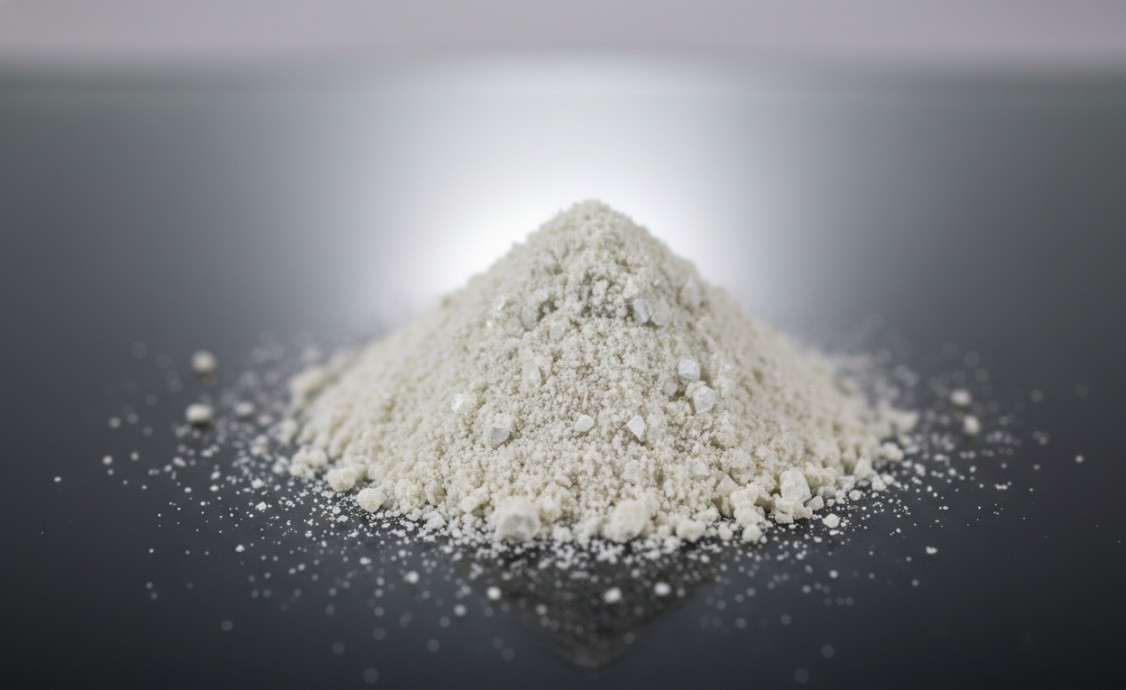 Figure 4: Crystalline metal-organic framework powder showing faceted particle morphology
Covalent Organic Frameworks (COF)
Covalent organic frameworks extend the framework materials concept to purely light-element compositions, offering low densities, high thermal stability, and semiconductor-like electronic structures. COF-1, COF-5, and TPBD-COF are available for gas storage, heterogeneous catalysis, and optoelectronic device research.
Optoelectronic and Specialty Nanomaterials
Colloidal quantum dots of CdSe, InP, PbS, and perovskite compositions provide size-tunable photoluminescence spanning the visible to short-wave infrared spectral regions. Our quantum dots feature narrow emission linewidths (FWHM < 30 nm), high photoluminescence quantum yields (>90% for CdSe/ZnS core-shell), and surface ligand options compatible with aqueous or organic solvents. Applications include display technology, solar concentrator luminescence, near-infrared imaging, and single-photon source development.
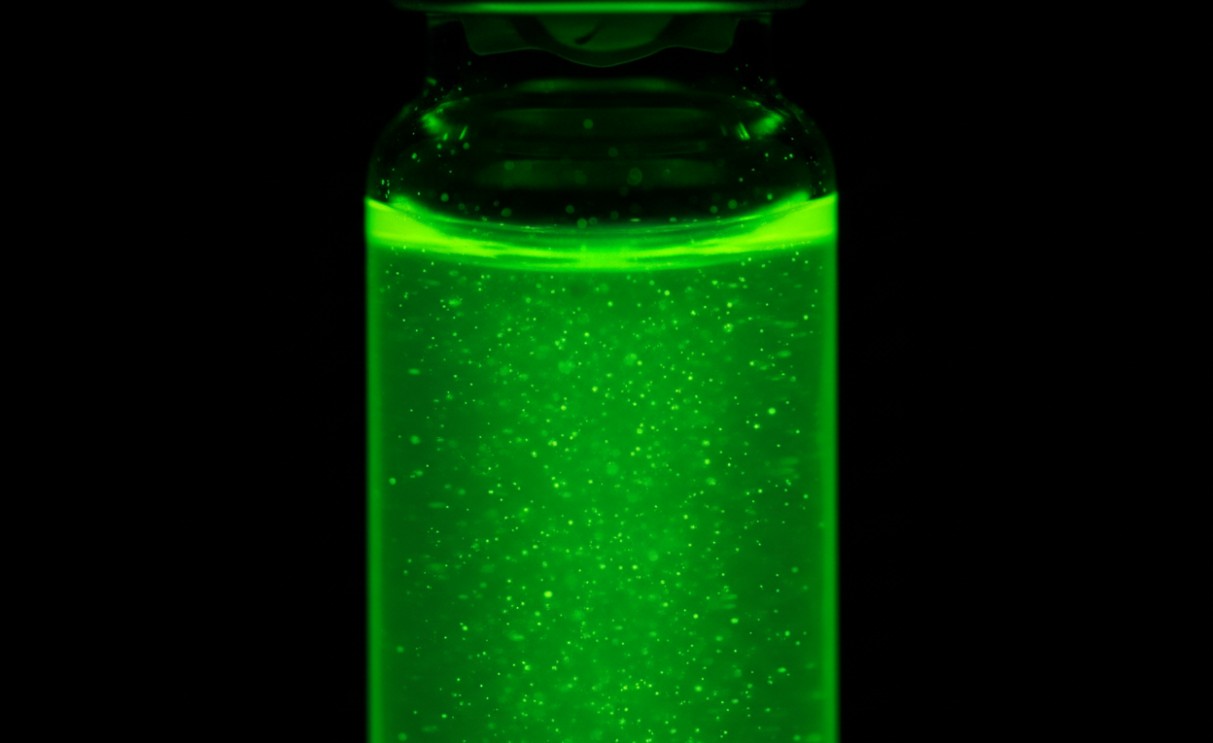 Figure 5: Cadmium selenide quantum dot solution exhibiting bright green photoluminescence under ultraviolet excitation
Aggregation-Induced Emission (AIE)
Aggregation-induced emission luminogens overcome the aggregation-caused quenching limitation of conventional fluorophores, achieving intense emission in the solid state. Tetraphenylethylene (TPE) derivatives, triphenylamine-based AIEgens, and silole compounds are supplied for bioimaging, chemosensor, and organic light-emitting diode research.
Near-Infrared II (NIR-II) Fluorescent Dyes
NIR-II fluorescent dyes emitting in the 1000-1700 nm window enable deep-tissue in vivo imaging with micron-scale resolution and millimeter penetration depths. Our offerings include organic small-molecule dyes, carbon nanotube-based fluorophores, and rare-earth-doped nanoparticles optimized for biological window II/III imaging applications.
Inorganic and Energy Nanomaterials
Our inorganic nanomaterials catalog spans metal oxide nanoparticles (TiO₂, ZnO, Al₂O₃, Fe₃O₄, CeO₂), metal nanoparticles (Au, Ag, Pt, Pd, Cu), and quantum dots for catalysis, sensing, antimicrobial, and electronic applications. Surface-functionalized variants with PEG, silica, or specific ligand coatings are available for enhanced colloidal stability and biocompatibility.
Halide perovskites (APbX₃, where A = Cs, MA, FA; X = Cl, Br, I) and oxide perovskites (SrTiO₃, BaTiO₃, LaAlO₃) are supplied as single crystals, thin films, and nanoparticle dispersions. These materials drive innovation in photovoltaic cells with certified efficiencies exceeding 26%, light-emitting diodes with narrowband emission, and X-ray detector arrays.
Single-atom catalysts maximize atomic efficiency by dispersing individual metal atoms on nitrogen-doped carbon, metal oxide, or MOF supports. Fe-N-C, Co-N-C, Pt-SAC, and Ir-SAC formulations are available for oxygen reduction, hydrogen evolution, and CO₂ reduction electrocatalysis research.
Thermoelectric materials including Bi₂Te₃, PbTe, skutterudites, half-Heusler compounds, SiGe, and Mg₂Si enable direct thermal-to-electrical energy conversion for waste heat recovery and solid-state cooling. Nanostructured variants with enhanced ZT values are available for thermoelectric generator and Peltier cooler device development.
Hard carbon anodes, layered oxide cathodes (NFM), polyanionic compounds (NVPF, NFPP), Prussian blue analogues, and alloy-type anodes (Sn/C, Sb/C) constitute our sodium-ion battery materials portfolio, supporting research into cost-effective energy storage beyond lithium-ion technology.
Solid-state electrolyte materials including sulfides (LGPS, Li₆PS₅Cl), oxides (LLZO, LLZTO, LATP), halides (Li₃YCl₆, Li₃InCl₆), and polymer electrolytes (PEO-LiTFSI) are supplied for next-generation solid-state battery development. Lithium metal anodes, coated cathodes, and interface engineering materials complete the offering.
Industrial-Grade Nanomaterials
Our industrial-grade nanomaterials line delivers TiO₂, ZnO, Al₂O₃, nano-silica, carbon nanotubes, and graphene at production scales with batch-to-batch consistency, REACH/RoHS compliance documentation, and competitive pricing for coatings, polymers, ceramics, construction, and electronics manufacturing.
Organic and Soft Nanomaterials
Our organic materials portfolio encompasses small-molecule semiconductors (pentacene, rubrene, PCBM), conducting polymers (PEDOT:PSS, polyaniline, polypyrrole), and liquid crystal materials for organic field-effect transistors, organic photovoltaics, and flexible display research. High-purity grades (>99%) suitable for sublimation and solution processing are available.
Hydrogel Series and Consumables
Natural and synthetic hydrogels including alginate, GelMA, hyaluronic acid, collagen, PNIPAM, and PEGDA are offered for 3D cell culture, tissue engineering, and drug delivery research. Complementary laboratory consumables—cell culture plastics, syringe filters, PDMS molds, and crosslinking accessories—support complete hydrogel processing workflows.
Customization and Technical Services
The breadth of our nanomaterials catalog reflects the diversity of our customers' research programs, yet we recognize that standard offerings frequently require adaptation to meet specific experimental requirements. Our customization capabilities span controlled doping and alloying, surface functionalization with specified ligands or coupling agents, particle size engineering across the nanometer-to-micrometer range, and custom synthesis of novel compositions not listed in our catalog. Scale flexibility accommodates everything from gram-scale exploratory samples to multi-kilogram pilot-line batches, with rigorous quality control and documentation at every production tier.
Our applications engineering team provides direct technical support including material selection guidance, dispersion and processing protocol development, and joint troubleshooting of integration challenges. For industrial customers, we offer regulatory compliance documentation, safety data sheets in multiple languages, and supply chain security agreements. Whether your project requires a minor modification to an existing product or the development of an entirely new material system, we invite you to contact our technical team to discuss your requirements in detail.
|
There is no product in your cart. |