

Nanomaterial Synthesis & Fabrication Services
Eata Nanomaterials operates at the frontier of controlled nanosynthesis, transforming raw chemical precursors into architecturally defined materials with properties dialed to your exact research requirements. Our capabilities span soft and hard nanomaterial classes across multiple dimensionalities — zero-dimensional quantum dots and metal clusters, one-dimensional nanotubes and nanofibers, two-dimensional sheets and flakes, and three-dimensional porous frameworks. Every synthesis campaign is conducted with rigorous in-process monitoring and post-synthesis characterization, ensuring the material you receive matches the specification we agreed upon.
Whether your project calls for a milligram-scale exploratory batch of novel perovskite nanocrystals or a multi-gram reproducible supply of PEGylated lipid nanoparticles for in vivo studies, our team brings the synthetic expertise and analytical infrastructure to deliver. The sections below detail our core fabrication competencies — each representing a distinct materials platform with unique synthetic challenges, tunable parameters, and application landscapes.
Lipid Nanoparticles Customized Services
Lipid nanoparticles have emerged as the leading non-viral delivery vehicle for nucleic acid therapeutics, with clinical validation in mRNA vaccines and growing adoption for gene editing, RNA interference, and protein replacement therapies. Our LNP fabrication platform combines microfluidic precision mixing with exhaustive post-formulation characterization to produce monodisperse particles with diameters typically between 60-150 nm, polydispersity indices below 0.2, and encapsulation efficiencies exceeding 90% for mRNA, siRNA, and plasmid DNA payloads.
We formulate LNPs using optimized ratios of four lipid components: an ionizable cationic lipid that drives endosomal escape, a structural phospholipid (typically DSPC) that stabilizes the bilayer membrane, cholesterol that enhances packing integrity, and a PEGylated lipid that provides steric stabilization and prolongs systemic circulation. Our library includes commercially available ionizable lipids (SM-102, ALC-0315, DLin-MC3-DMA) as well as custom-synthesized proprietary lipids for clients seeking differentiated intellectual property positions.
 Figure 1: Microfluidic lipid nanoparticle synthesis laboratory with rotary evaporators and precision mixing systems
LNP Customization Options:
- Ionizable lipid screening: Headgroup structure and pKa optimization for specific tissue tropism and endosomal escape efficiency.
- PEG lipid selection: Varying PEG chain length (1-5 kDa) and anchor chemistry to modulate circulation time and stealth properties.
- Payload flexibility: Encapsulation of mRNA, self-amplifying RNA, circular RNA, siRNA, antisense oligonucleotides, and CRISPR components.
- Surface targeting: Post-formulation conjugation of antibodies, peptides, or small molecules for cell-specific delivery.
Membrane-Coated Biomimetic Nanostructures Customized Services
Cell membrane-coated nanoparticles represent a rapidly advancing class of biomimetic materials that merge the functional advantages of synthetic nanocores with the biological capabilities derived from natural cell membranes. The fabrication process involves three critical stages: extraction of intact membrane vesicles from source cells, synthesis of the core nanoparticle (commonly PLGA, polystyrene, or mesoporous silica), and fusion of membrane onto the core through physical co-extrusion or sonication-driven assembly.
This coating strategy imparts remarkable biological functionalities that are difficult to replicate through purely synthetic approaches. Red blood cell membranes confer prolonged circulation by expressing CD47, a 'do-not-eat-me' signal that evades macrophage uptake. Platelet membranes enable active targeting to sites of vascular injury and pathogen infection. Macrophage membranes provide natural homing to inflammatory lesions and atherosclerotic plaques. Cancer cell membranes, meanwhile, express tumor-associated antigens that can stimulate autologous immune responses against residual disease.
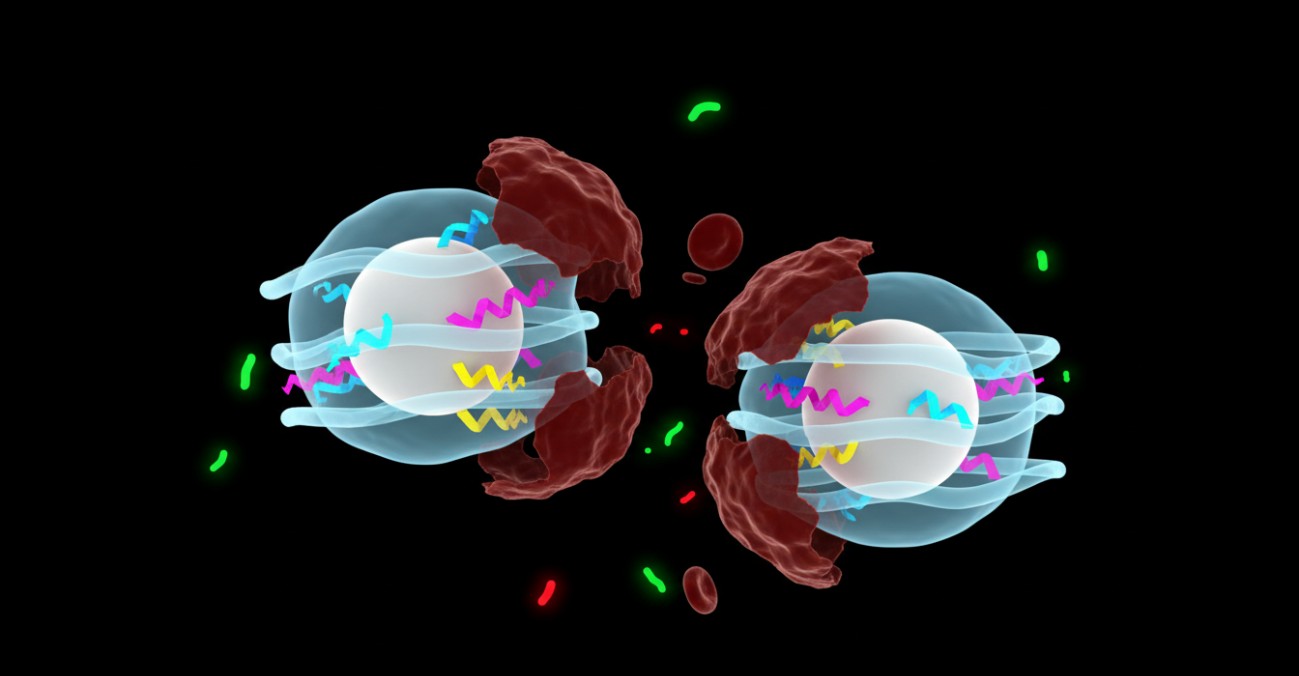 Figure 2: Cell membrane-coated nanoparticles showing phospholipid bilayer wrapping with embedded membrane proteins
Membrane Sources We Work With:
- Red blood cells: For extended circulation half-life and evasion of the reticuloendothelial system.
- Platelets: Targeting vascular injury, bacterial infections, and thrombus-associated pathologies.
- Macrophages and neutrophils: Natural homing to inflammatory sites and tumor microenvironments.
- Cancer cells: Antigen presentation for personalized cancer vaccination strategies.
- Bacterial membranes: Toxin neutralization and pathogen-mimetic vaccine adjuvants.
Drug Delivery Systems Customized Services
Effective drug delivery demands more than just encapsulating a therapeutic agent — it requires precise control over where, when, and how that payload is released. Our delivery system design philosophy centers on matching the physicochemical properties of the drug with the appropriate nanocarrier architecture, then engineering release kinetics through rational material selection and structural design. We develop delivery platforms spanning small molecules, peptides, proteins, nucleic acids, and combination therapies.
Beyond lipid-based systems, our fabrication repertoire includes polymeric nanoparticles from biodegradable polyesters (PLGA, PLA, PCL) that offer tunable degradation rates from days to months. Polymeric micelles self-assembled from amphiphilic block copolymers excel at solubilizing hydrophobic drugs with poor aqueous bioavailability. Mesoporous silica nanoparticles provide exceptionally high loading capacities and ordered pore structures that enable stimuli-responsive gating. Solid lipid nanoparticles combine the biocompatibility of lipids with the physical stability of polymeric systems.
Delivery Platform Architectures:
| Platform | Ideal Payload | Key Advantage |
| Lipid Nanoparticles | mRNA, siRNA, DNA | High encapsulation, endosomal escape |
| Polymeric Nanoparticles | Hydrophobic drugs, proteins | Tunable degradation, sustained release |
| Polymeric Micelles | Hydrophobic small molecules | Enhanced solubility of poorly soluble drugs |
| Mesoporous Silica | Diverse cargos, enzymes | Extremely high loading, gated release |
| Solid Lipid NPs | Lipophilic actives | Physical stability, biocompatibility |
Hydrogel Materials Customized Services
Hydrogels are three-dimensional polymer networks capable of absorbing substantial amounts of water while maintaining structural integrity. At Eata Nanomaterials, we specialize in nanomaterial-integrated hydrogel systems that combine the tunable mechanical and responsive properties of hydrogel matrices with the functional capabilities of embedded nanoparticles. This synergy opens applications in sustained drug release, tissue engineering scaffolds, wearable biosensors, and soft robotics.
Our hydrogel synthesis capabilities cover both natural and synthetic polymer systems. Natural hydrogels based on alginate, chitosan, hyaluronic acid, gelatin, and collagen offer inherent biocompatibility and bioactive cues for cell-laden applications. Synthetic hydrogels from poly(ethylene glycol), polyacrylamide, and poly(N-isopropylacrylamide) provide precise control over crosslinking density, mechanical properties, and stimuli-responsive behavior. We support physical crosslinking (ionic, thermal, host-guest), chemical crosslinking (radical polymerization, enzymatic, click chemistry), and hybrid approaches.
- Nanocomposite hydrogels: Integration of gold nanoparticles, carbon nanotubes, hydroxyapatite, or nanoclays for mechanical reinforcement and functional enhancement.
- Responsive hydrogels: pH-, temperature-, light-, magnetic-, and enzyme-triggered swelling or degradation behavior.
- Injectable formulations: In-situ gelling systems for minimally invasive delivery to tissue defects or disease sites.
- 3D bioprintable inks: Shear-thinning nanocomposite hydrogels compatible with extrusion-based bioprinting systems.
Custom Nanoparticle Synthesis Services
When catalog nanoparticles fall short of your requirements, our custom synthesis service provides a direct path to purpose-built nanomaterials. We operate a flexible synthesis infrastructure that accommodates wet chemical methods, high-temperature organometallic routes, microemulsion systems, and continuous flow reactors. Each project begins with a technical consultation to define target specifications — particle size, size distribution, surface chemistry, crystalline phase, dispersibility, and purity — followed by protocol development, small-scale optimization, and batch production.
Our track record includes custom syntheses of fluorescent silica nanoparticles with precisely doped dye concentrations, magnetic iron oxide nanoparticles with tailored coercivity for hyperthermia applications, upconverting NaYF4 nanocrystals doped with lanthanide ions for near-infrared bioimaging, and rare earth-doped perovskite nanocrystals with engineered emission wavelengths. We welcome inquiries involving novel material compositions, unconventional morphologies, and multi-functional particle designs.
Graphene and 2D Material Synthesis Services
Two-dimensional materials have redefined the boundaries of materials science, offering atomically thin layers with extraordinary electronic, optical, mechanical, and thermal properties. Our 2D material synthesis portfolio centers on graphene and its derivatives — graphene oxide, reduced graphene oxide, and nitrogen-doped graphene — produced through modified Hummers methods, chemical vapor deposition on copper foils, and electrochemical exfoliation of graphite. Each route yields materials with distinct structural characteristics suited to different application contexts.
Beyond graphene, we synthesize transition metal dichalcogenides (MoS2, WS2, MoSe2) through chemical vapor transport and liquid-phase exfoliation, hexagonal boron nitride nanosheets as insulating substrates for van der Waals heterostructures, and black phosphorus flakes through solvent-assisted exfoliation of bulk crystals under inert atmosphere. Post-synthesis functionalization — including covalent modification, non-covalent surfactant wrapping, and heteroatom doping — extends the application range of these materials into catalysis, sensing, energy storage, and biomedical domains.
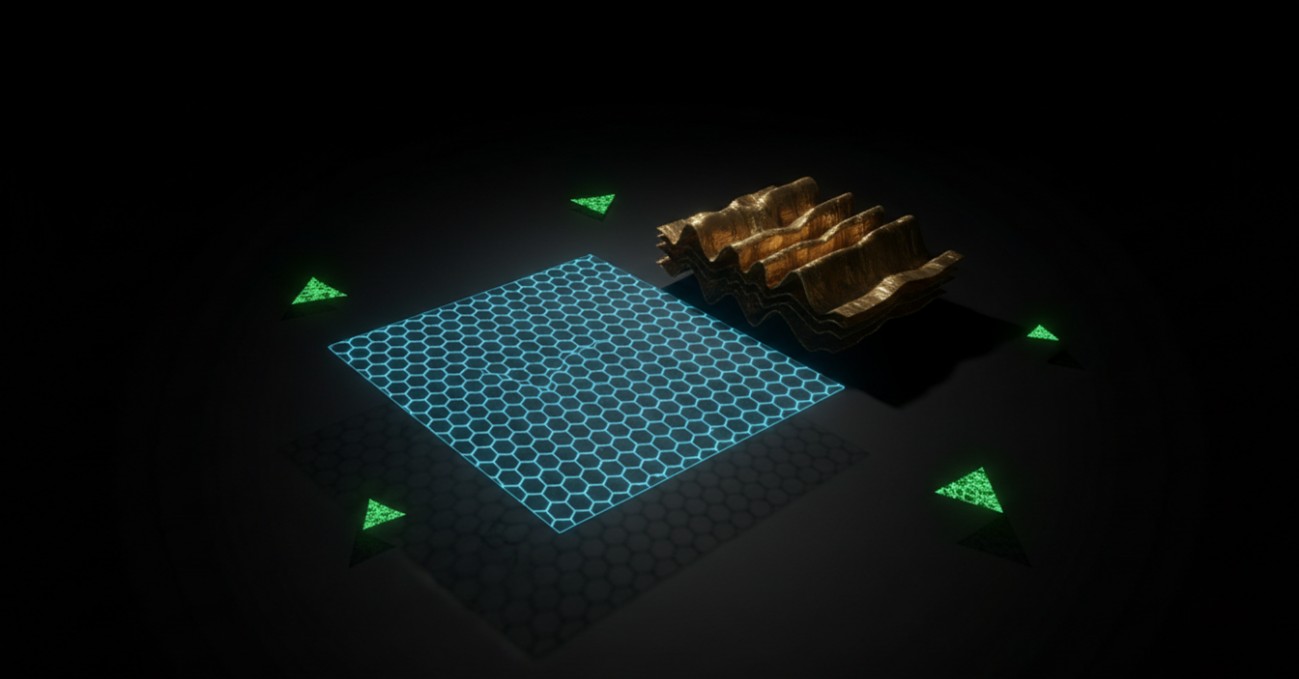 Figure 3: Graphene sheet with hexagonal carbon lattice, stacked MXene layers, and MoS2 nanoflakes
Available 2D Materials:
- Graphene & derivatives: GO, rGO, N-doped graphene — tunable oxidation/reduction levels for conductivity and dispersibility control.
- MXenes (Ti3C2Tx, V2CTx, Mo2TiC2Tx): Hydrofluoric acid or fluoride salt etching followed by delamination into single to few-layer flakes.
- Transition metal dichalcogenides: MoS2, WS2, MoSe2 — semiconducting 2D layers with direct bandgaps in the monolayer limit.
- Hexagonal boron nitride: Atomically smooth insulating layers ideal for substrate passivation and dielectric applications.
Carbon Nanotube Synthesis and Purification Services
Carbon nanotubes continue to occupy a central position in nanomaterial research, prized for their exceptional tensile strength, electrical conductivity, thermal stability, and high aspect ratio. We produce both single-walled carbon nanotubes (SWCNTs) and multi-walled carbon nanotubes (MWCNTs) through catalytic chemical vapor deposition using floating catalyst or fixed-bed reactor configurations. Our synthesis parameters — catalyst composition, carbon feedstock, temperature profile, and carrier gas flow — are tuned to control nanotube diameter, length, chirality distribution, and defect density.
Raw CVD-produced nanotubes contain metal catalyst residues, amorphous carbon, and support material that must be removed before most research applications. Our purification pipeline includes acid washing for metal removal, thermal oxidation to eliminate amorphous carbon, and selective oxidation for chirality enrichment. For applications requiring specific electronic properties, we offer density gradient ultracentrifugation to separate semiconducting from metallic SWCNTs with enrichment factors exceeding 95%.
- SWCNT synthesis: Diameter control from 0.8 to 2.0 nm via catalyst particle size engineering.
- MWCNT synthesis: 2-10+ walls, diameter 10-50 nm, lengths from hundreds of nanometers to tens of micrometers.
- Purification protocols: Metal removal >99%, amorphous carbon removal, optional chirality sorting.
- Surface functionalization: Carboxylation, amination, fluorination, and polymer grafting for dispersion and compatibilization.
Quantum Dot Synthesis and Bandgap Engineering Services
Quantum dots are semiconductor nanocrystals whose electronic and optical properties are governed by quantum confinement — a phenomenon where the particle diameter approaches the exciton Bohr radius of the bulk material. This size-dependent behavior enables precise tuning of emission wavelength, absorption onset, and extinction coefficient simply by controlling nanocrystal dimensions during synthesis. Our quantum dot fabrication capabilities span established II-VI systems (CdSe, CdTe, ZnSe), III-V materials (InP, InAs), lead halide perovskites (CsPbX3), and heavy-metal-free copper indium sulfide compositions.
Bandgap engineering in our laboratory extends beyond simple size control. We synthesize core-shell heterostructures (CdSe/CdS, CdSe/ZnS, InP/ZnSe) that confine the exciton wavefunction within the core while passivating surface defects through the wider-bandgap shell, dramatically improving photoluminescence quantum yields. Alloyed quantum dots (CdSeTe, ZnCdSe) provide intermediate compositions with continuously tunable bandgaps. Type-II heterojunctions spatially separate electrons and holes, producing emission at wavelengths beyond the bandgap of either constituent material.
Quantum Dot Systems:
| Material | Emission Range | Application Focus |
| CdSe | 480-650 nm | Display, bioimaging, solar concentrators |
| CdTe | 600-800 nm | NIR bioimaging, photovoltaics |
| InP | 480-700 nm | Heavy-metal-free displays, lighting |
| CsPbX3 | 410-700 nm | High-brightness displays, lasing |
| CuInS2 | 600-950 nm | Deep-tissue imaging, phototherapy |
MXene Synthesis and Delamination Services
MXenes are a family of two-dimensional transition metal carbides, nitrides, and carbonitrides with the general formula Mn+1XnTx, where M represents an early transition metal, X is carbon and/or nitrogen, and Tx denotes surface terminations (-O, -OH, -F, -Cl) introduced during synthesis. These materials exhibit metallic conductivity that rivals graphene, hydrophilic surfaces uncommon among 2D materials, and exceptional volumetric capacitance — making them compelling candidates for energy storage, electromagnetic shielding, sensors, and catalysis.
Our MXene production follows the selective etching approach: bulk MAX phase ceramics (Ti3AlC2, Ti2AlC, Mo2TiAlC2) are treated with hydrofluoric acid or fluoride salt solutions (LiF/HCl) to dissolve the Al layers, leaving behind accordion-like multilayer MXene. Critical to quality is the subsequent delamination step, which we optimize for each composition to produce colloidal suspensions of single to few-layer flakes with lateral dimensions ranging from hundreds of nanometers to several micrometers. We have developed soft delamination protocols that preserve the hexagonal morphology inherited from the parent MAX phase while maximizing yield.
- Ti3C2Tx: The most widely studied MXene; high electrical conductivity, strong near-infrared absorption.
- Ti2CTx: Smaller interlayer spacing, promising for ion sieving and gas separation membranes.
- V2CTx & Nb2CTx: Higher theoretical capacities for battery and supercapacitor electrodes.
- Mo2TiC2Tx: Ordered double-transition-metal MXene with unique catalytic active sites.
- Surface termination control: Selective -O, -OH, or -F enrichment for targeted applications.
MOF/COF Synthesis and Porosity Optimization Services
Metal-organic frameworks and covalent organic frameworks represent a revolutionary class of crystalline porous materials with surface areas exceeding those of traditional zeolites and activated carbons. MOFs are constructed from metal nodes connected by organic linkers, yielding pores with precisely defined geometries and chemically addressable interiors. COFs extend this concept to purely organic systems linked by covalent bonds, offering exceptional thermal and chemical stability. Our synthesis capabilities encompass solvothermal methods, room-temperature precipitation, mechanochemical grinding, and continuous flow production.
Porosity optimization is central to our MOF/COF services — whether the target application demands ultra-high surface area for gas storage, mesoporous channels for large-molecule catalysis, or hierarchical pore structures for controlled drug release. We modulate pore dimensions through linker length variation, introduce defects to create additional mesoporosity, and perform post-synthetic modification to graft functional groups onto pore walls. Framework stability in aqueous media, biological fluids, and industrial process conditions is systematically evaluated and improved through hydrophobic functionalization or protective coatings.
Representative Frameworks:
- ZIF-8 (Zeolitic Imidazolate Framework): Hydrophobic cavities, pH-responsive degradation, ideal for drug delivery.
- UiO-66 series: Exceptional chemical stability, tunable defect concentrations, scalable synthesis.
- MIL-101(Cr/Fe): Large mesoporous cages, high payload capacity for enzymes and large biomolecules.
- COF-5 / COF-10: 2D layered boronate ester COFs with large surface areas and ordered hexagonal pores.
- TpPa / TpBD: Stable beta-ketoenamine-linked COFs with excellent chemical resistance.
Metal Nanoparticle Synthesis Services
Noble and transition metal nanoparticles occupy foundational roles in plasmonics, catalysis, sensing, and theranostics. Our synthesis group produces monodisperse metal nanoparticles with controlled size, shape, and surface chemistry through well-established colloidal methods. Gold nanoparticles are synthesized by citrate reduction (10-150 nm), seed-mediated growth for rod and star morphologies, or two-phase Brust-Schiffrin methods for ultrasmall clusters with thiol ligand protection. Silver nanoparticles are prepared through Tollens reduction or polyol processes with shape-directing agents. Platinum, palladium, and ruthenium nanoparticles are fabricated through alcohol reduction or thermal decomposition of metal precursors in high-boiling solvents.
Shape control is a particular strength of our metal nanoparticle program. Spheres, rods, cubes, octahedra, stars, and core-shell structures are accessible through manipulation of reduction kinetics, surfactant selection, and seed-directed overgrowth. Anisotropic shapes such as gold nanorods exhibit intense longitudinal surface plasmon resonances tunable across the visible and near-infrared spectrum — critical for photothermal therapy, surface-enhanced Raman spectroscopy, and optical coherence tomography contrast agents.
- Gold (Au): Spheres 3-150 nm, nanorods, nanostars, nanocages — tunable plasmon from visible to NIR-II.
- Silver (Ag): High extinction coefficients, antimicrobial activity, SERS substrates.
- Platinum (Pt) & Palladium (Pd): Catalytic nanoparticles for fuel cells, hydrogenation, and C-C coupling.
- Copper (Cu): Cost-effective plasmonic alternative, Fenton-like catalytic activity.
- Bimetallic alloys: Au-Ag, Pt-Ni, Cu-Pd — composition-tuned optical and catalytic properties.
Metal Oxide Nanoparticle Synthesis Services
Metal oxide nanoparticles constitute one of the most technologically important classes of nanomaterials, with applications spanning photocatalysis, gas sensing, battery electrodes, UV protection, and biomedical imaging. Our synthesis repertoire covers both single-component oxides and complex mixed-metal oxides produced through sol-gel processing, hydrothermal crystallization, thermal decomposition of metal-organic precursors, and flame spray pyrolysis. Particle size, crystalline phase, and morphology are controlled through precursor chemistry, reaction temperature, solvent composition, and the presence of structure-directing agents.
Titanium dioxide nanoparticles are synthesized in anatase, rutile, or brookite polymorphs depending on application requirements — anatase for photocatalysis and solar cells, rutile for UV shielding and pigments. Zinc oxide is produced as nanorods, nanoplates, or spherical particles with strong UV absorption and piezoelectric properties. Iron oxide (magnetite Fe3O4 and maghemite gamma-Fe2O3) nanoparticles are engineered for superparamagnetic behavior at room temperature with negligible remanence, making them ideal for magnetic hyperthermia, MRI contrast enhancement, and magnetic separation. Cerium oxide, tungsten oxide, indium tin oxide, and aluminum oxide are also within our production scope.
Metal Oxide Portfolio:
| Material | Morphology | Primary Applications |
| TiO2 | Spheres, rods, plates | Photocatalysis, solar cells, UV filters |
| ZnO | Rods, flowers, spheres | UV protection, piezoelectrics, antimicrobials |
| Fe3O4/gamma-Fe2O3 | Spheres, cubes, flowers | MRI contrast, hyperthermia, separation |
| CeO2 | Spheres, rods | Catalysis, antioxidant, UV shielding |
| SnO2 | Spheres, wires | Gas sensors, transparent conductors |
Perovskite Nanocrystal Synthesis Services
Lead halide perovskite nanocrystals (CsPbX3, where X = Cl, Br, I or mixed halides) have emerged as extraordinary light-emitting materials with photoluminescence quantum yields approaching unity, narrow emission linewidths below 20 nm full width at half maximum, and wavelength tunability spanning the entire visible spectrum through halide composition control. Our perovskite nanocrystal synthesis employs hot-injection methods in coordinating solvents, ligand-assisted reprecipitation, and microfluidic reactors for enhanced reproducibility and scale-up potential.
Beyond the classic all-inorganic CsPbX3 system, we fabricate FAPbX3 and MAPbX3 nanocrystals for applications where the organic cation provides advantageous optoelectronic properties. Double perovskite compositions (Cs2AgBiX6) offer lead-free alternatives with reduced toxicity concerns. For enhanced stability against moisture, heat, and polar solvents, we offer surface passivation treatments, encapsulation in polymer matrices, and conversion to zero-dimensional Cs4PbX6 phases that retain bright emission through self-trapped excitons.
- Halide composition tuning: Continuous bandgap tuning from 410 nm (Cl-rich) to 700 nm (I-rich) through anion exchange.
- Shape control: Cubes, nanoplates, nanowires, and quantum dots with distinct excitonic confinement.
- Stability enhancement: Surface halide compensation, lead-phosphonate complexation, and polymer matrix encapsulation.
- Lead-free alternatives: Cs2AgBiBr6 and related double perovskite nanocrystals for environmentally sensitive applications.
Core-Shell Nanostructure Fabrication Services
Core-shell architectures represent one of the most powerful strategies for engineering multi-functional nanomaterials. By combining distinct materials into a single particle with defined spatial organization, core-shell designs can simultaneously optimize properties that would be mutually incompatible in homogeneous particles — such as combining a magnetic core for targeting with a mesoporous silica shell for drug loading. Our fabrication expertise spans solution-phase seeded growth, sol-gel coating, layer-by-layer assembly, microemulsion templating, and atomic layer deposition.
The interfaces between core and shell materials are engineered to serve specific functions. In semiconductor quantum dots, wider-bandgap shells passivate surface traps and boost quantum yield. In plasmonic nanoparticles, thin dielectric shells tune the local electromagnetic field distribution. In magnetic composites, protective shells prevent oxidation and enable surface functionalization. And in catalytic particles, porous shells control reactant access to the active core, introducing size-selective or diffusion-controlled catalytic behavior.
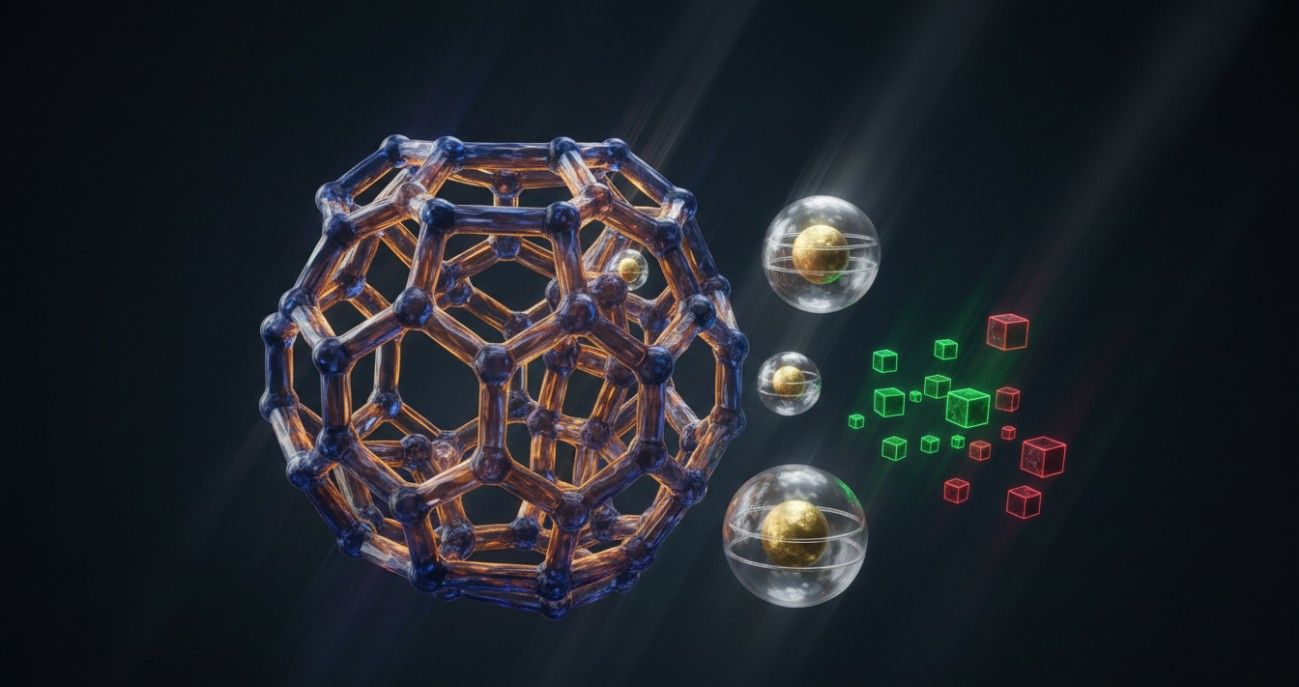 Figure 4: Metal-organic framework cage structure with core-shell nanoparticles and luminescent perovskite nanocrystals
Core-Shell Architectures:
- Fe3O4@SiO2: Magnetic core with biocompatible silica shell — magnetic separation, MRI, and drug delivery.
- Au@SiO2, Ag@SiO2: Plasmonic core with protective or functionalizable dielectric shell.
- CdSe@ZnS, InP@ZnSe: Quantum dot core-shells with dramatically enhanced photoluminescence stability.
- SiO2@Au: Plasmonic shell on dielectric core — reversed architecture for SERS substrates.
- Multi-layer structures: Triple-layer and onion-like designs for multi-modal imaging and sequential release.
Nanofiber Electrospinning Services
Electrospinning is a remarkably versatile technique for producing continuous nanofibers with diameters ranging from tens of nanometers to several micrometers. Under a high-voltage electric field, a polymer solution jet undergoes whipping instabilities that stretch and thin the filament by orders of magnitude before solidification on a grounded collector. The resulting non-woven mats exhibit extremely high surface-area-to-volume ratios, interconnected porosity, and mechanical properties that can be tuned through polymer selection and processing parameters.
At Eata Nanomaterials, we electrospin from an extensive polymer library including PCL, PLGA, PLA, PVA, PAN, PVDF, nylon, collagen, gelatin, chitosan, silk fibroin, and cellulose derivatives. We incorporate functional additives — nanoparticles, drugs, growth factors, carbon nanotubes, and graphene oxide — directly into the spinning dope to create composite fibers with enhanced or multi-functional properties. Fiber alignment, diameter distribution, and mat thickness are precisely controlled through voltage, flow rate, tip-to-collector distance, collector geometry, and solution rheology.
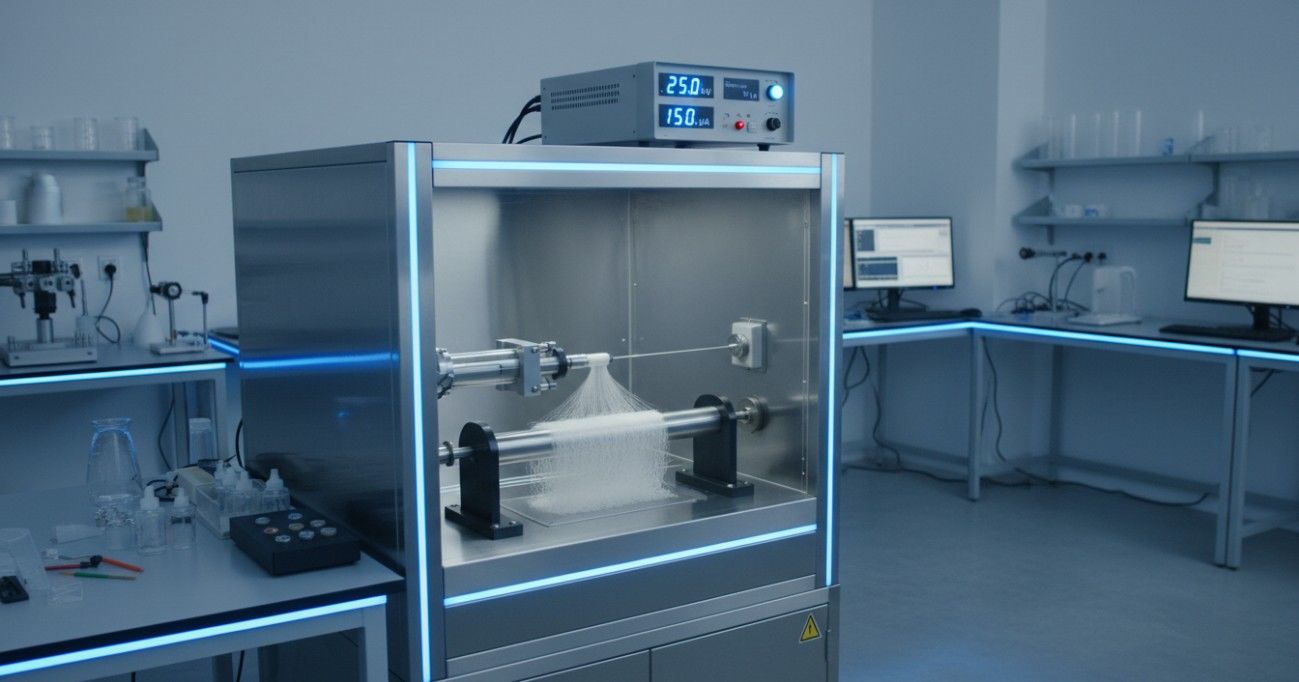 Figure 5: High-voltage electrospinning apparatus producing nanofiber mats on a rotating drum collector
Electrospinning Capabilities:
- Fiber diameter control: From 50 nm to 5 um through solution concentration and electric field strength optimization.
- Alignment control: Random, uniaxially aligned, or radially aligned fiber architectures for specific cell guidance.
- Multi-fluid spinning: Coaxial and side-by-side spinning for core-shell, Janus, and hollow fiber morphologies.
- Composite nanofibers: Incorporation of bioactive ceramics, carbon nanomaterials, and therapeutic agents.
- Post-processing: Crosslinking, calcination for ceramic fibers, and surface plasma treatment.
Start Your Custom Nanomaterial Project Today
Share your target specifications with our team and receive a tailored synthesis proposal with clear experimental strategy, expected outcomes, and material characterization package.