

PEGylation and Bioconjugation Services
PEGylation and bioconjugation represent two of the most impactful chemistries in contemporary nanomedicine. PEGylation, the covalent attachment of polyethylene glycol chains to molecules or particles, transforms pharmacokinetic profiles by shielding surfaces from immune recognition. Bioconjugation creates stable covalent linkages between biomolecules and functional moieties, enabling targeted delivery, molecular imaging, and diagnostic detection.
At Eata Nanomaterials, we integrate both disciplines under one roof. Our scientists design PEG coatings that optimize stealth behavior while preserving reactive handles for subsequent bioconjugation, producing multifunctional nanoplatforms ready for downstream therapeutic or diagnostic deployment.
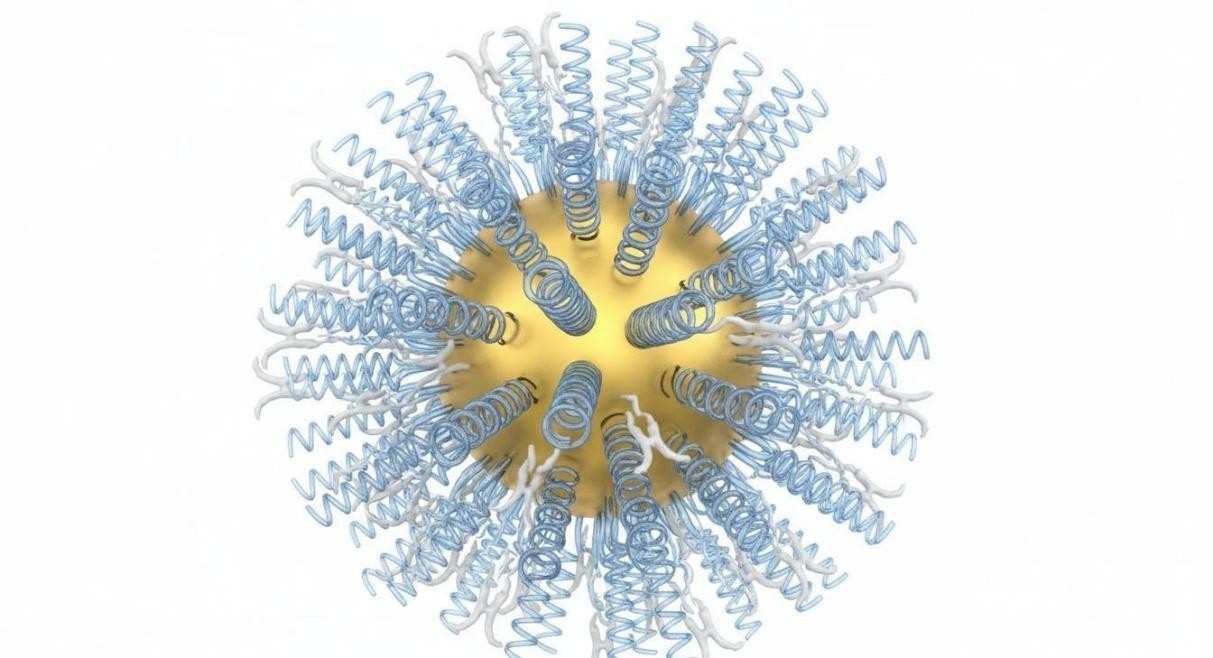 Figure 1: A PEGylated gold nanoparticle with antibody molecules conjugated to the terminal ends of PEG chains for targeted recognition.
Nanoparticle and Protein PEGylation Services
Our PEGylation platform accommodates diverse substrates and PEG architectures. We tailor molecular weight, chain geometry, and terminal functionalization to match the specific requirements of each project. Available PEGylation options include:
- Linear PEG chains (1-40 kDa) with methoxy, amine, carboxyl, thiol, maleimide, azide, or biotin termini for monofunctional or heterobifunctional designs
- Branched and multi-arm PEGs (4-arm, 8-arm) achieving higher grafting densities and multivalent presentation of targeting or payload ligands
- Lipid-PEGs (DSPE-PEG, DMPE-PEG) for insertion into liposomal, micellar, and lipid nanoparticle membranes
- Silane-PEGs for covalent grafting onto silica, iron oxide, and metal oxide surfaces
- Thiol-PEGs for gold and silver nanoparticle surface modification via robust dative bonding
The PEGylation process begins with careful selection of coupling chemistry based on the existing surface chemistry of your nanoparticles or the available functional groups on your protein. For amine-bearing substrates, we activate PEG carboxyls using EDC/NHS chemistry. For thiol-containing molecules, maleimide-terminated PEGs provide highly selective Michael addition under mild aqueous conditions. Click chemistry between azide-PEGs and alkyne-functionalized substrates offers bioorthogonal precision with minimal side reactions.
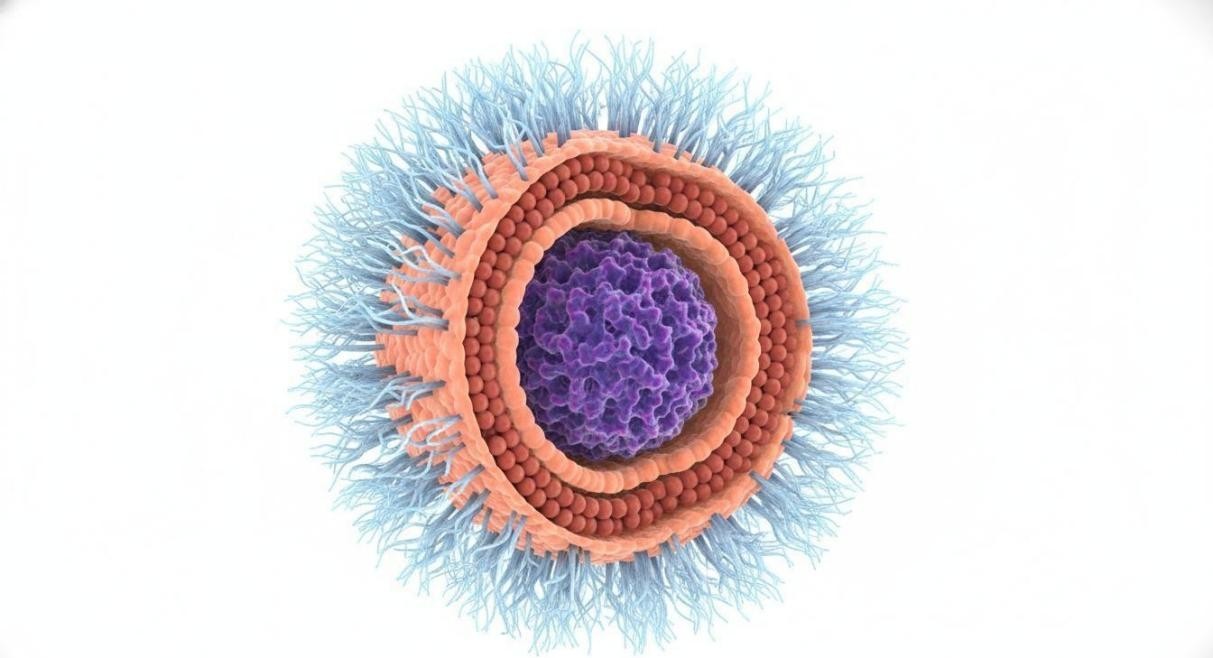 Figure 2: Cross-sectional view of a PEGylated liposome showing the phospholipid bilayer, hydrophobic drug core, and surface PEG corona.
Bioconjugation Chemistry Platforms
Our bioconjugation services leverage well-established chemistries alongside emerging orthogonal strategies to create stable, active conjugates. We routinely employ the following coupling approaches:
Lysine-based conjugation: Exploits the abundance of primary amines on protein surfaces for reaction with activated esters. This approach offers high coupling efficiency and straightforward implementation, though it produces heterogeneous products with variable stoichiometry. Suitable for exploratory studies and applications where precise drug loading is not critical.
Cysteine-maleimide coupling: Utilizes thiol-reactive maleimide groups for selective conjugation to free sulfhydryls, naturally present or engineered via disulfide reduction. Produces more homogeneous conjugates than lysine approaches, with defined attachment sites and controlled stoichiometry.
Carbodiimide (EDC/NHS) crosslinking: Forms stable amide bonds between carboxyl and amine groups. Our optimized protocols minimize protein aggregation while maximizing conjugation yield through careful control of reagent ratios, pH, and reaction time.
Click chemistry (CuAAC / SPAAC): Copper-catalyzed or strain-promoted azide-alkyne cycloaddition enables bioorthogonal conjugation under mild conditions with exceptional chemoselectivity. Ideal for constructing complex multifunctional architectures without interfering with native biological functionality.
Streptavidin-biotin bridging: Leverages the femtomolar affinity between streptavidin and biotin for modular, non-covalent conjugation. This system permits rapid assembly and testing of different component combinations before committing to permanent covalent linkage.
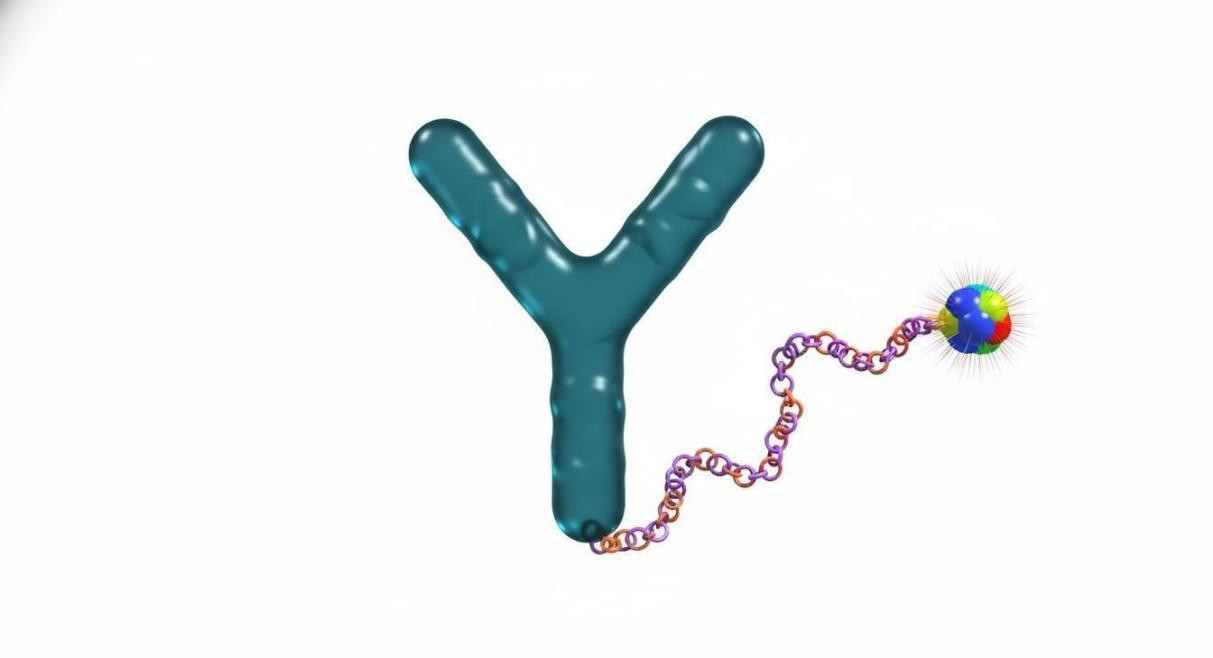 Figure 3: A molecular model of an antibody-drug conjugate showing the antibody, flexible linker chain, and spherical payload molecule.
Antibody-Drug Conjugate Development
Antibody-drug conjugates represent one of the most promising frontiers in targeted therapeutics, combining the specificity of monoclonal antibodies with the potency of cytotoxic payloads. Our ADC development services encompass linker selection, conjugation optimization, and comprehensive characterization to ensure your constructs achieve the desired therapeutic index.
Key parameters we optimize during ADC development:
- Drug-to-antibody ratio (DAR) through controlled stoichiometry, achieving homogeneous populations with defined payload loading rather than heterogeneous mixtures
- Linker chemistry selection between cleavable linkers (Val-Cit, hydrazone, disulfide) for intracellular release and non-cleavable linkers for improved plasma stability
- Payload classes including auristatins, maytansinoids, camptothecins, and PBD dimers, matched to linker chemistry and target indication
- Conjugation site selection via engineered cysteine, glycan remodeling, or enzymatic approaches for site-specific attachment with batch-to-batch consistency
Heterobifunctional PEG Crosslinkers
We maintain an inventory of discrete-length PEG crosslinkers enabling precise control over the spatial separation between conjugated components. The following table summarizes our most commonly employed crosslinking reagents:
| Crosslinker | Reactive Groups | Application |
| NHS-PEG-Maleimide | Amine + Thiol | Antibody-enzyme, protein-dye conjugation |
| NHS-PEG-Azide | Amine + Azide | Click chemistry precursor for bioorthogonal labeling |
| NHS-PEG-Biotin | Amine + Biotin | Streptavidin-based capture and detection systems |
| Mal-PEG-DBCO | Thiol + Alkyne | SPAAC click conjugation to azide-tagged targets |
| NHS-PEG-Alkyne | Amine + Alkyne | CuAAC click chemistry for diverse azide partners |
| DSPE-PEG-Maleimide | Lipid + Thiol | Liposome surface functionalization with thiolated ligands |
| Silane-PEG-NHS | Silanol + Amine | Silica and metal oxide surface PEGylation |
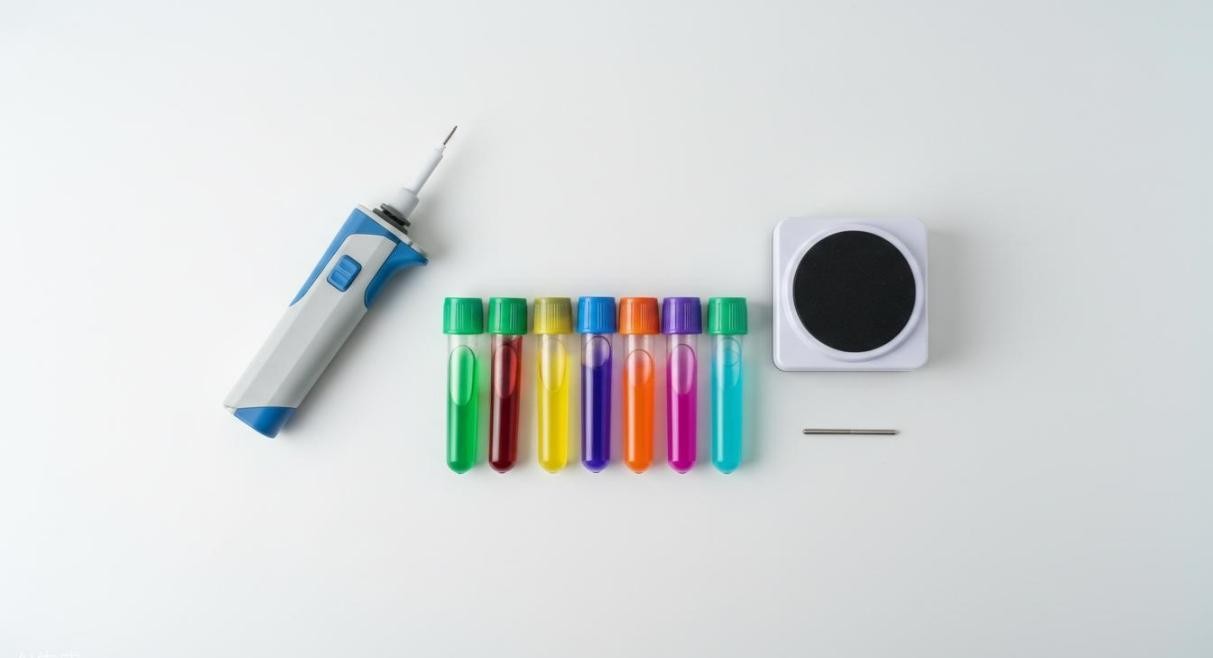 Figure 4: Colorful microcentrifuge tubes containing bioconjugation reaction mixtures alongside a micropipette and magnetic stirrer.
Specialized Conjugation Services
Beyond conventional antibody conjugation, we offer tailored bioconjugation services for diverse molecular classes:
- Protein and peptide conjugation including fluorescent labeling (FITC, Alexa Fluor, Cy dyes), enzyme coupling (HRP, alkaline phosphatase), and biotinylation for affinity applications
- Oligonucleotide conjugates linking antibodies or peptides to siRNA, ASO, or aptamer payloads for targeted gene silencing or molecular diagnostics
- Gold and magnetic nanoparticle bioconjugation attaching antibodies, aptamers, or peptides for biosensing, immunoassay, and magnetic separation platforms
- Polymer-drug conjugates creating therapeutic macromolecular constructs with tunable release kinetics and enhanced solubility for hydrophobic agents
- Carrier protein conjugation linking haptens to KLH, BSA, or OVA for immunogen preparation and antibody generation campaigns
Analytical Characterization and Quality Control
Every PEGylation and bioconjugation project includes comprehensive analytical characterization. Our multi-technique quality assurance program verifies conjugation success, quantifies critical quality attributes, and ensures batch reproducibility:
- Hydrophobic interaction chromatography (HIC-HPLC) for DAR determination and conjugate heterogeneity profiling in ADC constructs
- Size-exclusion chromatography (SEC) assessing aggregation state, hydrodynamic radius, and purity of conjugated products
- SDS-PAGE and capillary electrophoresis (CE-SDS) for molecular weight verification and fragment analysis of protein conjugates
- UV-Vis spectroscopy quantifying dye-to-protein ratios (DOL), drug loading, and plasmonic integrity of nanoparticle conjugates
- Mass spectrometry (MALDI-TOF, ESI-MS) providing intact mass confirmation and conjugation site identification
- Dynamic light scattering (DLS) and zeta potential monitoring colloidal stability and surface charge modifications following PEGylation
- Surface plasmon resonance (SPR) and bio-layer interferometry (BLI) measuring binding kinetics of conjugated recognition elements
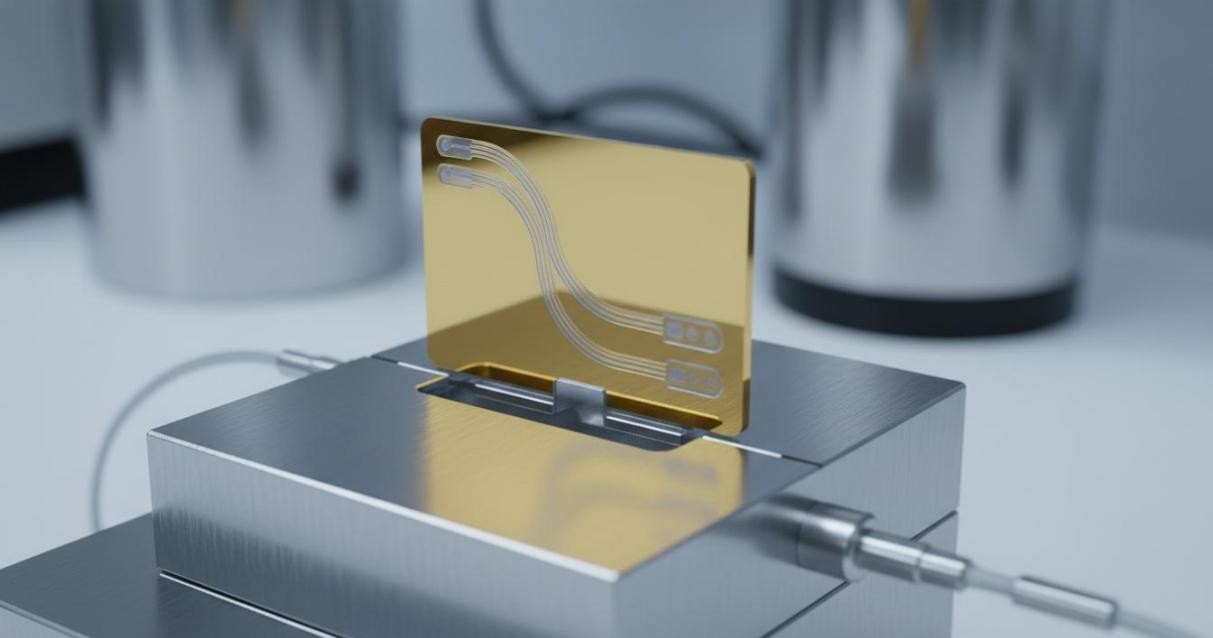 Figure 5: A surface plasmon resonance sensor chip positioned in its holder for real-time binding kinetic analysis of bioconjugates.
Applications Across Therapeutic and Diagnostic Research
The PEGylated and bioconjugated materials produced at Eata Nanomaterials support a broad spectrum of cutting-edge research programs:
| Application Domain | PEGylation Role | Bioconjugation Role |
| Targeted drug delivery | Stealth coating, prolonged circulation | Antibody/targeting ligand for cell-specific uptake |
| Molecular imaging | Reduced nonspecific background | Fluorophore, radionuclide, or contrast agent attachment |
| In vitro diagnostics | Stability enhancement | Capture antibody, detection enzyme, or reporter dye |
| Biosensing | Anti-fouling surface | Recognition element for specific analyte binding |
| Protein therapeutics | Extended half-life, reduced immunogenicity | Not applicable |
Begin Your PEGylation or Bioconjugation Project
Whether you need to PEGylate nanoparticles for stealth drug delivery, construct antibody-drug conjugates with defined DARs, or label proteins with fluorescent reporters, Eata Nanomaterials provides the chemical expertise and analytical infrastructure to advance your research objectives with confidence.
Contact our technical team to discuss your specific conjugation requirements, review available PEG architectures and crosslinker options, and receive a customized project proposal designed around your research goals.